
ASCE 20-96: Guidelines for Safe Pile Foundation Design
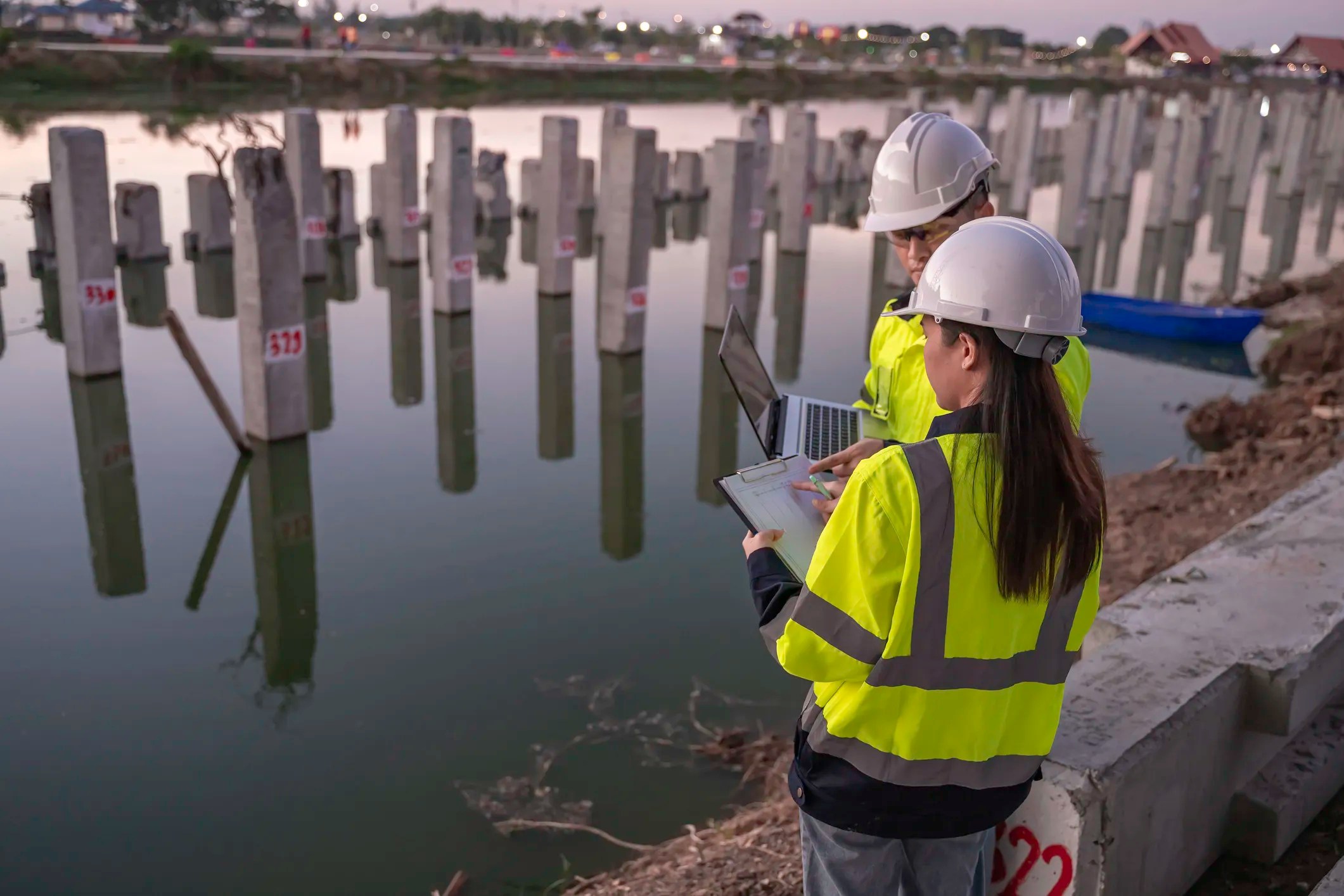
When soil conditions cannot adequately support building loads near the surface, engineers often turn to pile foundations: deep slender, elongated structural elements (often made of materials such as concrete or steel) that provide stability by transferring loads to stronger soil layers or bedrock. ASCE 20-96: Standard Guidelines for the Design and Installation of Pile Foundations (ASCE 20-96) provides engineers with a comprehensive framework for designing and installing pile foundations using sound engineering principles and established construction practices.
Why Proper Pile Foundation Design and Installation Matter
Pile foundations are used when shallow foundations cannot adequately support a structure because of weak, compressible, or unstable soils. Without them, tall buildings, bridges, overpasses, and industrial facilities would sink, tilt, or collapse. By transferring loads through weaker soils into stronger bearing layers or by developing friction along the pile shaft, pile foundations are critical in improving structural stability.
Properly designing and installing pile foundations requires careful engineering, knowledge of soil behavior, and adherence to recognized standards. ASCE 20-96 provides guidance throughout both the design and construction phases of pile foundation projects.
What Is ASCE 20-96?
ASCE 20-96 provides civil and structural engineers with a rational, state-of-the-art framework for designing and installing deep foundation piles, assuring structures safely transfer their loads into the ground. This engineering standard covers various topics:
- Administrative requirements
- Pile shaft strength requirements
- Soil-pile interface strength requirements and capacity
- Design loads
- Design stresses
- Construction and layout guidelines for pile design
- Installation guidelines for pile construction
In addition, ASCE 20-96 includes information on applicable standards from ASTM, AWPA, and ACI; the document concludes with an Appendix on partial factors of safety.
The History of Pile Foundations
Pile foundations have supported structures for thousands of years. River dwellers in Switzerland around 6,000 years ago built their homes on wooden piles that were driven into lakebeds and marshy terrain. Elevating these structures helped protect them from flooding, moisture, and potential attacks.
Centuries later (around 2,000 years ago), the Romans also used pile foundations to support grand constructions like bridges, aqueducts, and the iconic Colosseum in Rome. Roman engineers drove piles into riverbeds to create stable foundations for infrastructure that enabled trade, transportation, and military expansion—many of which have survived for centuries as evidence of the durability of well-designed deep foundations.
How Pile Foundations Evolved to Support Modern Infrastructure
Throughout history, cities naturally developed along rivers, coastlines, and ports where commerce flourished. However, these locations often featured soft, compressible soils that could not adequately support heavy structures. Builders responded by driving timber piles into the ground by hand or excavating holes filled with compacted stone and sand to strengthen the foundation beneath buildings. These early methods laid the groundwork for modern deep foundation engineering.
Today, pile foundations remain indispensable to construction, although the materials, equipment, and engineering principles have evolved dramatically. Steel, reinforced concrete, timber, and composite piles are now designed using sophisticated geotechnical analyses, computer modeling, and standardized engineering practices. Modern pile foundations support some of the world’s tallest buildings, longest bridges, offshore wind farms, ports, and critical infrastructure—with extreme mega-projects often extending more than 300 feet (90 meters) below the surface to reach competent soil or bedrock.
While today’s technology is far more advanced, the underlying principle remains unchanged: safely transferring structural loads to stable ground. Standards like ASCE 20-96 build on thousands of years of engineering knowledge by providing consistent guidelines for the design and installation of reliable pile foundation systems.
Where to Find ASCE 20-96
ASCE 20-96: Standard Guidelines for the Design and Installation of Pile Foundations (ASCE 20-96) is available on the ANSI Webstore.
Learn More about Structural Design Standards