
NSF/ANSI 42-2025: Drinking Water Treatment Units, Aesthetic Effects
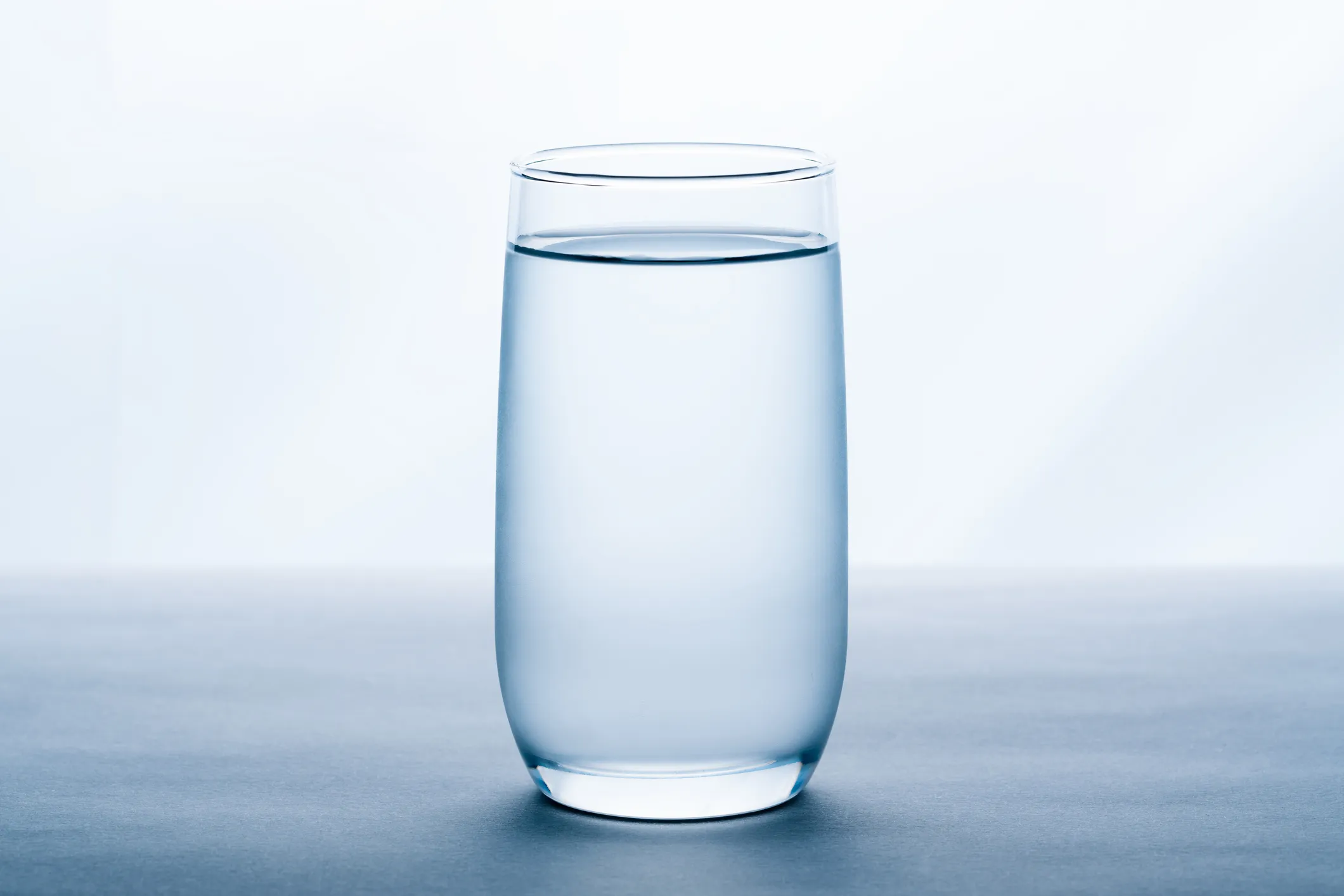
Picture a glass of water. Odds are it shares a striking similarity with the one above. We like our water a certain way, especially the type we need to drink. Setting aside the variance in appearance, odor, etc., in whatever form it takes to occupy 71% of the earth’s surface and an indeterminate amount of the cosmos—water likely arrived on our planet via comets and asteroids—we want this dipolar transparent liquid to be pleasant. Appearance is important for the substance that we literally drink for survival.
Aesthetics extends beyond water’s appearance. In fact, the systems covered by NSF/ANSI 42-2025, Drinking Water Treatment Units – Aesthetic Effects reduce substances that can affect the aesthetic quality of water (impurities such as chlorine and taste/odor), but they also can add chemicals for scale control or limit microbial growth in the system.
Water Treatment Systems Covered by the NSF/ANSI 42 Standard
The treatment systems addressed by NSF/ANSI 42-2025, which can be either point-of-use (under-the-sink, water pitcher) or point-of-entry (whole house), are designed to reduce specific substances that may be present in public or private drinking water considered to be microbiologically safe and of known quality.
The American National Standard establishes minimum requirements for materials, design and construction, and performance of drinking water systems dealing with aesthetic (nonhealth) effects contaminants in water supplies. This includes gas chromatography/mass spectroscopy (GC/MS) analysis, structural integrity, and test methods for bacteriological performance. It also specifies minimum product literature and labeling information for a manufacturer to supply to authorized representatives and system owners.
Changes to NSF/ANSI 42-2025
NSF/ANSI 42-2025 revises the 2023 edition of the same American National Standard for filters that limit the aesthetic effects of drinking water treatment units. To keep the document current, this revision:
- Section 8.2.2.3.1 was modified to allow additional claims for commercial modular systems thateither have no volumetric rated capacity or that match the higher of the rated capacities for chlorine and monochloramine claims.
- In Section 4.2.3, “Exposure,” Section 4.2.3.1 was updated to provide instruction for products with an initial flush longer than 4 h. Section 4.2.3.2 includes water collection procedures for with and without media pour through products.
- Maximum reporting limits were removed from DWTU extraction testing parameters [Table 4.1, “Extraction testing parameters (metals),” Table 4.2, “Extraction testing parameters (semi-volatiles),” and Table 4.3, “Extraction testing parameters (volatiles)”].
- Section 4.2.1.3 was added for the new requirement to seek the lowest detection limits via both sample exposure and analysis.
- Language was added throughout the standard per ISO/IEC Directives, Part 2, for consistency within NSF documents.
NSF/ANSI 42-2025, Drinking Water Treatment Units – Aesthetic Effects is available on the ANSI Webstore and as part of the NSF Drinking Water Treatment Units Complete Set and NSF/ANSI/CAN 61/NSF/ANSI/CAN 600 / NSF/ANSI/CAN 372 / NSF/ANSI 42 – Drinking Water System Package.
Changes to Past Revisions of NSF/ANSI 42
To assist long-time users of the standard, we’ve included notable changes for several past revisions below:
Drinking Water Treatment Units – Health Effects
For guidance on drinking water treatment units that reduce health-related contaminants, please refer to NSF/ANSI 53-2023: Drinking Water Treatment Units – Health Effects.
Questions About NSF/ANSI 42?
NSF/ANSI 42 is developed by NSF International.
Please direct any technical questions relating to this American National Standard to the developer. You can find the contact information for all ANSI-accredited standards developers here: List of ANSI-Accredited Standards Developers (ASDs).
For further information, please refer to: Who to Contact for Standards Related Questions.



Thanks for covering this topic. I have a technical question based on verified NSF/ANSI testing provided by a gravity filter manufacturer.
You state above that: “Systems covered under this standard are intended to address one or more of the following: reduce substances affecting the aesthetic quality of the water, add chemicals for scale control, or limit microbial growth in the system (bacteriostatic)”
Does this communicate that filters are tested ONLY for these criteria, nothing more? Does NSF/ANSI 42-2022 test for chloramines, lead, or mercury?
I purchased a filter based on a company’s claim that test results show chlorine, lead, and mercury were removed. They present a link to info.nsf.org that includes a facsimile of their test results. At the bottom there is a note:
[1] Conforms to material requirements only.
[Pb] Product also evaluated and determined to possess weighted average lead content of
<=0.25% and complies with lead content requirements for “lead free” plumbing as defined
by California, Vermont, Maryland, and Louisiana state laws and the U.S. Safe Drinking
Water Act.
Perhaps chloramines are bacteriostatic, but the results say nothing about mercury.
Thanks for clarifying.
Please contact NSF International for any technical questions relating to their standards: https://www.nsf.org/contact-us