AHAM AC-4-2022: Testing Air Cleaners for Chemical Gases
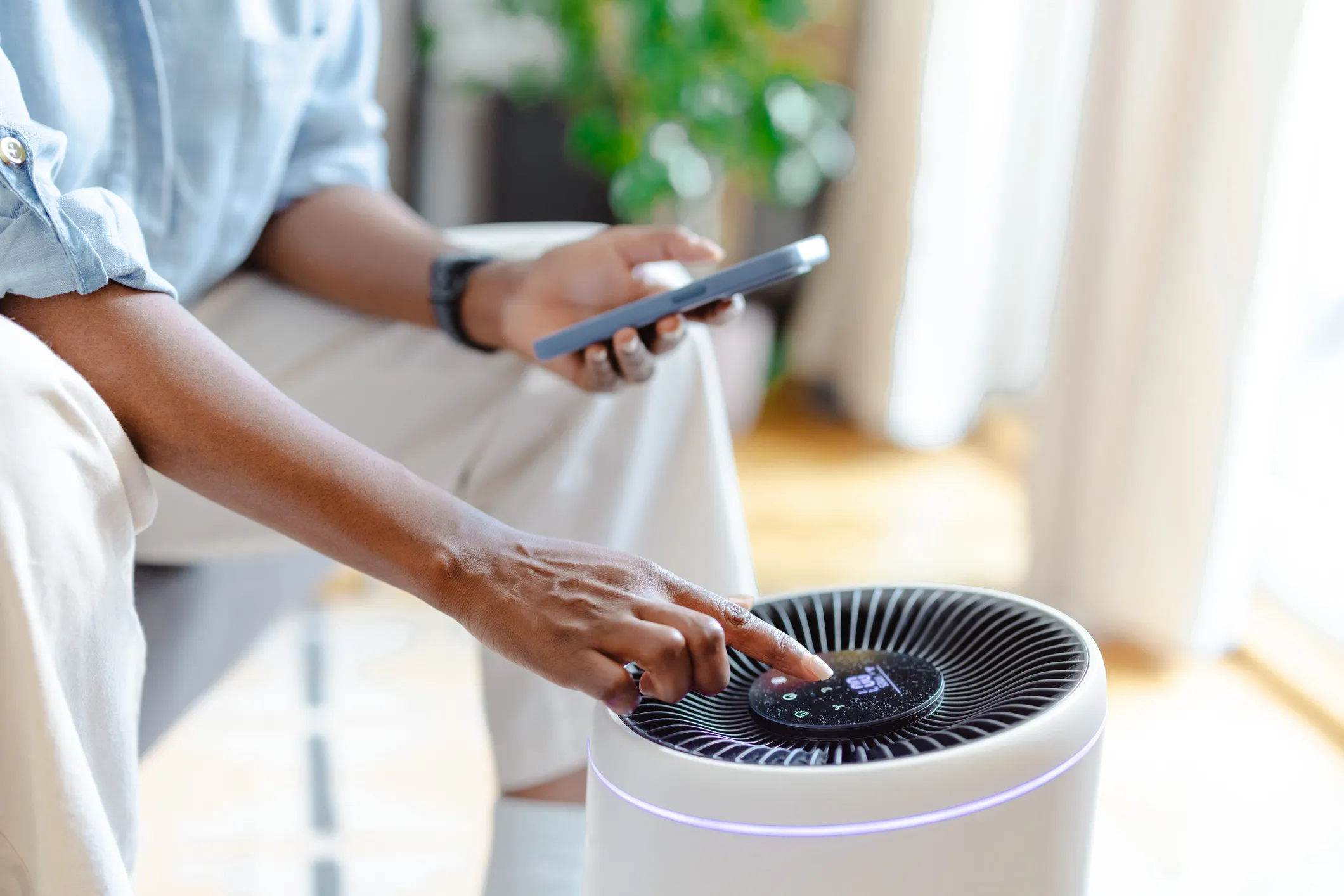
We spend about 87% to 90% of our time inside buildings; consequently, maintaining healthy indoor air quality is critical. Air cleaners can help improve indoor air quality by reducing concentrations of certain chemical gases and odor-causing compounds. AHAM AC-4-2022, Method of Assessing the Reduction Rate of Chemical Gases by a Room Air Cleaner establishes a testing procedure to evaluate the effectiveness of portable air cleaners in reducing specific chemical gases under controlled temperature and humidity conditions.
What Is AHAM AC-4-2022?
AHAM AC-4-2022 specifies a method to evaluate the capability of a portable air cleaner to reduce the concentration of chemical gases in a specified chamber. The test is applicable to portable air cleaners commonly used in single room spaces, such as those based on mechanical filtration, ultraviolet (UV), ionizers, photocatalytic oxidation, and ozone generators in-unit technology.
This standard method includes definitions and performance characteristics of portable household electric room air cleaners. Also, it measures the relative reduction by the air cleaner of the concentration of chemical gases.
Defining Chemical Gases in AHAM AC-4-2022
For purposes of the test method in AHAM AC-4-2022, chemical gases are of those types that can be found in residential dwellings either from entrance from the outside, from human activities in the dwelling, or from materials brought into the home. They may also include chemicals that produce odorants, which may be irritants.
Annex B, Chemical Gases used in This Test Procedure (Informative), in AHAM AC-4-2022, covers examples of chemical gases that may be found indoors. These gases include formaldehyde (CH₂O), toluene (C₇H₈), n-Heptane (C₇H₁₆), d-Limonene (C₁₀H₁₆), ammonia (NH₃), and nitrogen dioxide (NO₂).
Sources and Health Effects of Indoor Chemical Gases
Various chemical gases degrade indoor air quality. These chemicals come from different sources, including building materials, paints, adhesives, cleaning products, fragrances, and combustion activities. For example, cooking may release airborne chemicals, and cleaning products may emit volatile organic compounds (VOCs).
Concentrations of many VOCs are consistently higher indoors (up to ten times higher) than outdoors. Depending on the chemical and concentration, exposure to these chemical gases may cause irritation, nausea, dizziness, respiratory problems, or other health concerns. Since humans spend considerable time inside, knowing how air cleaners perform against these chemical gases is an important step in evaluating indoor air quality.
AHAM AC-4-2022 provides a standardized method for evaluating how effectively room air cleaners reduce specific chemical gases, helping improve the reliability of performance results.
Where to Find AHAM AC-4-2022
AHAM AC-4-2022, Method of Assessing the Reduction Rate of Chemical Gases by a Room Air Cleaner is available on the ANSI Webstore.