What Is an Environmental Management System (EMS)?

On factory floors and in corporate offices, the environmental impact of daily operations—from energy consumption to waste generation—is becoming increasingly visible and harder for organizations to overlook. Organizations that implemented ISO 14001:2026 often experience significant reductions in energy consumption and waste production, cutting energy use by up to 20%. An Environmental Management System (EMS) provides the framework to make that possible. Serving as a practical, data-driven approach, an EMS helps organizations track their environmental impact, improve efficiency, and align sustainability with business performance.
What Is a Management System?
To understand what an Environmental Management System (EMS) is, it is important to define what a management system is. A management system is the way an organization structures and manages its goals, processes, and activities. Hence, an EMS is part of the management system related to environmental aspects.
What Is an Environmental Management System (EMS)?
An Environmental Management System (EMS) provides a structured way to manage environmental responsibilities, address risks and opportunities, and drive sustainability with purpose. It is about integrating environmental sustainability considerations into every part of your operations, consistently and strategically. Essentially, an EMS is a structured framework of processes and practices that enables organizations to reduce their environmental impacts, comply with legal requirements, and improve operating efficiency.
ISO 14001:2026 defines an environmental management system (EMS) as “part of the management system used to manage environmental aspects (e.g., energy usage, waste generation, emissions, and water consumption) meet compliance obligations and address risks and opportunities.” Its elements include context of the organization, leadership, planning, support, operation, performance evaluation, and improvement.
In sum, an EMS helps businesses proactively manage resources, minimize waste, and achieve sustainability goals, often following standards like ISO 14001:2026, the world’s most widely used EMS standard.
What Is ISO 14001:2026?
ISO 14001:2026 specifies the requirements for an environmental management system that any organization (regardless of size, type and nature) can use to enhance its environmental performance. It provides a trusted framework that helps organizations manage their environmental responsibilities systematically and effectively. ISO 14001:2026 helps reduce costs, strengthen credibility and turn sustainability goals into measurable impact – cleaner air, safer water and a healthier planet for generations to come.
Changes in the 2026 Edition of ISO 14001
The 2026 edition of ISO 14001 offers clearer guidance, easier navigation, and stronger alignment with today’s environmental priorities, such as climate change, biodiversity, and resource efficiency. Here is what is new in ISO 14001:2026:
Stronger Climate Focus
ISO 14001:2026 puts more emphasis on climate-related risks and opportunities within EMS, including adaptation measures and contributions to climate goals.
Enhanced Life Cycle Perspective
ISO 14001:2026 adds consideration of impacts across the entire value chain, from raw materials to end-of-life, and increases emphasis on performance within the supply chain.
Greater Transparency
ISO 14001:2026 elaborates on transparent communication, supporting alignment with reporting frameworks.
What Are the Intended Outcomes of an EMS?
ISO 14001:2026 details that the intended outcomes of an environmental management system include:
- Identifying how your organization’s activities affect the environment
- Setting measurable goals to reduce negative impacts
- Implementing processes to achieve those goals
- Monitoring progress and driving continual improvement
What Are the Benefits of an EMS?
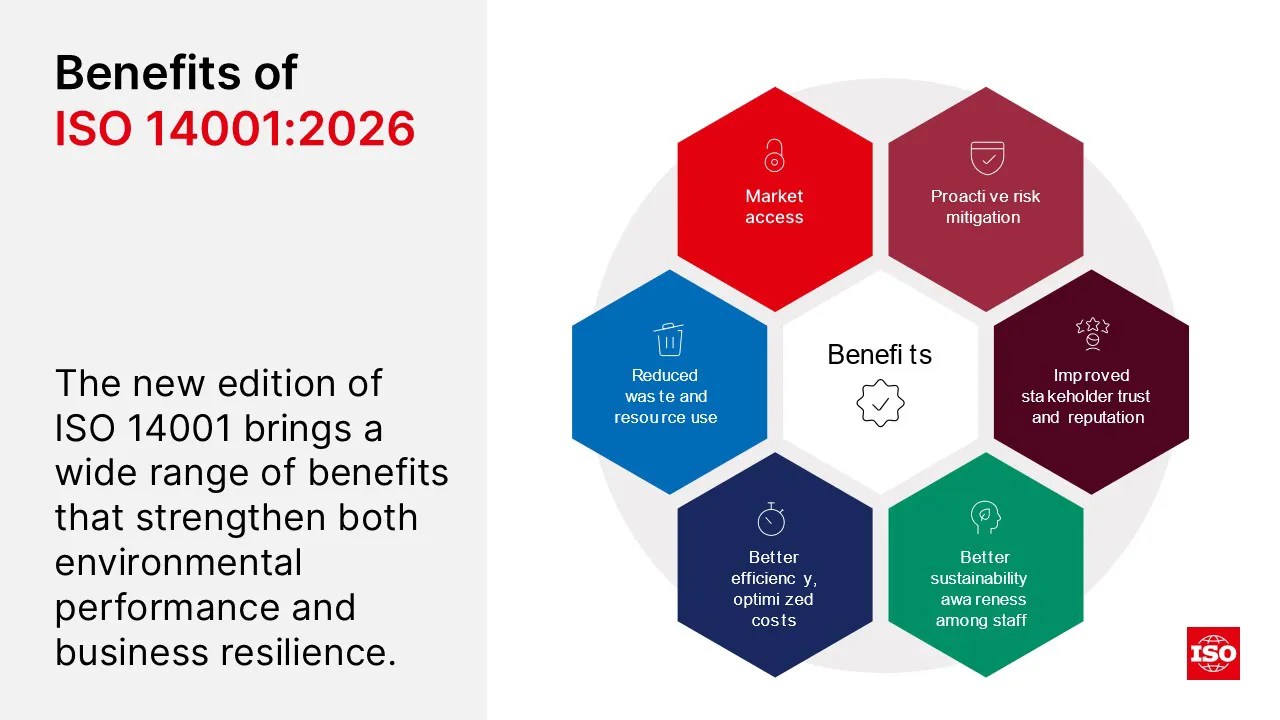
An Environmental Management System (EMS) helps organizations reduce environmental impact, assure regulatory compliance, cut costs, and strengthen their reputation with stakeholders.
Reduced Environmental Impact
An EMS enables organizations to systematically identify and manage their environmental aspects, leading to reduced waste generation, more efficient use of energy and raw materials, and lower greenhouse gas emissions. Over time, this not only minimizes the organization’s environmental footprint but also supports broader sustainability goals.
Regulatory Compliance
By establishing processes to monitor and meet environmental laws and regulations, an EMS helps organizations stay compliant with evolving requirements. This proactive approach reduces the likelihood of violations, fines, and legal complications, while also making audits and reporting more streamlined and manageable.
Cost Savings
Improved resource efficiency is a key outcome of an EMS. By optimizing energy consumption, reducing material waste, and improving operational processes, organizations can significantly lower operating costs. These savings often compound over time, making sustainability initiatives financially beneficial as well.
Improved Reputation
Demonstrating a commitment to environmental responsibility enhances an organization’s credibility and brand image. An EMS signals to customers, investors, regulators, and the public that the organization takes sustainability seriously, helping to build trust, strengthen relationships, and create a competitive advantage in the marketplace.
Where to Find ISO 14001:2026?
As regulations tighten and stakeholders demand transparency, adopting an Environmental Management System (EMS) is quickly shifting from a nice-to-have to a strategic necessity. ISO 14001:2026 is essential for helping organizations build, implement, and continually improve an EMS in a structured, measurable, and credible way.
ISO 14001:2026 is available on the ANSI Webstore and in the following Standards Packages:
- ANSI/ASSP Z10.0 / ISO 14001 / BS ISO 45001 – Occupational Health and Safety Management Package
- BS ISO 45001 / BS 45002-0 / ISO 14001 – Occupational Health and Environmental Management Package
- BS ISO 45001 / BS ISO 45002 / ISO 14001 – Occupational Health and Environmental Management Package
- BS ISO 45001 / ISO 14001 – Environmental and Occupational Health Management Systems Package
- BS ISO 45001 / ISO 9001 / ISO 14001 – Occupational Health and Safety Requirements Package
- ISO 10018 / ISO 9001 / ISO 14001 – Quality and Environmental Management ESG Package
- ISO 14000 Collection 1
- ISO 14000 Collection 2
- ISO 14001 / ISO 14002-1 / ISO 14004 / ISO 14006 – Environmental Management Systems ESG Package
- ISO 14001 / ISO 14004 / ISO 19011 / ISO 14050 – Environmental Management Package
- ISO 14001 / ISO 50001 – Energy and Environmental Management Systems Set
- ISO 26000 Guidance on Social Responsibility and ISO 14000 Collection 1
- ISO 45001 / ISO 14001 – Environmental and Occupational Health and Safety Set
- ISO 45001 / ISO 9001 / ISO 14001 – Occupational Health and Safety Requirements Package
- ISO 50001 / ISO 9001 / ISO 14001 – Energy Quality and Environmental Management Systems Package
- ISO 9001 / ISO 14001 – Quality and Environmental Management Set
- ISO 9001 / ISO 14001 / ISO/IEC 27001 / ISO 31000 / ISO 55001 / ISO 22301 – ISO Requirements Collection
You can also learn more about ISO 14001:2026 in our video: