ISO 1817:2026— Rubber, Vulcanized Or Thermoplastic
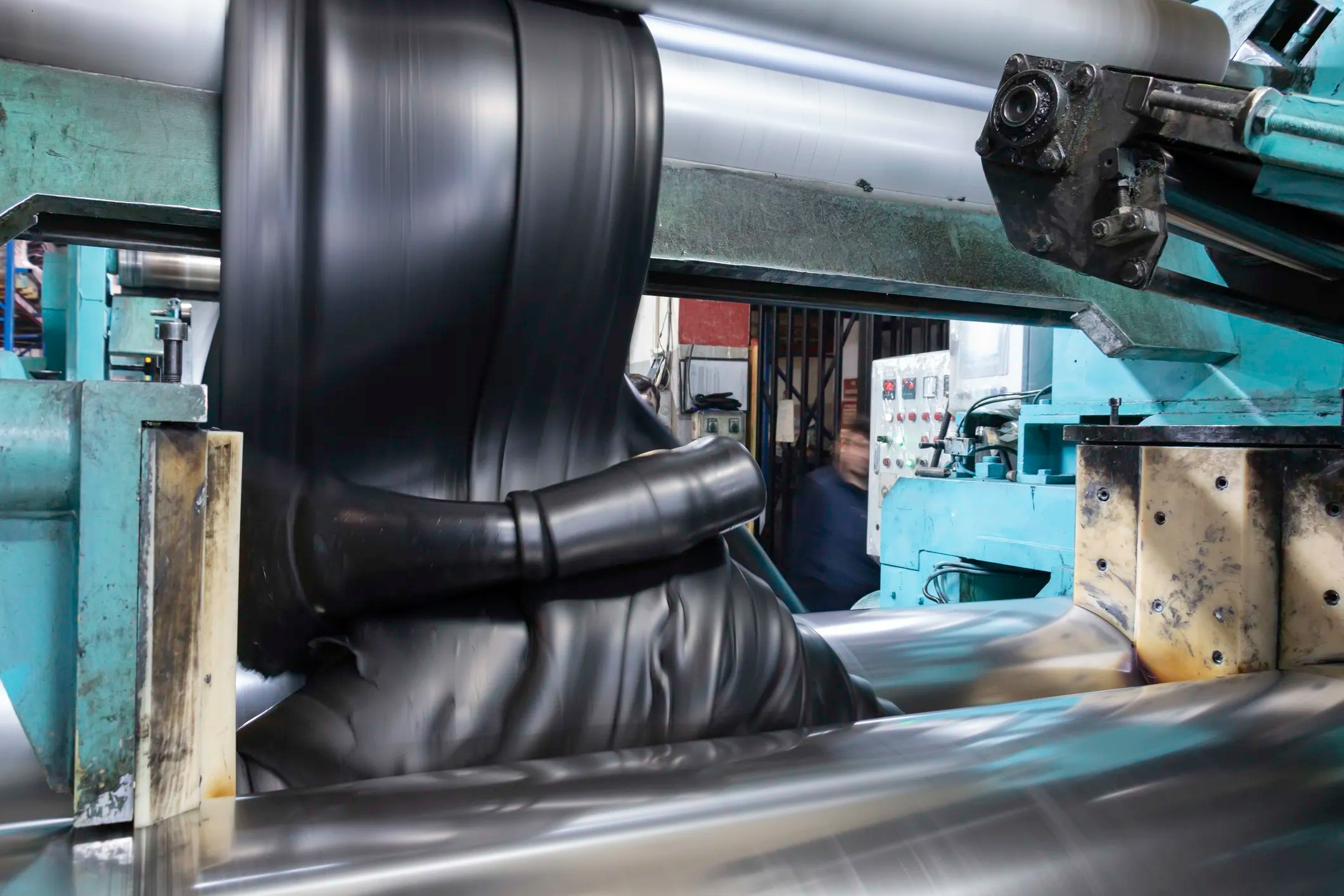
99% of natural rubber is produced from rubber trees (Hevea brasiliensis). When the bark of these trees is tapped, latex is collected and processed into natural rubber, which is used in countless everyday and industrial products. Because rubber can come into contact with various liquids during use, understanding how it responds to those substances is essential for evaluating its performance and safety. ISO 1817:2026, Rubber, Vulcanized Or Thermoplastic – Determination Of The Effect Of Liquids establishes methods for determining the effects of liquids on vulcanized and thermoplastic rubber.
Defining Vulcanized and Thermoplastic Rubbers (TPR)
Vulcanized and thermoplastic rubbers have different properties and respond differently to heat, chemicals, and other environmental conditions. Understanding these differences is important when selecting rubber for products that may come into contact with liquids.
Vulcanized Rubber
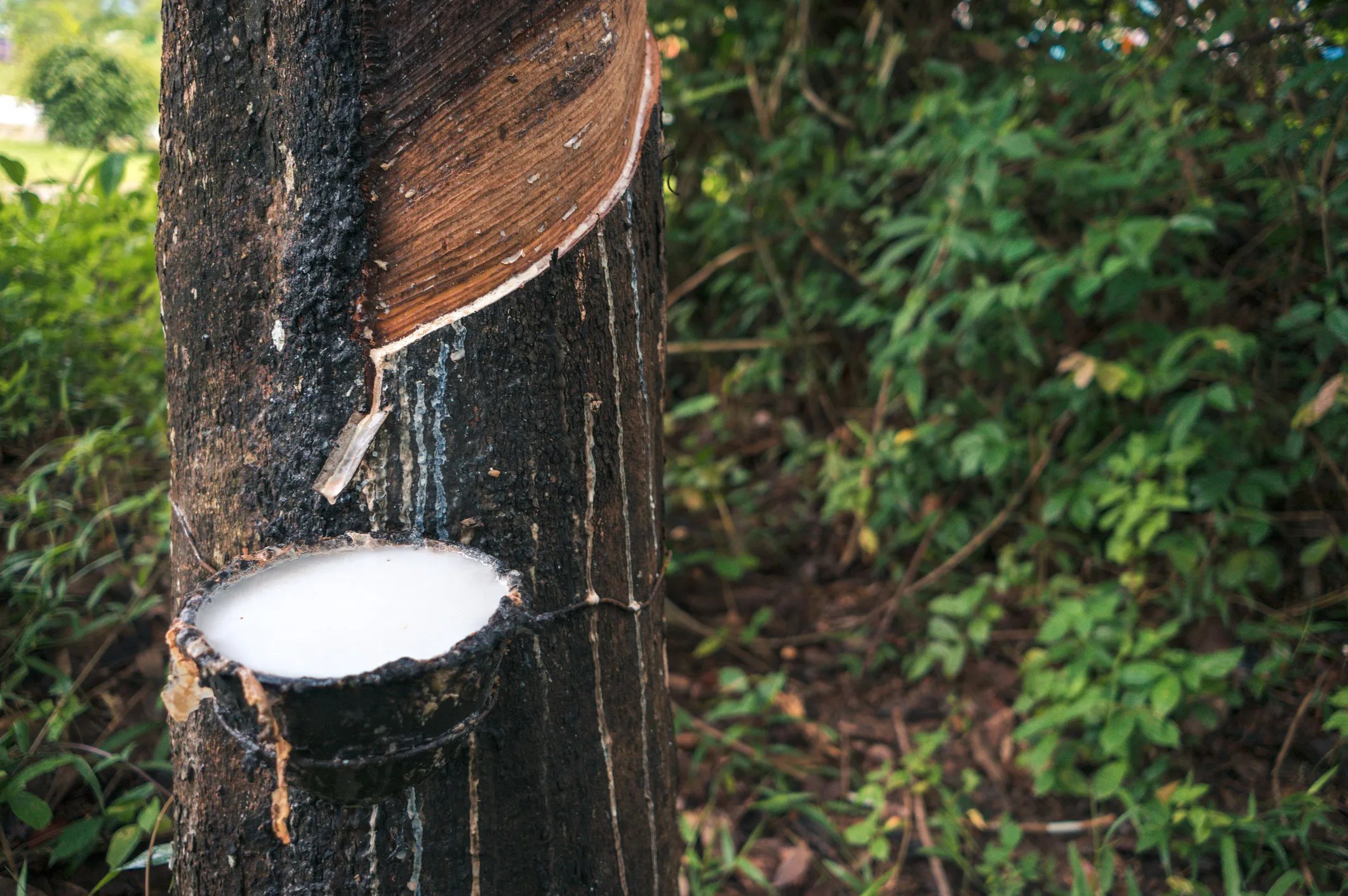
Vulcanized rubber is any type of rubber that has been hardened via the use of heat and sulfur. It is made from a curing process in which the rubber’s elastomers harden in response to heat and sulfur. Most rubber products are vulcanized, since it drastically improves their lifespan, function, and strength. Vulcanized rubber is found in erasers, children’s toys, conveyor belts, shoe soles, insulation, rubber-lined tanks, and rubber hoses. To learn more about the vulcanization process, read Vulcanizing Rubber.
Thermoplastic Rubber (TPR)
Thermoplastic rubber (TPR) is a form of synthetic rubber. When heated, it melts into a liquid and becomes solid when cooled. Unlike natural rubber (latex) extracted from the rubber tree, TPR is manmade from the polymer styrene-butadiene-styrene. Once natural rubber has been vulcanized or cured it cannot be recycled; however, TPR can be recycled and remolded. TPR is used in shoe soles, injection molding, blow molding, extrusion, tires, and calendaring.
Evaluating Rubber Performance
Whether rubber is vulcanized or thermoplastic, exposure to liquids can affect its properties and ultimately its performance in an application. ISO 1817:2026 helps assess these effects by providing methods for determining changes in rubber after contact with liquids.
What Is ISO 1817:2026?
ISO 1817:2026 describes methods to evaluate the resistance of vulcanized and thermoplastic rubbers to the action of liquids. Liquids in the standard include current service liquids (e.g., petroleum derivatives), organic solvents, and chemical reagents. The standard details the methods necessary for determining the changes in the following properties—mass, volume, dimensions, extractable matter, hardness, and tensile stress-strain—after immersions in test liquids and after immersion and drying.
What Is New in the 2026 Edition of ISO 1817?
This ninth edition (ISO 1817:2026) cancels and replaces the eighth edition (ISO 1817:2024), which has been technically revised. ISO 1817:2026 adds the option to use water baths, oil baths, or heat blocks for method B in Clause 4, Apparatus.
The Ancient Origins of Natural Rubber
Roughly around 1600 BCE, the Olmec, Aztecs, and Maya, ancient civilizations in Mesoamerica, were the first to use rubber. They took the latex from the bark of rubber trees and boiled it into a small ball to use in a ballgame, similar to today’s basketball and football. It was discovered that when the tree (Hevea brasilineas) was cut open, it secreted an oozy milky fluid (latex) to heal itself. These trees were originally in South America, near the tropics. Since the discovery of boiling latex into rubber, more complex processes have been used by industries to create bulk rubber, which proved to be the driving force of World War II (1939-1945).
How World War II Accelerated the Development of Synthetic Rubber
Bulk rubber was pertinent during World War II because it allowed for vehicles like Sherman tanks, which contained half a ton of rubber, military airplanes, which contained half a ton of rubber, and battle ships, which contained 20,000 rubber parts, to be used on the battlefield. Rubber plantations in Southeast Asia were under Japanese control, which decimated and halted 90% of the United States access of the natural rubber supply. Since rubber was of vast military importance, and the U.S. had a consumption rate of about 600,000 tons per year, it was clear that the nation needed to find a commercial process to produce synthetic rubber in bulk. Thus, President Franklin D. Roosevelt, in June 1940, formed the Rubber Reserve Company (RRC), which set objectives for stockpiling rubber.
The United States formed an alliance with rubber companies, and, on March 26, 1942, the representatives of the companies, academia, and the U.S. government agreed upon a “mutual recipe” to produce government rubber-styrene (GR-S) rubber to use in great quantity in World War II. The U.S. synthetic rubber industry was able to grow from annual output of 231 tons of general-purpose rubber in 1941 to an output of 70,000 tons a month in 1945.
The rapid development and widespread use of synthetic rubber during World War II demonstrated the material’s importance across industries. Today, rubber is used in applications where its interaction with liquids can affect its performance and service life. ISO 1817:2026 provides methods for evaluating how vulcanized and thermoplastic rubber responds when exposed to various liquids, helping manufacturers and users better understand material performance.
Why Is ISO 1817:2026 Important?
The action of a liquid on vulcanized or thermoplastic rubber can result in:
- Absorption of the liquid by the rubber
- Extraction of soluble constituents (especially plasticizers and antidegradants) from the rubber
- A chemical reaction with the rubber
ISO 1817:2026 is important to measure the physical and chemical properties following immersion and drying of the rubber with a liquid because the rubber’s properties can be profoundly altered, changing the rubber’s tensile strength, extensibility, mass, and hardness.
Where to Find ISO 1817:2026
ISO 1817:2026, Rubber, Vulcanized Or Thermoplastic – Determination Of The Effect Of Liquids is available on the ANSI Webstore, the best place to buy ISO standards.