Hidden Ignition Hazards in Industrial Facilities
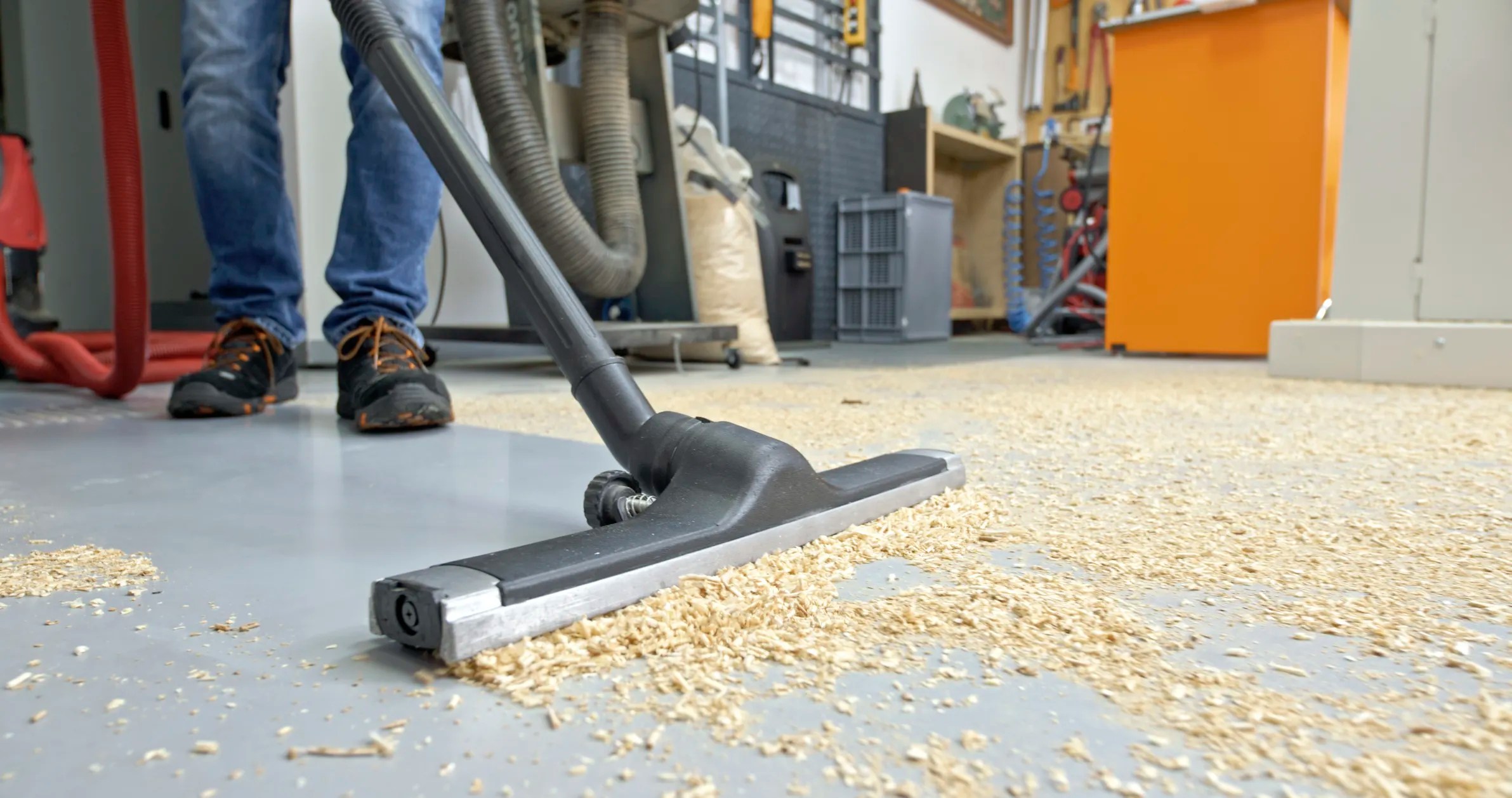
Across many industrial settings, combustible dust dangers are frequently underestimated. Formal risk assessments and large-scale audits often concentrate on primary equipment and obvious fire threats, but fine dust can present a serious hazard. Addressing these concealed risks requires anticipation and prevention, rather than sole reliance on emergency response measures.
What Are the Dangers of Combustible Dust?
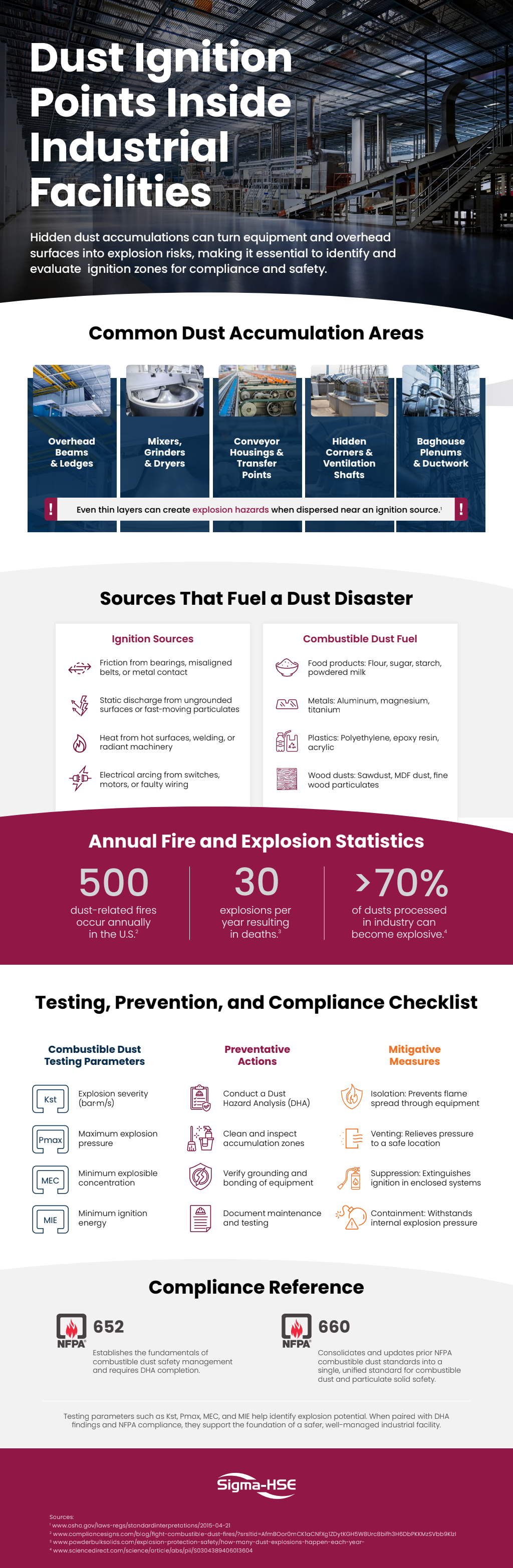
The problem lies in the close connection between dust buildup and ignition sources. Layers of dust may rest undisturbed on structural beams, ductwork, or tucked-away corners. Once an energy source is introduced, such as static discharge, mechanical friction, or overheated surfaces, a rapid combustion event can follow.
Facilities must understand that the danger is not limited to primary machinery. Conveyor enclosures, material transfer areas, and overhead frameworks often fall outside routine cleaning and inspection practices. As thin dust layers accumulate, they create ignition-ready conditions.
Static buildup from moving materials, belt misalignment, or bearing heat can supply the spark to combustible dust. Variables such as particle size, moisture levels, and layering influence how dust responds once exposed to energy.
How to Better Prepare for Dust Hazards
Operations that process powders or bulk solids should operate under a clear, documented strategy. The process starts with a detailed hazard analysis to pinpoint dust risks and chart all potential accumulation points. From there, controls should be implemented to reduce buildup, block ignition pathways through grounding and bonding, strengthen housekeeping practices, and apply explosion protection systems where appropriate. The objective is to sustain safe conditions continuously rather than responding after an event has occurred.
Workforce education and organizational mindset are equally important. Employees should recognize that explosion hazards are not confined to visible spills or large deposits and understand the threats of light coatings of dust . Close coordination among maintenance, operations, and safety teams helps ensure hidden areas are monitored and mitigation measures remain effective.
Regulatory frameworks provide guidance for managing these risks. An advanced safety program combines testing results, on-site observations, and operational data to establish practical risk controls. In this way, identifying and assessing ignition zones becomes an integral part of building long-term operational resilience rather than a simple compliance exercise.
Contributing Author: Mahmoud Hafez, Principal Process Safety Consultant, Sigma-HSE
Mahmoud Hafez is a Principal Process Safety Consultant, working for Sigma-HSE, which provides assessments, studies, analyses and other solutions to increase safety and reduce inefficiencies in your processes. Mahmoud has extensive experience in Dust Hazard Analysis (DHA), HAZID and HAZOP studies, and wider process safety assessments across high-hazard industries. With an MSc in Safety, Risk and Reliability Engineering from Heriot-Watt University, Mahmoud specializes in helping organizations strengthen regulatory compliance and implement effective risk-reduction strategies. Mahmoud is a Certified PHA and HAZOP Leader, an IOSH Chartered Member, a Certified Safety Professional (CSP), a Certified Instructional Trainer (CIT), and a member of multiple professional safety institutions. His work focuses on providing high-quality safety assessments, leading complex safety reviews, and advising clients on practical, cost-effective control measures and long-term operational resilience.