AGA Report No. 3, Part 2: Orifice Meter Installation
In the natural gas industry, even small measurement inaccuracies can create major financial and operational consequences. —often caused by improper installation, poor calibration, or flow disturbances—can result in substantial revenue losses. Because natural gas custody transfer and hydrocarbon accounting depend on precise flow data, accurate metering systems are critical throughout the energy sector. Orifice flow meters remain one of the most widely used technologies for measuring the flow of liquids, gases, and steam due to their reliability and industry acceptance. AGA XQ1601: AGA Report No. 3, Part 2, Orifice Metering of Natural Gas and Other Related Hydrocarbon Fluids – Concentric, Square-edged Orifice Meters, Part 2: Specification and Installation Requirements, Includes Errata (2017) provides design, installation, and construction parameters for orifice meters to assure accurate flow measurement.
What Is an Orifice Meter?
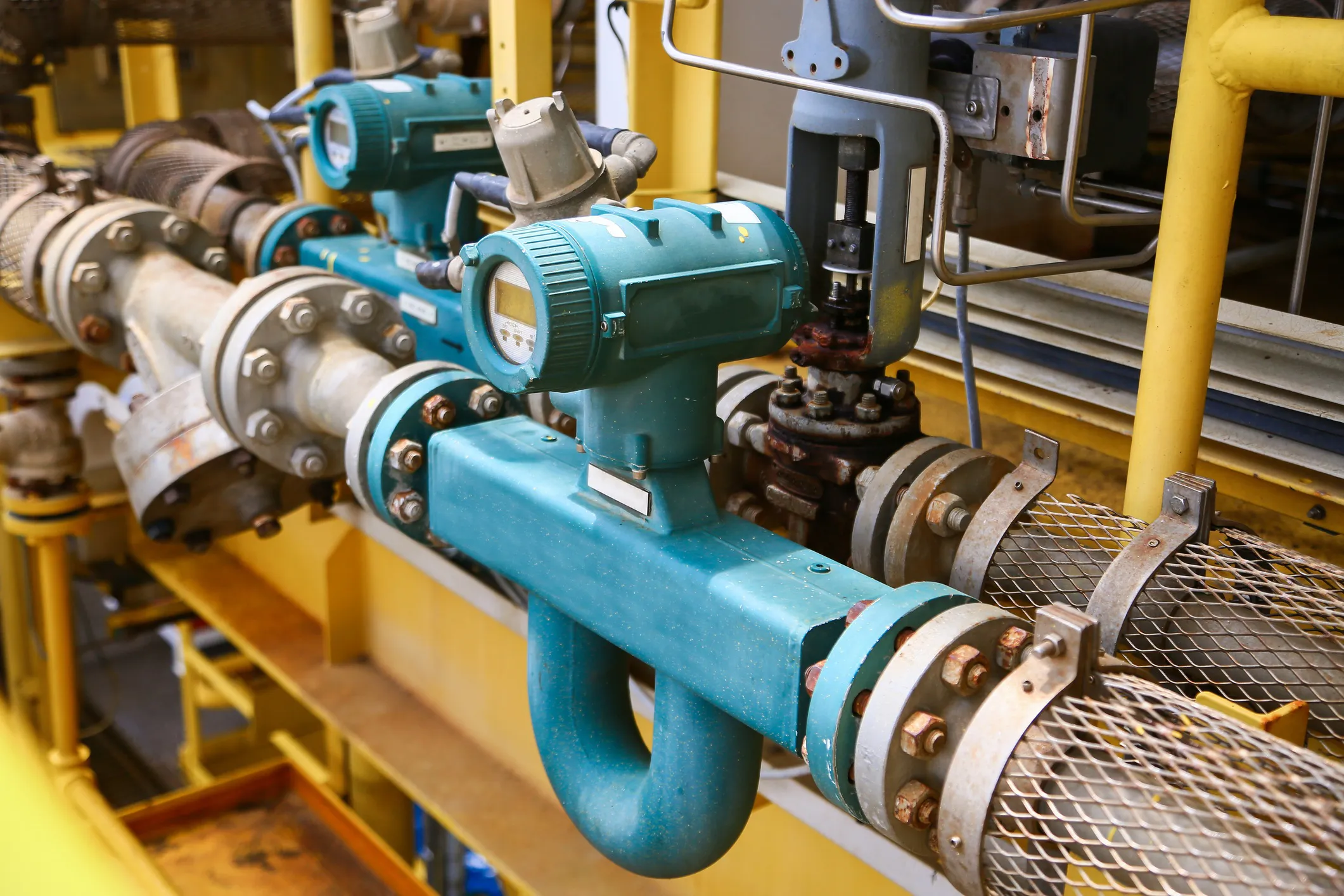
An orifice meter is a differential pressure flow meter used to measure the volumetric flow rate of liquids, gases, or steam in a pipe. Essentially, it measures the pressure drop (differential pressure) as the fluid passes through the orifice plate: a thin square-edged plate with a machined circular bore, concentric with the meter tube ID.
Importance of Orifice Meters
Orifice meters remain one of the most widely used flow measurement systems in the natural gas industry. Their continued use is driven by several advantages:
- Relatively simple mechanical design
- Proven performance history
- Cost-effectiveness for large pipeline systems
- Established regulatory and contractual acceptance
Orifice meters are thus simple, cost-effective devices that provide accurate flow measurements, making them essential tools for process control and monitoring.
What Is AGA XQ1601?
AGA XQ1601is a revised AGA Report No. 3, Part 2. It replaces the previous version of the same American Gas Association (AGA)Report, dated April 2000. It contains changes based on current knowledge of the installation needs for more accurate flow measurement.
AGA XQ1601 sets the standards for orifice metering of natural gas and other hydrocarbon fluids. This document specifically establishes design and installation parameters for measurement of fluid flow using concentric, square edged, flanged tapped orifice meters. It helps assure that orifice metering systems are designed and installed to deliver dependable, repeatable, and accurate measurements under demanding operating conditions.
Who Would Benefit By Using AGA XQ1601
AGA XQ1601 isused by professionals in the natural gas and hydrocarbon industries, including:
- Natural Gas Engineers: For designing, testing, and installing orifice metering systems.
- Measurement Technicians: To assure proper installation and compliance with specifications for flow measurement.
- Pipeline and Processing Operators: For monitoring and verifying the accuracy of hydrocarbon fluid measurements.
- Technical Compliance Specialists: To verify that metering stations adhere to industry standards.
By helping standardize installation and measurement practices, AGA XQ1601 supports greater accuracy, operational consistency, and confidence in natural gas flow measurement across the energy industry.
Where to Find AGA XQ1601
AGA XQ1601: AGA Report No. 3, Part 2, Orifice Metering of Natural Gas and Other Related Hydrocarbon Fluids – Concentric, Square-edged Orifice Meters, Part 2: Specification and Installation Requirements, Includes Errata (2017) is available on the ANSI Webstore.