AWS D1.3/D1.3M:2025—Structural Welding Code – Sheet Steel
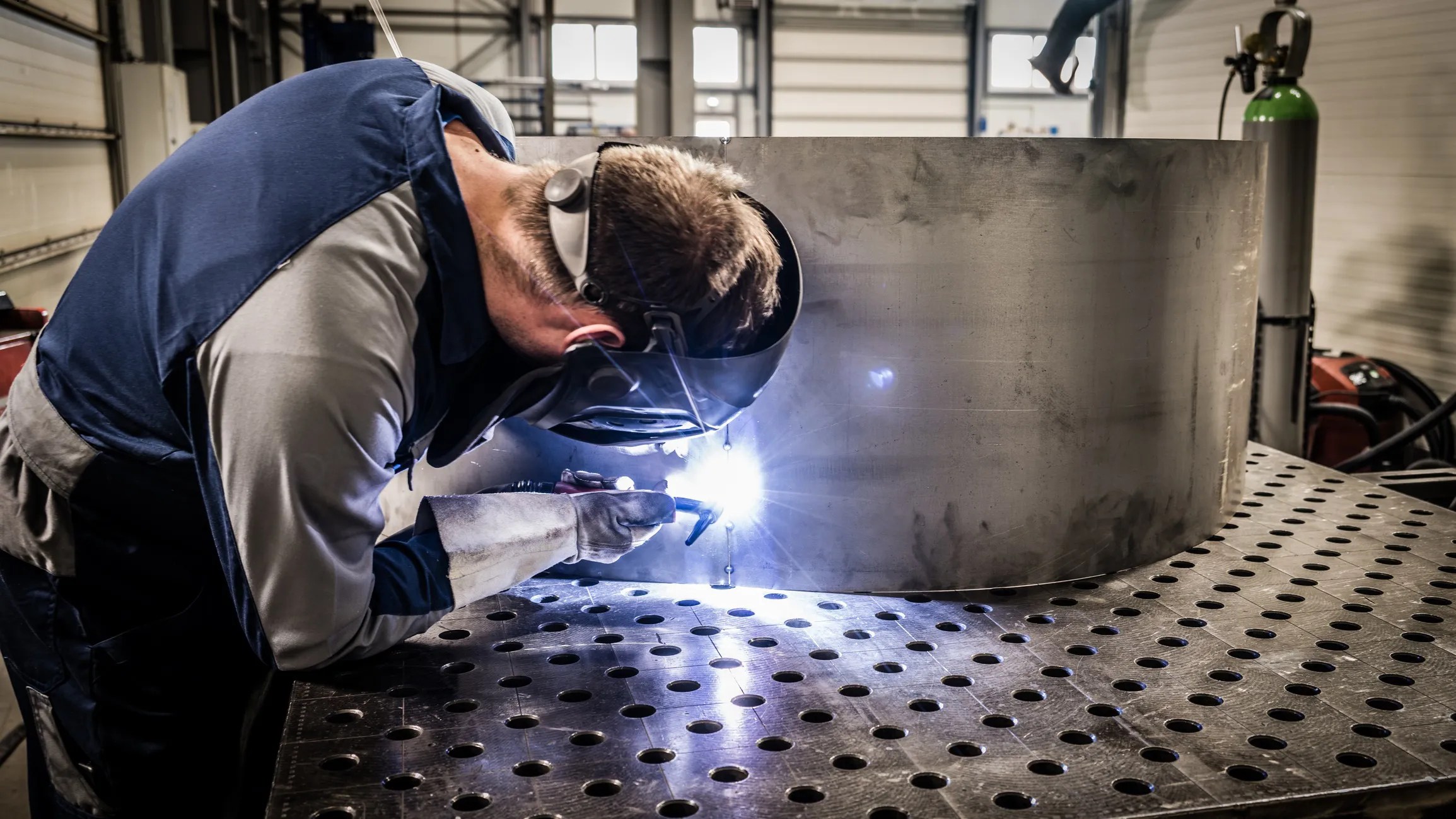
Welding sheet steel is a critical process in construction, manufacturing, automotive, and infrastructure projects. Whether you are a fabricator, welder, or engineer, understanding the standards and best practices for welding sheet steel is essential to assure the integrity and safety of your structures. Developed by the American Welding Society (AWS), AWS D1.3/D1.3M:2025—Structural Welding Code – Sheet Steel is a structural welding code specifically focused on sheet steel.
What Is Sheet Steel & What Is It Used for?
Sheet steel is general category for metals that are approximately 0.018 to 0.250 inches in thickness. Thus, the gauge or thickness determines the designation of when metal foil becomes metal sheet and when metal sheet becomes metal plate.
Sheet steel offers strength, formability, and versatility—which makes it widely used in construction, manufacturing, automotive, and infrastructure projects. Through its longevity and ability to create complex, lightweight, and weather-resistant components, sheet steel offers cost-effectiveness and energy efficiency.
What Are the Changes in the 2025 Edition of AWS D1.3?
The following is a summary of the most significant technical revisions contained in AWS D1.3/D1.3M:2025:
- “Clause 1: Added a new clause and commentary on restricting filler metals when used in the “as-welded” condition. Added new commentary when using filler metals with the Submerged Arc Welding process. Revised the Code to allow for welding through multiple sheets as an accepted practice in the installation of steel deck at corner laps where 4 thicknesses of sheet are welded to the structural support.
- Clause 3: Added two new definitions, procedure qualification records and qualifier.
- Clause 4: The strength provisions in Clause 4.3 were deleted and the user is now referred to AISI S100 which reflects the most current research on strength of welded joints in sheet steel. Revised Arc Spot Welds to permit multiple thicknesses instead of double thicknesses.
- Clause 6: Clause 6 was completely revised to provide clarity and better organization of the Clause. Added a new clause to account for retests. Placed all Welding Performance Qualification Essential Variables in a new Table. A Figure in Tables 6.2 and 6.4 was updated to better depict the joint detail. Revised Figures to clarify code requirements.
- Clause 7: A new clause was added, Base Metal Preheat and Interpass Requirements for Welding Sheet Steel to Structural Steel, to codify the base metal preheat and interpass temperature requirements for welding sheet steel to structural steel. In addition, the requirements for groove and fillet welding sheet steel to structural steel have been differentiated from spot, seam, and plug welds.
- Annex A: The Annex A was revised with the clause numbers for this edition of D1.3/D1.3M and D1.1/ D1.1M, Structural Welding Code—Steel.”
In sum, the 2025 updates in AWS D1.3 include revisions on filler metal usage, welding practices, performance qualifications, strength provisions, base metal preheat requirements, and new definitions, along with reorganized clauses and improved clarity in figures and references.
What Is AWS D1.3/D1.3M:2025?
AWS D1.3/D1.3M:2025 contains the requirements for arc welding of structural sheet/strip steels, including cold formed members, hereafter collectively referred to as “sheet steel,” which are equal to or less than 3/16 in [5 mm] in nominal thickness.
AWS D1.3/D1.3M:2025 covers the requirements associated with welding sheet steel having a minimum specified yield point no greater than 80 ksi [550 MPa]. The code requirements cover any welded joint made from the commonly used structural quality low-carbon hot rolled and cold rolled sheet and strip steel with or without zinc coating (galvanized). Clause 1 includes general provisions, Clause 4 design, Clause 5 prequalification, Clause 6 qualification, Clause 7 fabrication, and Clause 8 inspection.
In addition, welding hollow structural sections (HSS), also called tubular members, with wall thickness less than 1/8 in [3 mm] are included in the scope of this code. Design requirements for HSS member connections are not in the scope of AWS D1.3/D1.3M:2025. When this code is stipulated in contract documents, conformance with all its provisions shall be required, except for those provisions that the Engineer or contract documents specifically modifies or exempts.
What Is the Relationship of AWS D1.3 to AWS D1.1?
AWS D1.3 focuses on welding thin sheet steel (low-carbon hot-rolled, cold-rolled, galvanized) for structural purposes, unlike AWS D1.1 which covers heavier structural steel. AWS D1.1:2025 – Changes to Structural Welding Code – Steel explains AWS D1.1 in more detail.
When AWS D1.3 is used in conjunction with AWS D1.1, conformance with the applicable provisions of Annex A of AWS D1.3 shall apply (see also Table 1.1). Two weld types unique to sheet steel, arc spot, and arc seam are included in this code.
Where to Find AWS D1.3/D1.3M:2025?
AWS D1.3/D1.3M:2025—Structural Welding Code – Sheet Steel is available on the ANSI Webstore.