
ANSI/ASHRAE/IES 90.1-2025: Energy Standard For Buildings
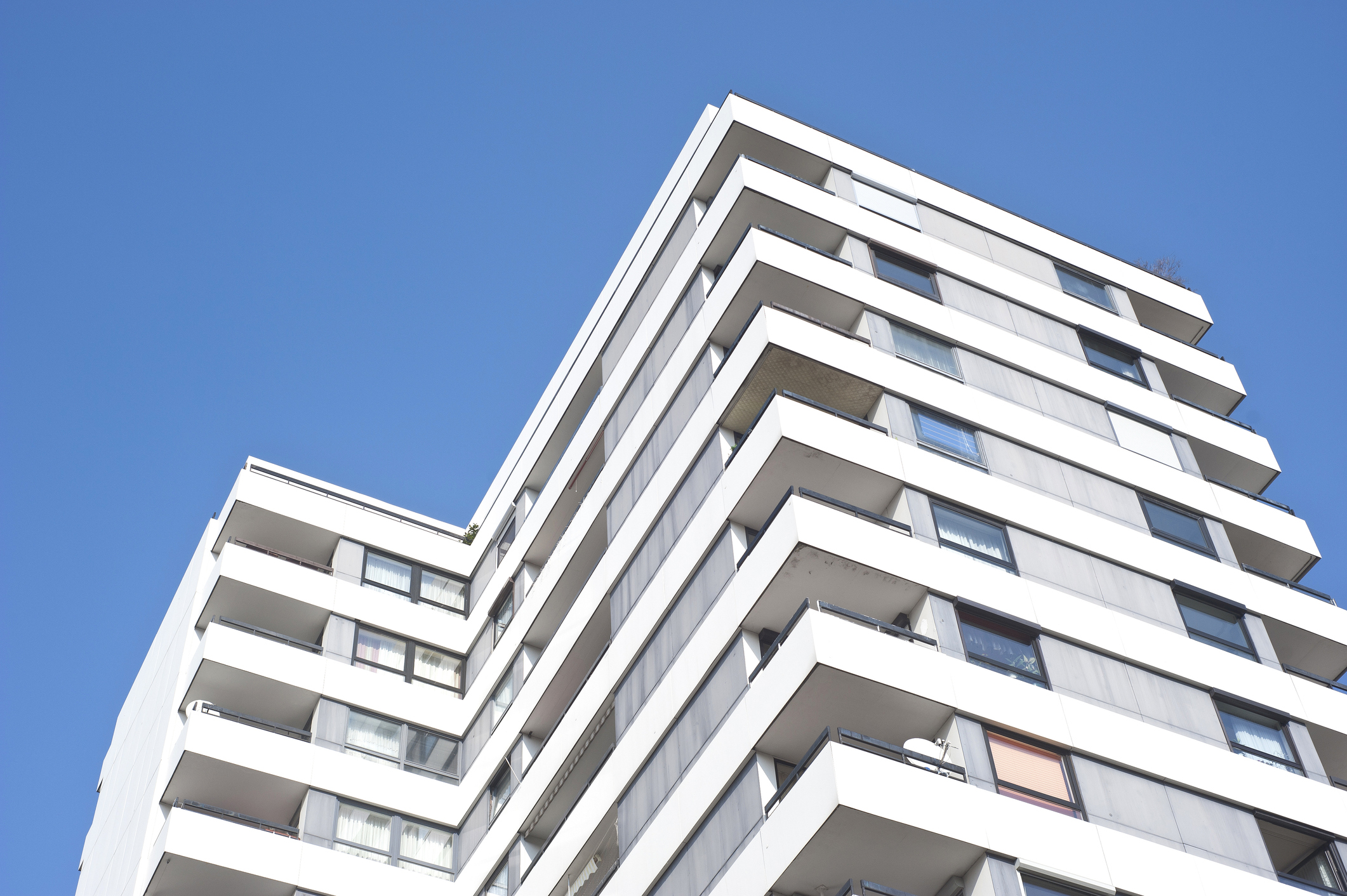
The energy standard for buildings has been revised: ANSI/ASHRAE/IES 90.1-2025, Energy Standard For Sites And Buildings Except Low-Rise Residential Buildings (I-P Edition).
The earliest human shelters guarded Paleolithic gatherers with basic protection from the elements and had few amenities. Today, things are quite different, as buildings comprise complex systems that provide occupants with comfortable, safe, and attractive living and working environments. However, this necessitates superior architecture and engineering designs and quality construction practices. In result, lighting, major appliances, electronics, and heating, ventilation, and air conditioning (HVAC) can consume a great deal of energy.
As noted by the U.S. Department of Energy (DOE), the buildings sector accounts for about 76% of electricity use and 40% of all U.S. primary energy use and associated greenhouse gas (GHG) emissions. To face energy and environmental challenges, it is crucial to reduce energy consumption in buildings. This also can lower costs to building owners and tenants.
What Does ASHRAE 90.1 Cover?
ANSI/ASHRAE/IES 90.1-2025 provides minimum energy-efficient requirements for the design, construction, operation, and maintenance of buildings and sites and their utilization of on-site renewable energy resources. It applies to new buildings and new portions of buildings and their systems, new systems and equipment in existing buildings, new systems and equipment that are part of a site, and new equipment or building systems that are part of industrial or manufacturing processes. The standard also provides criteria for determining compliance with these specifications.
ANSI/ASHRAE/IES 90.1-2025 does not apply to single-family houses, multifamily structures of three stories or fewer above grade, manufactured houses (mobile homes), manufactured houses (modular), and buildings that use neither electricity nor fossil fuel.
Changes to ANSI/ASHRAE/IES 90.1-2025
The new revision of this American National Standard incorporated over 100 addenda approved since the publication of the 2022 edition. Collectively, these addenda achieve advanced energy efficiency levels, expand options for compliance, and create better alignment between Standard 90.1, industry practice, and related ASHRAE standards. Major changes in this update include:
- Flowcharts at the beginning of each major section were updated to improve consistency and provide a better quick view of the processes described in writing.
- Climate zone tables are now located exclusively online, as are many of the tables utilized for compliance with informative appendices.
- The standard replaces three terms—“code official,” “building official,” and “authority having jurisdiction”—with a single updated definition of “authority having jurisdiction.”
- The committee collaborated with SSPC 300 to improve the clarity of commissioning requirements throughout Sections 4 through 10.
- Insulation levels for opaque elements (walls, roofs, and floors) and fenestration (windows and skylights) were updated to increase envelope stringency. These updates reflect commercially feasible construction.
- Fenestration provisions were clarified to allow for performance impacts at high elevations; new requirements were included to address the proper installation of rigid insulation boards, particularly for assemblies located above the roof deck; and an updated methodology was introduced for calculating effective U-factors for steel-framed walls, and where continuous insulation is interrupted by cladding supports.
- Minimum efficiency requirements were increased for a wide range of equipment such that the standard reflects the latest federal test procedures and industry rating standards for products that include unitary systems, water-source heat pumps, cooling towers, fans, and dedicated outdoor air systems. Included are new metrics for unitary products with the new IVEC cooling annualized metric and, for the first time, an annualized metric for heat pumps called IVHE (IVHEC for cold climates). These metrics go into effect in 2029.
- A new IEER metric was added for water-source heat pumps.
- A major update was made to integrate DOE regulated products throughout Section 6 and 7 tables, where appropriate.
- Fan power limits were tightened across most system types, with a new procedure for fan system power limits reinforcing the standard’s emphasis on distribution system efficiency.
- Pool heating provisions were revised to prioritize recovered and renewable heat sources before conventional heating methods are engaged.
- New provisions were added for gas-fired heat pumps and gas-fired heat pump-water heaters to meet prescriptive requirements and qualify for energy credits.
- Dehumidification and ventilation requirements were updated to align with recent changes to ANSI/ ASHRAE Standard 62.1, assuring energy efficiency while supporting updated indoor air quality targets.
- Several addenda introduced changes to emphasize system-level efficiency measures rather than component-only improvements—for example, expanded requirements for energy recovery, updated economizer provisions (including targeted exceptions for specific healthcare applications), lower minimum VAV airflow turndown ratios to improve part-load operation in buildings considering occupied conditions, and new requirements for unoccupied setback controls in health care spaces.
- Section 9, “Lighting,” requirements were significantly restructured to clearly distinguish lighting power density limits from control requirements and update interior and exterior lighting power density values.
- Revisions were made to the decorative and specialty lighting values to reflect widespread LED adoption.
- Exterior lighting zones were revised to align with current IES guidance.
- Control requirements were strengthened through expanded daylight-responsive controls, updated occupancy provisions, and revised thresholds that trigger automatic control requirements.
- In Section 8, “Power,” new provisions were introduced for electric vehicle spaces, receptacle controls, and energy monitoring. Where direct digital control systems are installed, a requirement was added for data to be graphically displayed to encourage effective monitoring of building energy use.
- Renewable energy provisions were expanded and clarified, including higher minimum prescriptive on-site renewable capacity requirements based on an updated cost-effectiveness analysis, and the introduction of limited off-site renewable energy compliance options by climate zone.
- The energy credit framework in Section 11 continues to evolve toward a more flexible, performance-oriented structure. New credits were added for system-level strategies, including use of the Mechanical System Per formance Rating Method and thermal energy storage for both heating and cooling.
- Additional revisions were made to the overall number of credits required by building type based on updated analyses that considered real-world performance factors.
- The Energy Cost Budget compliance path was refined to improve consistency with prescriptive requirements.
- Updated modeling rules align envelope, mechanical, and lighting assumptions in the budget building more closely with current Section 5, 6, and 9 requirements.
- New requirements specify that, where available, actual utility rates or contractual energy prices must be used instead of generic national averages.
- Modeling of fan power in baseline systems was altered due to changes in equipment efficiency metrics and rating conventions.
- Through multiple addenda, various changes were introduced to refine ECB requirements regarding building orientation, shading assumptions, and the treatment of renewable energy.
- Appendix G—Performance Rating Method Appendix G received significant updates aimed at reinforcing its role as a stable, transparent performance baseline, while accommodating modern design approaches. Baseline HVAC system definitions were expanded and refined, including new distinctions based on heat ing source and updated zoning and economizer rules. Modeling requirements for elevators, dehumidification, ventilation, and purchased heating and cooling were revised to better reflect measured energy use and current international standards. Simulation software requirements were updated to align with the latest version of ASHRAE Standard 140, and prior references to specific tools were replaced with performance-based qualification criteria. Building performance factors were updated in consideration of the energy efficiency improvements that have been introduced since the last published standard.
- Several informative appendices were added or expanded to support jurisdictions and project teams seeking alternatives to traditional energy-cost-based compliance for an emissions reduction approach. These include optional pathways focused on source energy, carbon emissions, end-use performance factors, and zero-emission building outcomes, using either prescriptive or performance-based approaches.
- Appendix M provides a performance compliance pathway, based on Appendix G, which may be adopted by a jurisdiction or rating authority to achieve net zero operational energy emission (NZOEE) buildings. The performance pathway also includes building performance factors (BPFs) calculated on a site energy basis to ensure a minimum level of energy efficiency performance. The greenhouse gas emissions covered in Informative Appendix M include both on-site and upstream emissions associated with building energy usage; they do not include emissions associated with other building use operations, such as refrigerant leak age or water usage.
- Appendix N provides a prescriptive compliance pathway that may be adopted by a jurisdiction or rating authority to achieve NZOEE buildings; it also incorporates the NZOEE performance path of Informative Appendix M. The prescriptive option is limited to buildings with common loads and standard, simple HVAC systems; compliance can be shown through emissions calculations or by meeting minimum renewable energy requirements. The greenhouse gas emissions covered in Informative Appendix N include both on-site and upstream emissions associated with building energy usage; they do not include emissions associated with other building use operations, such as refrigerant leakage or water usage.
- Informative Appendix O provides an optional approach for implementing Appendix G that is particularly useful for projects with atypical load profiles such as data centers. This appendix provides end-use-specific performance factors (EUPFs) that can be used in place of a single BPF, allowing compliance targets to reflect the distribution of energy end uses in a given project. While Appendix G continues to use energy cost as its compliance metric, the end-use performance factors are also provided for site energy, source energy, cost, and carbon emissions for jurisdictions that elect to apply them
ANSI/ASHRAE/IES 90.1-2025, Energy Standard For Sites And Buildings Except Low-Rise Residential Buildings is available on the ANSI Webstore.
ASHRAE 90.1 and Energy Conservation Regulation
Many in the United States know the ANSI/ASHRAE/IES 90.1 standard as one of the two baseline energy conservation codes adopted by regulatory authorities throughout the nation. The other is the International Energy Conservation Code (ICC IECC). The IECC, ASHRAE 90.1, or a combination of both are adopted by almost all states. You can see a list of all state building energy code adoptions here.
Both baseline energy conservation codes are available together as the ICC IECC / ANSI/ASHRAE/IES 90.1 – Energy Conservation Set.
Energy Standard for Low-Rise Residential Buildings
Users should note that there is an exception to this standard noted explicitly in its title: low-rise residential buildings. The purpose of ANSI/ASHRAE/IES 90.1-2022 is:
“To establish the minimum energy efficiency requirements of buildings other than low-rise residential buildings.”
Low-rise residential buildings are defined here as:
“single-family houses, multifamily structures of three stories or fewer above grade, manufactured houses (mobile homes), and manufactured houses (modular).”
Energy efficiency guidelines for these buildings are specified in a separate document, ANSI/ASHRAE/IES Standard 90.2-2024, High-Performance Energy Design of Residential Buildings, which is also available on the ANSI Webstore.
If you’d like to learn more about this standard, please refer to our post ANSI/ASHRAE/IES 90.2-2024, High-Performance Energy Design of Residential Buildings.
Changes to Past Editions of ANSI/ASHRAE/IES 90.1
Past revisions of ANSI/ASHRAE/IES 90.1 have undergone significant changes, which you can find below.
Questions About ANSI/ASHRAE/IES 90.1-2025?
ANSI/ASHRAE/IES 90.1-2025 was jointly developed by ASHRAE and the Illuminating Engineering Society.
Please direct any technical questions relating to this American National Standard to the developer. You can find the contact information for all ANSI-accredited standards developers here: List of ANSI-Accredited Standards Developers (ASDs).
For further information, please refer to: Who to Contact for Standards Related Questions.





need to know rule on switching 50% of duplex receptacle outlets in open and closed office spaces.
thank you, much appreciated.
John. Ricciardi.
hi there , im taking my masters electrician unlimited exam in alabama, they said i can take the ans/ashrae 90.1 i am able to take my exam with the referance guide, where might i find that book ? thank you steven Griesbaum
A printable PDF of ANSI/ASHRAE/IES 90.1-2022 is available for purchase on the ANSI Webstore.