ANSI/ASHRAE/IES 90.2-2024, High-Performance Energy Design Of Residential Buildings
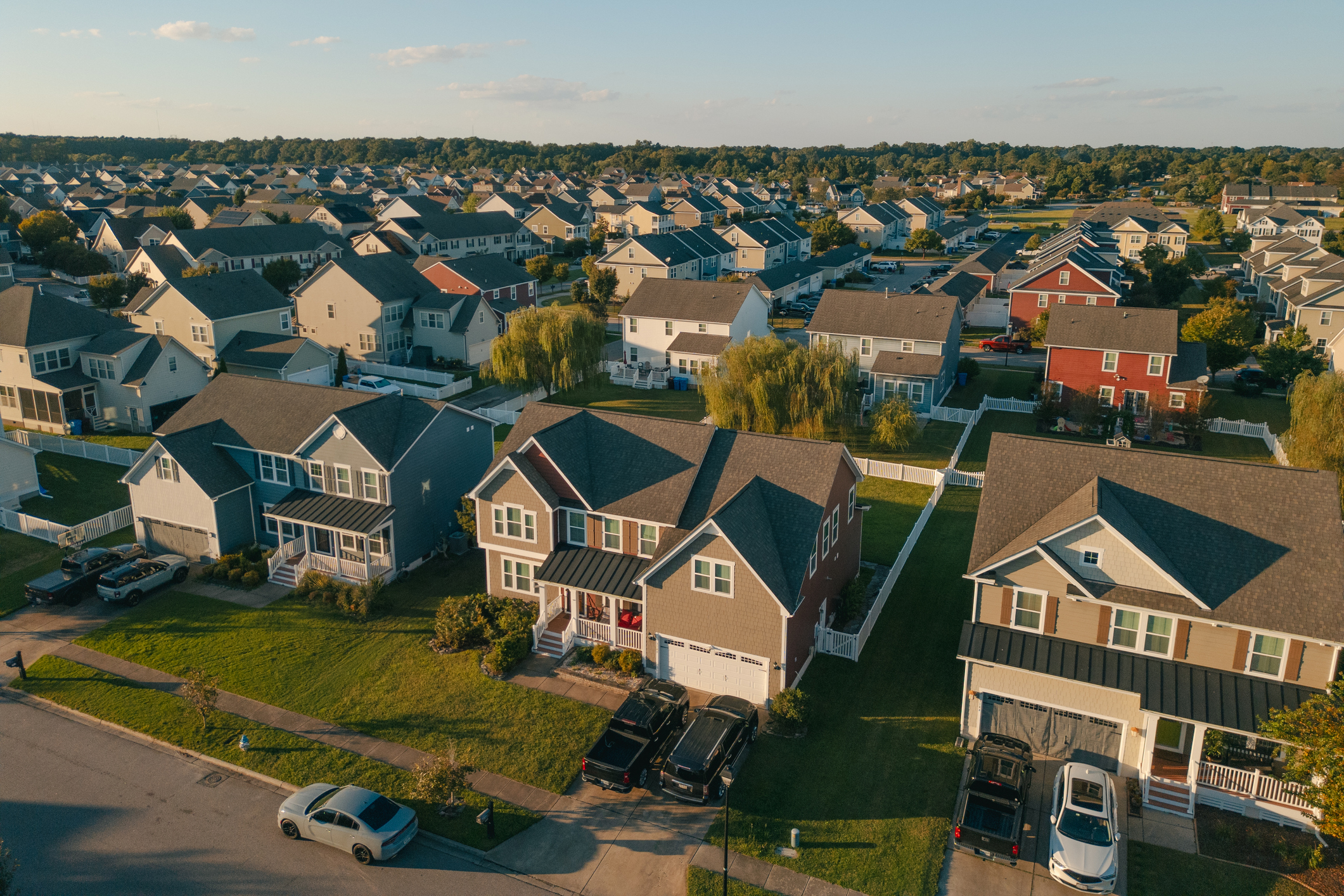
Energy is the vigor of the universe. Literally the ability to do work, nothing can happen without energy. Whether deriving from the heat and illumination carried by the sun’s rays or the chemical energy produced in our bodies to carry out an assortment of biological tasks, energy is rampant throughout the earth. Even in the home, as residencies need to maintain an optimal air and water temperature and air quality, energy efficiency is a key interest.
ANSI/ASHRAE 90.2-2024, High-Performance Energy Design of Residential Buildings, an American National Standard, establishes whole-building design requirements that enable high levels of energy performance and greenhouse gas emission performance for residential buildings.
While any energy-efficient addition to a building can be favorable, it is often ideal to consider the whole building when designing and building or renovating a house. Much like how the environment is shaped by energy-dependent systems influenced by interconnected, contingent components, an entire home or building comprises a system influenced by a variety of variables, such as local climate, insulation, water heating, windows, and other factors within the building envelope.
What Does ANSI/ASHRAE/IES 90.2-2024 Cover?
ANSI/ASHRAE 90.2-2024 covers the design, construction, and verification for new residential buildings and their systems, as well as new portions of existing residential buildings and their systems that use renewable and nonrenewable forms of energy. Specifically, for one- and two-family dwelling units, multifamily structures of three stories or fewer above grade, and outbuildings, this standard offers guidance for the building envelope, HVAC and related systems, service hot-water systems, major appliances, lighting systems, snow and ice melt systems, and pools and spas.
Please note, however, that ANSI/ASHRAE 90.2-2024 does not apply to specific procedures for the operation, maintenance, and use of residential buildings or transient housing (e.g. hotels, motels, nursing homes, jails, dormitories, and barracks).
Changes to ANSI/ASHRAE/IES 90.2-2024
The ANSI/ASHRAE/IES Standard 90.2-2024 revision reflects an ongoing commitment to achieving high energy performance buildings. In addition to providing leadership in energy efficiency, this standard enables progress toward decarbonization goals.
- New Title, Purpose, and Scope
- The standard title was changed from “Energy-Efficient Design Of Low-Rise Residential Buildings” to “High-Performance Energy Design of Residential Buildings.” The new title clarifies that Standard 90.2 addresses not only energy efficiency but also energy performance, which includes considerations such as emissions and indoor environmental quality (IEQ).
- Under the new scope, the standard now covers multifamily residential buildings of any height; the reference to “three stories or less” has been removed.
- New performance requirements for substantial energy alterations (retrofits) in Section 5.3
- Changes throughout the standard to clarify the differences between dwelling units and common areas, and their respective requirements
- New lighting control requirements for common areas distinct from dwelling units
- New thermal envelope requirements to specifically address common areas
- Changes to Section 6 to extend energy efficiency requirements and implement new CO2e targets for operational emissions. These requirements reduce net building energy consumption by about half, compared to Standard 90.2-2018, as a steppingstone to net zero energy and net zero carbon emissions design and operation.
- New limits for the maximum Energy Rating Index (ERI) and CO2e Rating Index (CRI) consistent with the most ambitious recommendations of national and international organizations
- Thresholds for the ERI and CRI (not counting renewable energy) when renewable energy systems are utilized on- or off-site to ensure that the use of renewable energy does not compromise efficiency
- A new Informative Appendix K for jurisdictions wanting to enforce net zero energy and zero carbon requirements
- Increases in stringency for air leakage requirements and updates to Normative Appendix C to accommodate different test methods as appropriate
- Expansion of indoor environmental quality requirements in Section 7.3 to create greater alignment with ASHRAE Standard 62.2, with additional provisions to address air cleaning, garages, material emissions, radon, and kitchen exhaust hood
- This revision is intended to promote the harmonization of energy efficiency and IEQ requirements.
- Sections 7.3.4 through 7.3.8 examine common residential design elements where IEQ is a relevant issue and how they can be addressed by balancing health concerns and energy consumption concerns.
- Various changes to Section 7 lighting requirements
- In Section 7.3, improvements to lighting quality with the use of dim-to-warm and tunable light sources
- In Section 7.5, higher-efficacy requirements for permanent lighting and more detailed requirements for lighting controls in common areas
- New requirements for the provision of charging infrastructure for electric vehicles (EVs) in Section 7
- Standard 90.2 compliance now requires every parking space to have EV supply equipment installed or be equipped with the electrical connections of an EV-ready space for future installation.
- Standard 90.2 compliance now requires every parking space to have EV supply equipment installed or be equipped with the electrical connections of an EV-ready space for future installation.
ANSI/ASHRAE 90.2-2024, High-Performance Energy Design of Residential Buildings is available on the ANSI Webstore.
Changes to ANSI/ASHRAE 90.2-2018
The previous revision of this standard, ANSI/ASHRAE 90.2-2018, was substantial as it offered a completely new approach to delivered residential building energy performance. According to the foreword of ANSI/ASHRAE 90.2-2018, the leadership standard “seeks to deliver residential building energy performance that is at least 50% more efficient than the energy efficiency defined by the 2006 IECC.”
To meet this objective, ANSI/ASHRAE 90.2-2018 went through the following changes:
- New definitions were added to support the proper performance modeling, energy analyses, and use of the standard.
- The standard clarifies which elements apply to new construction, additions and alterations.
- Guidance for additions and alterations was moved to new Section 5.
- Added international climate data from ANSI/ASHRAE 169: Climatic Data For Building Design Standards when using this standard in climates outside the U.S.
- For prescriptive tables of envelope performance data used for on-site power generation and compliance modeling, new clarifications address mass wall guidelines in warm, humid climates, and heated slabs.
- Performance specifications for ground-source heat pumps were added.
- Alterations clarify the minimum lighting efficiency provisions for single-family, large single family, and multifamily homes.
- New guidance was provided for verification of envelope airtightness, mechanical ventilation in single-family and multifamily structures, and on-site power systems.
- Section 9.1, “Compliance Reporting,” was revised to place an emphasis on key building data and reports (energy modeling, load calculations, on-site power systems performance, envelope, appliance loads, and mechanical, lighting, and water systems components) necessary for compliance determination.
- Additional clarifications to software guidance were added to encourage software developers to develop and deliver software that has accurate, repeatable, and comparable results. These clarifications were added because ANSI/ASHRAE 90.2-2018 highly prioritizes guidance for modeling software.
- New normative Appendix D, “Installation Requirements,” was added to address proper installation techniques for critical components of buildings that provide thermal resistance.
- Clarifications were added to address lighting modeling and multizonal building air-leakage testing procedures.
Questions About ANSI/ASHRAE/IES 90.2-2024?
ANSI/ASHRAE/IES 90.2-2024 was jointly developed by ASHRAE and the Illuminating Engineering Society (IES).
Please direct any technical questions relating to this American National Standard to the developer. You can find the contact information for all ANSI-accredited standards developers here: List of ANSI-Accredited Standards Developers (ASDs).
For further information, please refer to: Who to Contact for Standards Related Questions.