AWS D17.1/D17.2: Aerospace Welding Standards Set
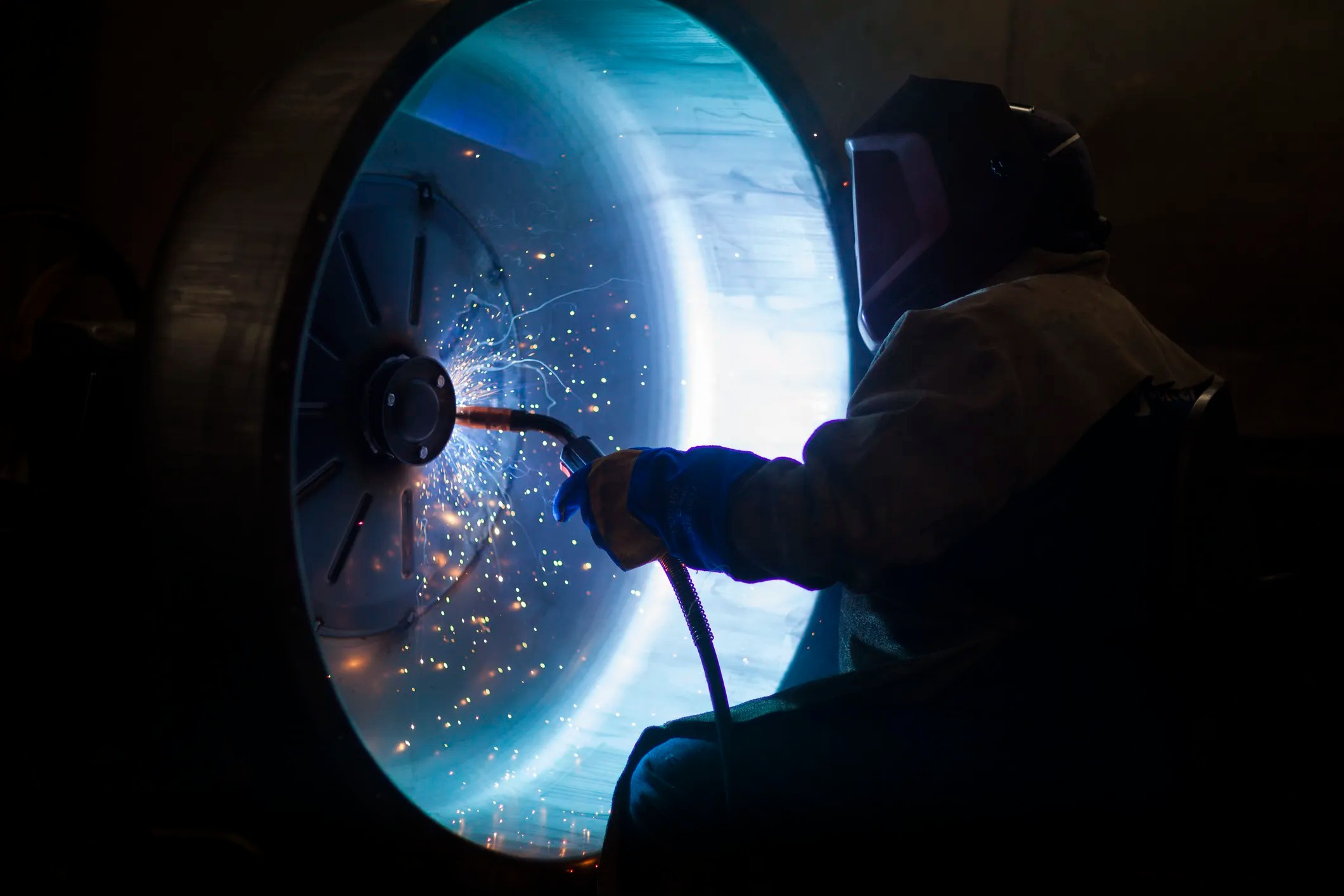
Extensive, high-quality welding applications are required in the manufacturing of helicopters, airplanes, unmanned drones, space vehicles, military jets, and guided missiles. Any defects in the welds, however, can compromise the structural integrity of the aircraft, leading to catastrophic failure, such as fatal crashes, carbon monoxide poisoning, or the inability to land or take off. Since precision and quality are essential in the aerospace and defense industry, welders need to be highly trained in specialized welding techniques and procedures.
AWS D17.1/D17.1M / AWS D17.2/D17.2M – Welding for Aerospace Applications Set provides a comprehensive standards framework that covers technical requirements for welding aircraft and space hardware.
Aerospace and Defense Welders
In the aerospace and defense industry, welding creates lightweight, ultra-strong, and airtight joints capable of surviving extreme speeds, massive pressure differentials, and intense thermal cycling. By joining various components, such as wings, fuselage, and tail sections, aerospace welding creates a strong and durable structure, often made from titanium, aluminum, magnesium, specialty steels, tungsten, beryllium, copper, and other alloys. Everything from the aircraft’s structural elements to engine parts, exhaust system, hydraulic and fuel lines, and fuel tanks requires the application of various welding processes—even composite elements of an aircraft rely on welding for making and repairing molds.
Because the performance of welding components can affect the reliability of aircraft and space hardware, they must meet defined requirements for fabrication, inspection, and acceptance. Aerospace and defense welding is therefore highly regulated, often requiring laser or electron-beam welding techniques, with strict training, and adherence to standards. Most aerospace welding done in the U.S. is executed to an AWS code, standard or specification such as: AWS D17.1/D17.1M:2024 and AWS D17.2/D17.2M:2019.
What Is the AWS D17.1/D17.1M / AWS D17.2/D17.2M – Welding for Aerospace Applications Set?
The AWS D17.1/D17.1M / AWS D17.2/D17.2M – Welding for Aerospace Applications Set provides guidance on resistance and fusion welding for aerospace hardware. These two core, strictly regulated metal-joining processes are utilized in aerospace manufacturing and repair.
By addressing these distinct welding processes in one resource, this set helps aerospace manufactures, welding engineers, quality assurance personnel, inspections, and other professionals involved in the fabrication or evaluation of aerospace hardware. This Standards Set includes: AWS D17.1/D17.1M:2024 and AWS D17.2/D17.2M:2019.
What Is AWS D17.1/D17.1M:2024?
AWS D17.1/D17.1M:2024 provides general welding requirements for welding aircraft and space hardware. It includes the fusion welding [e.g., such as Gas Tungsten Arc Welding (GTAW/TIG) and related arc/beam processes] of aluminum-based, nickel-based, iron-based, cobalt-based, magnesium-based, and titanium-based alloys using electric arc and high energy beam processes. The standard emphasizes qualified welding procedures (WPQ/WPS), joint preparation, shielding gas, and heat input.
AWS D17.1/D17.1M:2024 also covers requirements for welding design, certified personnel and procedure qualification, fabrication, inspection, and strict acceptance criteria for aerospace, support, non-flight hardware, and crewed spaceflight hardware. Additional requirements in this standard detail repair welding of existing hardware.
What Is AWS D17.2/D17.2M:2019?
AWS D17.2/D17.2M:2019 provides the general resistance welding requirements for aerospace hardware. It includes resistance spot and resistance seam welding of aluminum, magnesium, iron, nickel, cobalt, and titanium-based alloys. AWS D17.2/D17.2M:2019 also covers requirements for machine and welding schedule qualification, production witness samples, and inspection and acceptance criteria for aerospace hardware.
This standard places a heavy emphasis on machine qualification, validated weld schedules, welding current, timing, electrode force and condition, production witness samples, and process repeatability.
Where to Find Aerospace Welding Standards
AWS D17.1/D17.1M / AWS D17.2/D17.2M – Welding for Aerospace Applications Set is available on the ANSI Webstore.
Learn More about Welding for Aerospace
You can learn more about aerospace welding in our blog posts: AWS D17.1:2024 – Fusion Welding for Aerospace Applications and Aerospace Welding Standards.