
How Valentine’s Day Became Commercialized

Valentine’s Day has become one of the most commercially profitable holidays of the year. 83% of those celebrating Valentine’s Day plan to purchase a gift for a significant other (with spending on gifts for romantic partners expected to reach $14.5 billion), and an additional 58% plan to purchase gifts for other family members such as kids, parents or siblings, for a total of $4.5 billion in expected spending. Marketing campaigns have thus masterfully linked gift-giving with the demonstration of deep affection. As advertising and marketing continue to evolve, international (ISO) standards are pivotal in assuring that companies remain committed to ethical practices, operational quality, and accurate research.
How Did the Commercialization of Valentine’s Day Begin?
By the 1400s, friends and couples throughout Europe were exchanging handwritten poems, a precursor to today’s greeting cards. This practice came to the New World in the 1700s, which was about the time commercially printed cards were increasing in popularity.
When entrepreneur Esther Howland of Massachusetts came across an imported card in the 1840s, she was inspired to improve on its beautiful but expensive design. Her creation of gilded lace, wafer paper, and cupid ornaments led to the first mass-produced Valentine’s Day cards in America. She sold these cards through her business, which is considered one of the first major steps in transforming Valentine’s Day from a personal tradition into a consumer-driven event.
The success of Howland’s cards opened the door for other companies to tap into the market. By the turn of the 20th century, greeting cards had become a staple of Valentine’s Day, and soon other products followed.
The Rise of Roses, Chocolates, and Jewelry
As the 20th century progressed, marketers realized that Valentine’s Day didn’t have to be limited to cards alone. In the 1920s and 1930s, the introduction of lavish floral arrangements, particularly roses, as well as chocolates and jewelry, created a new wave of consumerism surrounding the holiday. This expansion was thanks, in part, to powerful advertising campaigns that made these gifts synonymous with love.
For instance, the chocolate industry capitalized on Valentine’s Day as a way to sell chocolates in heart-shaped boxes. The message was simple: love is best expressed through the giving of luxurious, sweet treats. The same can be said for jewelers, who began associating diamonds and jewelry with romantic gestures, thus adding another layer to the commercialization of the day. Additionally, the floral industry capitalized on the holiday, with red roses, symbolizing love and passion as a quintessential Valentine’s gift. Florists, working with advertisers, reinforced the message that gifting flowers was not just thoughtful but necessary.
By the mid-20th century, Valentine’s Day had firmly established itself as a consumer-driven holiday. The rise of mass media, including radio, TV, and later the internet, helped reinforce the idea that Valentine’s Day required people to spend money on gifts for their loved ones.
How Advertising Transformed Valentine’s Day into a Consumer Holiday
The power of advertising played a pivotal role in Valentine’s Day’s commercialization. After World War II (1939-1945), the American advertising industry began to latch onto the idea that holidays like Christmas and Valentine’s Day were opportunities to encourage people to spend money. In the case of Valentine’s Day, ads started promoting the idea that true love could be measured by the extravagance of your gift.
Additionally, as the American economy boomed in the post-war years, people had more disposable income to spend on non-essential items. This created the perfect environment for marketers to push the idea that love could be expressed through material goods, helping create the foundation for Valentine’s Day commercial success. Hence, with the surge in advertising around Valentine’s Day, businesses and brands were able to focus heavily on creating consistent, quality messaging.
The Commercial Growth of Valentine’s Day in the 21st Century
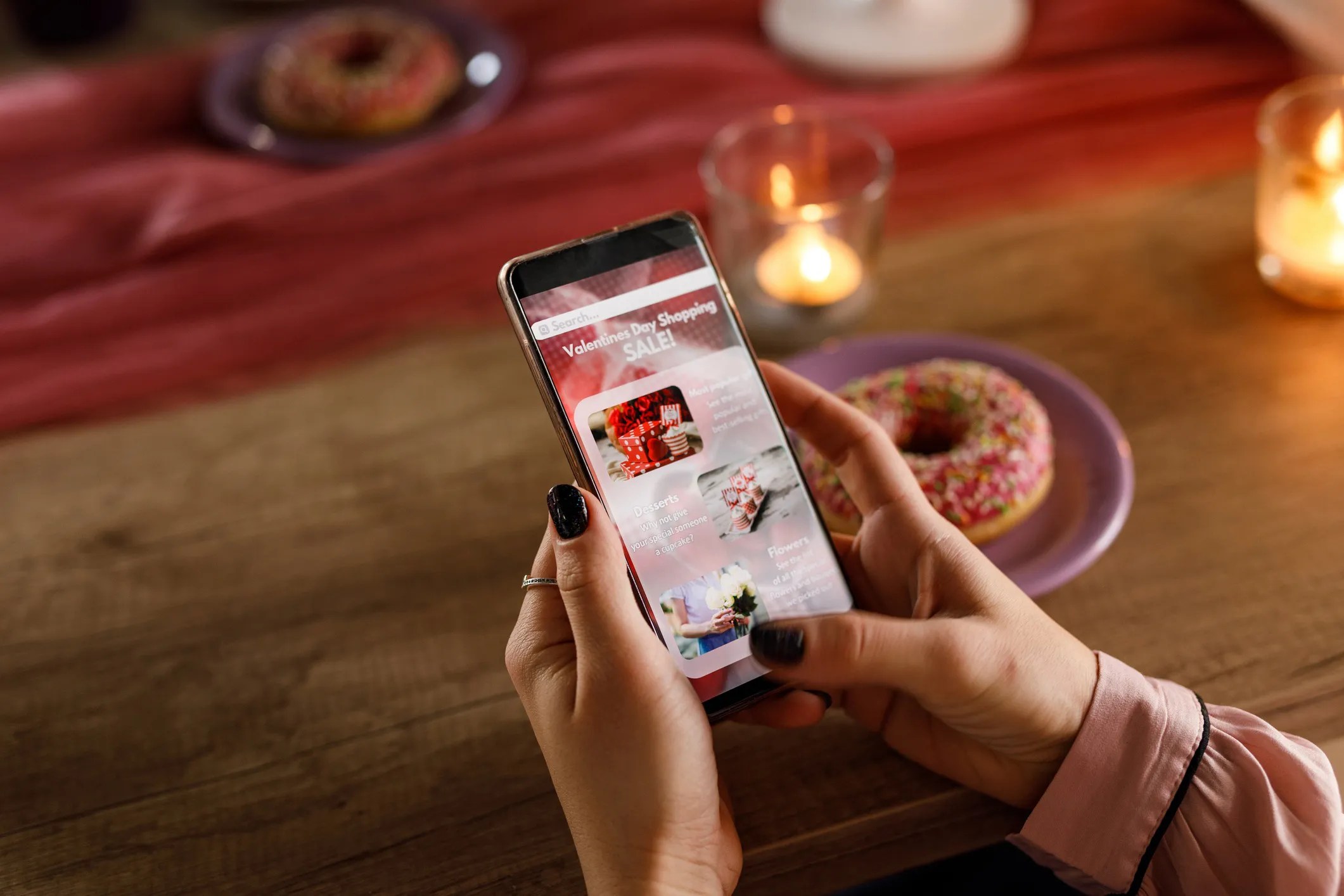
In the 21st century, the internet, social media, and influencer culture have also fueled Valentine’s Day’s commercial growth. Brands, from small businesses to multinational corporations, now target consumers through clever campaigns across Facebook, Instagram, and TikTok. The hashtag #ValentinesDay, for instance, is flooded with sponsored posts, discounts, and promotions that encourage consumers to buy into the idea that love can be demonstrated through products and experiences. In 2025, American consumers spent a record $27.5 billion on Valentine’s Day gifts and are expected to spend a record $29.1 billion on Valentine’s Day in 2026.
As consumer spending on Valentine’s Day continues to reach new heights, assuring ethical practices and consistency in marketing becomes increasingly important to meet the growing demand and maintain trust. International (ISO) standards are therefore crucial for assuring ethical practices, reliability, and consistency in the marketing world.
Key ISO Standards for Advertising and Marketing
Advertising and marketing campaigns for holidays like Valentine’s Day shape consumer behavior and perceptions of love and relationships. If not done responsibly, they can foster unrealistic expectations and/or promote unhealthy consumerism. Assuring ethical and quality international (ISO) standards builds trust, protects brands, and creates a more transparent, sustainable market. Here are key ISO standards that govern the advertising industry:
ISO 20252:2019—Market, opinion and social research, including insights and data analytics – Vocabulary and service requirements
ISO 20252:2019 establishes terms, definitions and service requirements for service providers conducting market, opinion and social research. It covers the entire research process from project design and data collection to analysis and reporting. In the context of Valentine’s Day, businesses could use ISO 20252:2019 to better understand consumer behavior, tailoring their advertising strategies to maximize reach and impact.
You can learn more about ISO 20252:2019 in our blog post: ISO 20252:2019 – Market, Opinion, And Social Research – Vocabulary And Service Requirements.
ISO 9001:2015—Quality management systems – Requirements
ISO 9001:2015 can be applied to advertising agencies by establishing a Quality Management System (QMS) that streamlines workflows for campaign development, client communication, and performance tracking. In the context of Valentine’s Day, advertising agencies can use ISO 9001:2015 to assure that all campaigns—from digital ads to traditional print—meet quality benchmarks and align with client expectations.
You can learn more about ISO 9001:2015 in our blog posts Why Is ISO 9001 the Universal Standard? and ISO 9001:2015 – Benefits for an Organization.
ISO 20671-1:2021—Brand evaluation – Part 1: Principles and fundamental
ISO 20671-1:2021 is designed for evaluating the strength and value of a brand. Cocoa or floral companies, who dominate the Valentine’s Day market, can use this standard to assess their brand’s positioning and effectiveness in reaching consumers.
ISO 10668:2010—Brand valuation – Requirements for monetary brand valuation
ISO 10668:2010 specifies a framework for brand valuation, including objectives, bases of valuation, approaches to valuation, methods of valuation and sourcing of quality data and assumptions. For advertisers, ISO 10668:2010 provides a structured way to assess the financial value of their brands, which can be valuable for companies using Valentine’s Day to drive brand prestige.
Craft Your Perfect Valentine’s Day with Love, Meaning, and Standards
Whether you are sending a heartfelt card, buying a box of chocolates, shopping for a diamond necklace, spending time with loved ones, or enjoying a fancy dinner, it is up to you to decide what Valentine’s Day means. For some, it is a personal day to express affection; for others, it is a chance to join in the collective celebration that fills the world with flowers, chocolates, and standards that keep us safe.
You can discover more standards on the ANSI Webstore.
Additionally, you can learn more about the history of the holiday and standards pertaining to cards, chocolate, and flowers in our blog post: Valentine’s Day: History, Traditions & Safety Standards.