SAE AMS 7032-2022: Metal AM Machine Qualification
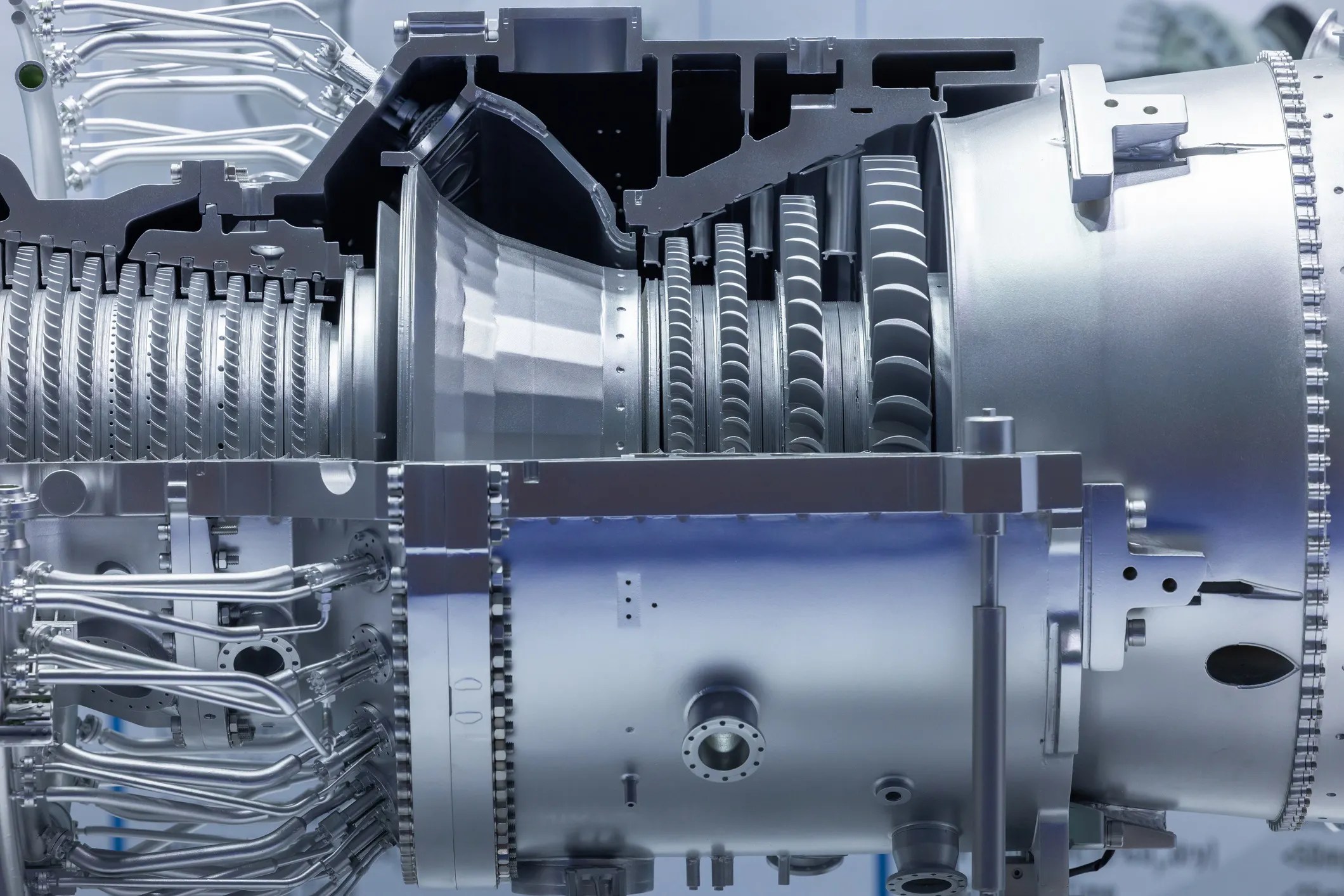
Additive manufacturing (AM) is frequently classified as a special process because the quality of its outputs cannot always be completely verified through inspection alone. In other words, internal structures, layer bonding, and material consolidation can be difficult or expensive to evaluate in every finished part. As a result, qualifying the equipment and establishing process control are pivotal to assuring consistent material quality. SAE AMS 7032-2022, Machine Qualification for Fusion-Based Metal Additive Manufacturing provides technical information on the requirements for qualifying a metal AM machine that is suitable for producing aerospace-grade material.
Importance of Machine Qualification in Aerospace
In the aerospace industry, a minor defects, such as cracks, porosity, and dimensional inaccuracies, can cause catastrophic failure. Qualification demonstrates that a machine can produce flight-critical components to tight tolerances (often down to ±0.0001 inches) every single time. It assures that manufacturing equipment—such as 5-axis CNC mills, laser powder bed fusion (LPBF) additive manufacturing systems, and coordinate measuring machines (CMMs)—can repeatedly produce components within ultra-tight geometric and thermal tolerances.
Moreover, this rigorous quality process is essential in aerospace manufacturing because it assures parts are safe, repeatable, and compliant, demonstrating that equipment is ready for a specified production application. There are generally three stages to machine qualification, and SAE AMS 7032-2022 covers the first two.
What Is SAE AMS 7032-2022?
SAE AMS 7032-2022 defines a series of requirements that results in a specific additive manufacturing (AM) machine qualified to produce material in compliance to an aerospace materials specification. Although there are three qualification milestones for AM machines; this standard focuses only on the initial two stages: installation qualification and operational qualification.
Who Should Use SAE AMS 7032-2022?
The intended users of SAE AMS 7032-2022 are organizations that will directly produce these aerospace-grade parts, or by those responsible for overseeing their production and therefore have a vested interest in verifying the performance of additive manufacturing machines.
The IQ/OQ/PQ Framework in Aerospace AM
Metal additive manufacturing (AM) machine qualification requirements are process intensive. It includes three sequential steps— installation qualification (IQ), operational qualification (OQ), and performance qualification (PQ)—that aim to prove the equipment consistently produces products meeting quality requirements.
Installation Qualification (IQ)
IQ confirms that the that the machine, utilities, environmental controls, and software are properly installed and operates within defined baseline conditions. Essentially, it establishes the baseline readiness of the manufacturing system.
Operational Qualification (OQ)
OQ evaluates the machine’s operating range. It tests critical process parameters, such as laser power, scan speed, and hatch spacing, to establish process control and identify potential failure modes. This stage identifies which variables affect part performance.
Performance Qualification (PQ)
PQ evaluates if the process can consistently produce parts that meet requirements under normal production conditions, including dimensional accuracy and mechanical properties across builds and batches.
In aerospace production, the IQ/OQ/PQ stages offer a structured, data-backed approach to qualifying that AM equipment and processes. It shifts confidence away from inspection alone and toward controlled, repeatable process performance.
Where to Find SAE AMS 7032-2022
SAE AMS 7032-2022, Machine Qualification for Fusion-Based Metal Additive Manufacturing is available on the ANSI Webstore.
You can learn more about AM in aerospace in our blog post, Additive Manufacturing in the Aerospace Industry.