Beyond the Barrier: Designing Containment Systems That Protect What Matters Most

In sanitary processing environments, sterility is not achieved through a single action. It requires continuous attention from the moment ingredients enter the facility through final packaging. Effective containment safeguards this expectation. It defends product integrity, supports regulatory compliance, and reinforces the customer trust.
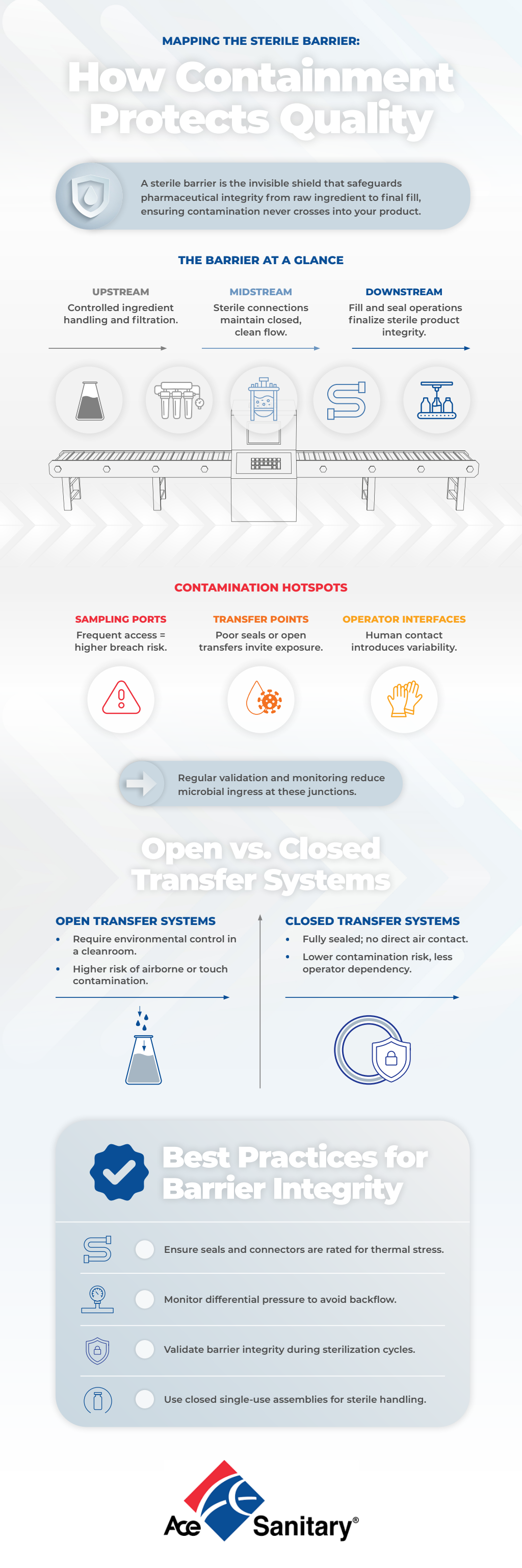
The process starts with incoming raw materials. Before blending, transferring, or filtering begins, controls must be established to limit exposure. The sterile boundary is formed at this early stage, shaped by equipment configuration, material compatibility, and overall system design. Components built for hygienic performance, featuring smooth finishes, reduced dead legs, and validated material selection, strengthen the process against contamination risks later in production.
As materials progress through the system, additional variables emerge. Transfer lines, sampling ports, and operator touchpoints can all present vulnerabilities. A robust containment strategy anticipates these areas by minimizing open interventions and maintaining secure connections throughout.
Consistency is essential. Every time a connection is assembled or adjusted, sterility is either preserved or put at risk. Selecting appropriate components, applying accurate installation practices, and confirming proper alignment all contribute to dependable performance.
Closed transfer solutions add another layer of protection by separating the product from the surrounding environment. Unlike open processes that depend heavily on controlled spaces and precise manual handling, closed systems significantly reduce exposure. Limiting air interaction and operator involvement decreases variability and helps maintain uniform product quality. This method can also streamline operations by lowering cleaning requirements and shortening revalidation timelines.
External conditions further influence containment system integrity. Changes in pressure, temperature variations, and repeated sterilization cycles can strain seals and connection points. Materials must be capable of withstanding these stresses while retaining flexibility and strength. Ongoing inspection and preventative maintenance help ensure continued reliability.
Containment is not simply a piece of equipment added to a line. It represents a comprehensive approach embedded in every hose, fitting, and connection that guides product through the process. When each element is aligned with sterility objectives, the overall system operates with greater assurance. Preserving a reliable sterile barrier goes beyond excluding contaminants. It protects product quality and upholds the confidence of those who rely on it.
Contributing Author: Jill Nagg, Marketing Manager, Ace Sanitary
Jill Nagg is the Marketing Manager for Ace Sanitary, a leading manufacturer of sanitary and high-purity liquid transfer solutions. Jill oversees brand strategy, digital initiatives, and go-to-market campaigns translating into product sales. With two decades of experience in B2B manufacturing, she’s passionate about transforming complex technical products into clear, customer-driven value stories that grow market share.