
ASTM E70-24—pH of Aqueous Solutions With Glass Electrode
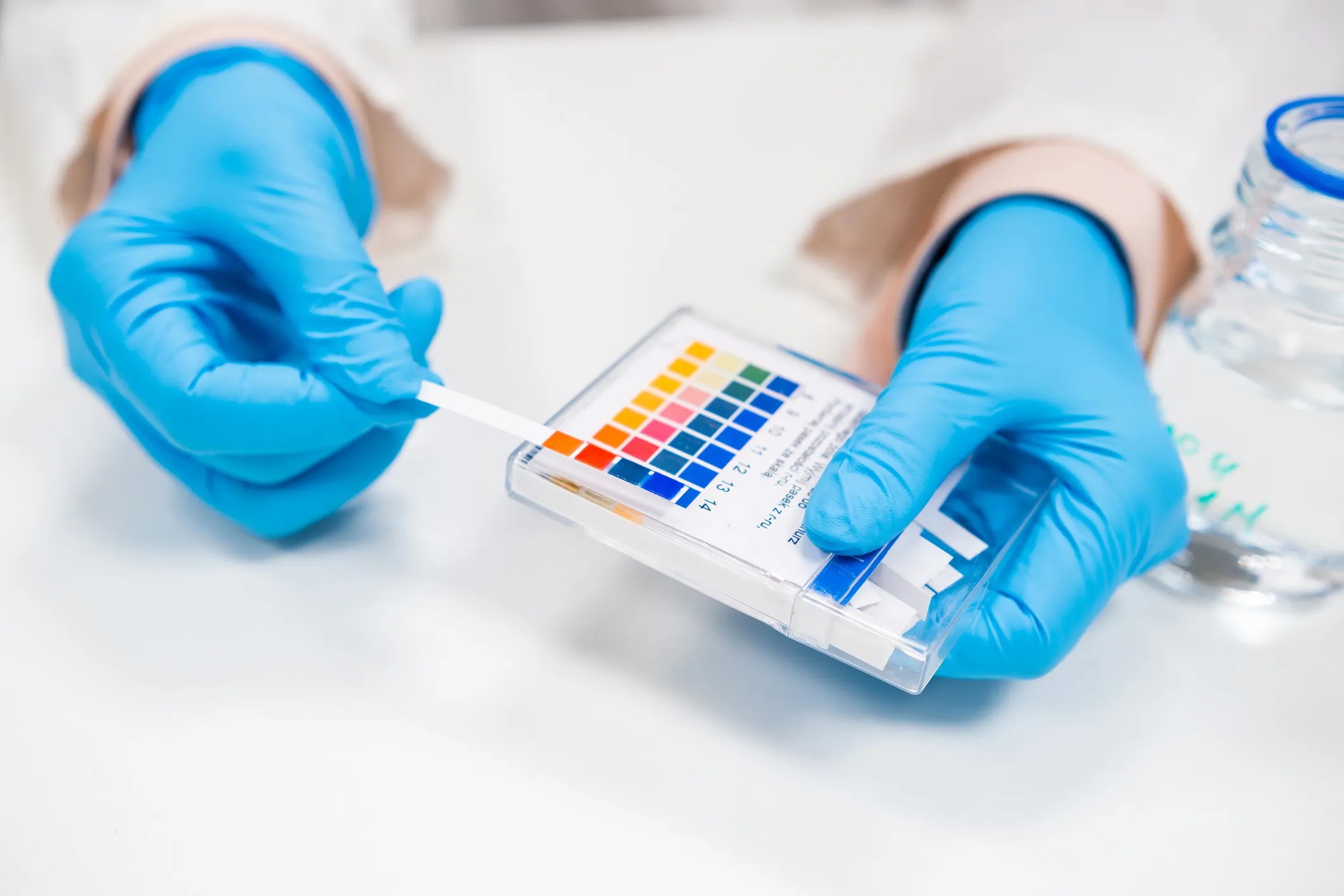
Without pH measurement, the quality of the products we use, the efficiency of the processes we depend on, and the safety of the environments we work in would all be at risk. Hence, pH measurement is a crucial parameter in a variety of scientific, industrial, and environmental applications, from water treatment to pharmaceuticals. ASTM E70-24—Standard Test Method for pH of Aqueous Solutions With the Glass Electrode provides a standardized method for determining the pH of aqueous solutions using a glass electrode and a suitable pH meter.
The Basics of pH Level
pH refers to the measurement of the acidity or alkalinity of a solution, which is commonly measured on a scale of 0 to 14. pH 7 is considered neutral. Lower pH values indicate acidity, while higher pH values signify alkalinity or causticity.
pH is a common analytical measurement in industrial processing, and since it is a direct measure of acid content [H+], pH also plays an important role in food processing.
Importance of PH in Food Processing and Industrial Production
pH measurements are critical in food processing and industrial applications to assure product safety, quality consistency, and regulatory compliance.
Food Processing and Quality
In food processing, maintaining the correct pH is essential for controlling fermentation, preserving freshness, flavor development, and assuring safety. For example, pH affects the acidity of dairy products, the texture of meat, and the preservation of fruits and vegetables. Foods with improper pH levels may spoil faster or develop undesirable flavors, compromising overall quality. Thus, pH measurements are critical in food processing and industrial applications to assure product safety, quality consistency, and regulatory compliance.
Industrial Production
In industrial production, pH is vital because it directly impacts the quality, safety, and efficiency of manufacturing processes across various sectors. In industries like food and beverage, pharmaceuticals, and chemical manufacturing, maintaining the correct pH assures the desired chemical reactions occur, products are consistent, and contaminants are controlled. For example, in chemical manufacturing, PH can influence the effectiveness of reactions and the stability of products—such as pharmaceuticals, cleaning agents, paints, coatings, fertilizers, and food additives. By closely monitoring and controlling pH, industries can optimize production, reduce waste, and meet safety standards, all of which are crucial for maintaining product quality and regulatory compliance.
Hence, standards like ASTM E70-24 are essential for assuring accurate and reliable pH testing in these settings.
What Is ASTM E70-24?
ASTM E70-24 specifies the apparatus and procedures for the electrometric measurement of pH values of aqueous solutions with the glass electrode. This test method provides a standardized procedure for measuring the acidity or alkalinity of these solutions to assure high precision in chemical, environmental, and industrial applications. It is commonly used in water testing, environmental monitoring, chemical manufacturing, pharmaceuticals, and food processing.
ASTM E70-24 does not deal with the manner in which the solutions are prepared. Furthermore, in general, this test method will not give an accurate measure of hydrogen ion activity unless the pH lies between 2 and 12 and the concentration of neither electrolytes nor nonelectrolytes exceeds 0.1 mol/L (M).
Where to Find ASTM E70-24
As industries and research fields continue to rely on precise pH measurements, ASTM E70-24 remains an indispensable tool for assuring quality, consistency, and international compliance in pH testing.
ASTM E70-24—Standard Test Method for pH of Aqueous Solutions With the Glass Electrode is available on the ANSI Webstore.