
ANSI/HI 9.6.6-2022: Rotodynamic Pumps for Pump Piping
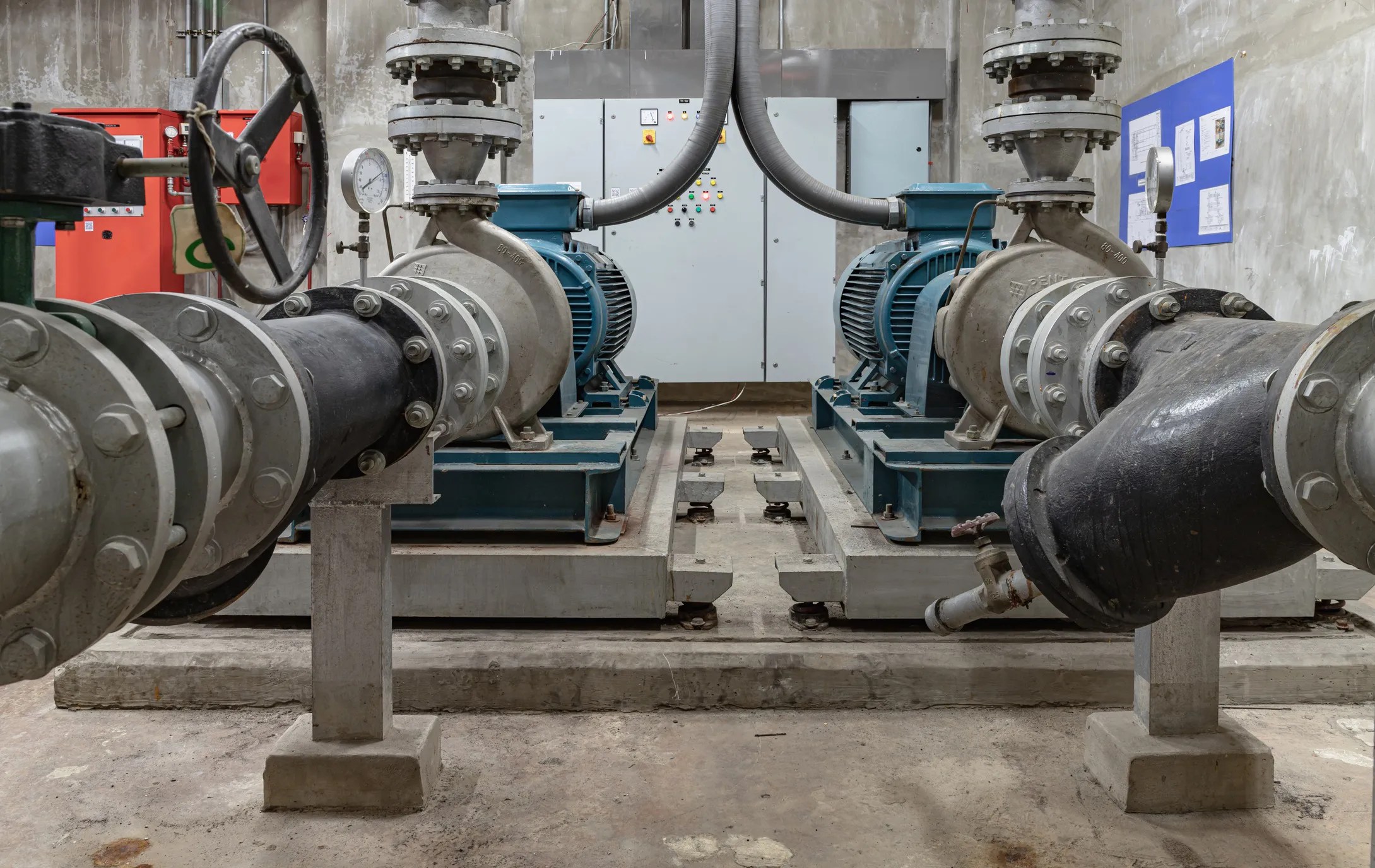
When designing a rotodynamic pump system, the performance of both upstream (suction) and downstream (discharge) piping plays a crucial role in assuring the pump operates efficiently and reliably. Properly designed piping systems can reduce energy consumption, minimize wear and tear on the pump, and enhance overall system reliability. ANSI/HI 9.6.6-2022: Rotodynamic Pumps for Pump Piping details requirements for upstream and downstream piping to assure proper pump performance.
Understanding the Two Main Types of Pumps: Rotodynamic vs. Positive Displacement
Pumps are essential devices used to move fluids from one location to another. They can be categorized into two major families based on their operating principles and design characteristics: rotodynamic pumps and positive displacement pumps.
- Rotodynamic pumps (also known as centrifugal and dynamic pumps) are kinetic machines that move low-viscosity fluids (water, fuel) by means of rotating impeller, propeller or rotor for high flow in irrigation, cooling, and water supply.
- Positive Displacement (PD) pumps (e.g., gear, piston, diaphragm) handle thick, delicate liquids (oils, syrups, chemicals) for precise dosing, high pressure, or viscous transfer in food/pharma, chemical metering, and oil fields.
In sum, the key difference is that rotodynamic pumps offer variable flow at constant pressure, whereas PD pumps provide constant flow against varying pressure, acting like a syringe.
Importance of Rotodynamic Pumps
Rotodynamic pumps are vital for moving large volumes of low-viscosity fluids efficiently in industries like water supply, power, chemical processing, and oil/gas. They offer high efficiency, reliability, and versatility for various flows (centrifugal, axial, mixed). By converting mechanical energy into fluid movement, rotodynamic pumps assure the smooth functioning of many industrial processes, reducing downtime, lowering operational costs, and enhancing overall system performance. Following the guidelines offered in ANSI/HI 9.6.6-2022 helps maximize the efficiency and reliability of rotodynamic pumps.
What Is ANSI/HI 9.6.6-2022?
ANSI/HI 9.6.6-2022 applies to inlet (suction) and outlet (discharge) piping for rotodynamic pumps in all worldwide markets. The American National Standard identifies and details the required and recommended practices for pump piping that will serve to reduce the risk of the pump failure to perform due to system interaction.
What Is Included In ANSI/HI 9.6.6-2022?
ANSI/HI 9.6.6-2022 is intended to complement ANSI/HI 9.8: Rotodynamic Pumps for Pump Intake Design. To eliminate the possibility of overlap and conflict with other standards, this document is applicable as follows:
- All piping upstream from the pump, regardless of pump suction orientation (e.g. side-suction, bottom-suction, etc.) and installation configuration (e.g. horizontal and vertical).
- All piping downstream from the pump, regardless of pump suction orientation (e.g. side-suction, bottom-suction, etc.) and installation configuration (e.g. horizontal or vertical)
What Is Excluded In ANSI/HI 9.6.6-2022?
ANSI/HI 9.6.6-2022 excludes the following:
- Any piping integral to the pump unit, such as auxiliary or lubricant piping.
- Requirements for suction piping when the pipe enters a tank, vessel, or other pump intake structure as described in ANSI/HI 9.8 where specific suction piping requirements are provided.
Changes in the 2022 Edition of ANSI/HI 9.6.6
ANSI/HI 9.6.6-2022 is a revision of the 2016 edition. Major updates in this 2022 revision includes a format change to aid users to more easily identify and reference requirements of the standard. Additionally, technical updates were made throughout the standard, and changes to some straight pipe length requirements following flow disturbing fittings and prior to the pump inlet were made.
What Are the Applications of Rotodynamic Pumps?
Rotodynamic pumps are widely used across industries for applications requiring high flow rates and continuous operation. They play a critical role in water supply and irrigation, efficiently moving large volumes of water for agricultural and municipal needs. In HVAC systems, rotodynamic pumps circulate water for heating and cooling, while in power plants, they are essential for cooling systems and boiler feed water. They also support wastewater treatment by transferring fluids throughout various stages of the treatment process, and in chemical processing, rotodynamic pumps move thin, low-viscosity chemicals.
Overall, rotodynamic pumps are critical components in numerous industries as they provide reliable, high-flow solutions for diverse fluid handling needs.
Where to Find ANSI/HI 9.6.6-2022
Engineers, designers, contractors, and purchasing agents in industries using rotodynamic pumps can benefit from ANSI/HI 9.6.6-2022 for specifying and installing effective pump systems.
Please direct any technical questions relating to this American National Standard to the developer. You can find the contact information for all ANSI-accredited standards developers here: List of ANSI-Accredited Standards Developers (ASDs).
For further information, please refer to: Who to Contact for Standards Related Questions.
ANSI/HI 9.6.6-2022: Rotodynamic Pumps for Pump Piping is available on the ANSI Webstore.
ANSI/HI 9.6.6-2022 is developed by the Hydraulic Institute (HI).