Making AI Data Centers More Sustainable | Using Standards
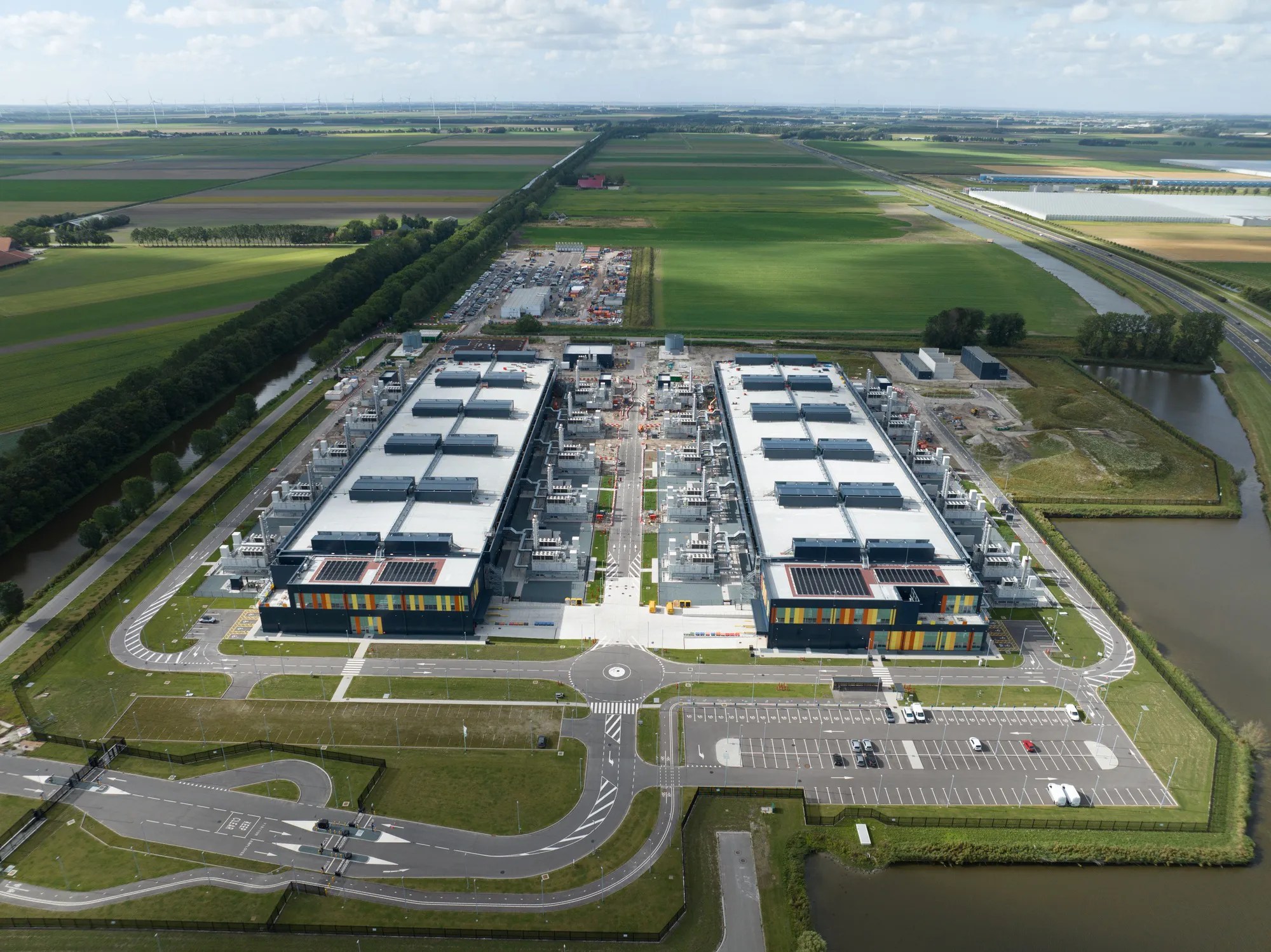
AI data centers consume massive amounts of electricity, water, and computing resources—making them a growing environmental concern. A single AI-focused data center can consume as much electricity as 100,000 households and up to 5 million gallons of water daily for cooling, significantly accelerating carbon emissions. As artificial intelligence adoption accelerates, understanding the energy, carbon, and water footprint of these systems is critical.
Key Statistics on AI Data Center Sustainability Impact
• Data centers use 1.5%–2% of global electricity
• U.S. data centers are estimated to have consumed over 4% to 7% of the nation’s total electricity in 2025
• AI could add 24–44 million metric tons of CO₂ annually by 2030
• Water usage can reach hundreds of billions of liters globally
What Are AI Data Centers?
Artificial Intelligence (AI) data centers are specialized facilities designed to handle complex computational workloads required for machine learning and deep learning models. They are large, temperature-controlled warehouses filled with data servers and computers with dedicated infrastructure, power, cooling, and security. These facilities have advanced compute, network and storage architectures, and energy and cooling capabilities to handle AI workloads. Unlike traditional data centers, AI data centers rely heavily on advanced processors like GPUs and high-performance networking systems to train and run AI models efficiently.
ISO/IEC 22237-1 for Reliable and Energy-Efficient Data Centers
ISO/IEC 22237-1 provides a holistic framework for the design, construction, and operation of data centers—focusing on reliability, physical security, and energy efficiency. It acts as a global standard for data center facilities, helping to minimize downtime and assure high availability.
Rapid Expansion of AI Data Centers in the U.S.
Data centers first emerged in the mid-20th century and expanded rapidly in the 1990s with the rise of the internet. Today, their growth is occurring at an unprecedented scale and speed. This surge of data centers is driven by billions in private investment (global investment in data centers amount to half a trillion dollars in 2024), state-level tax incentives, and federal efforts to accelerate permitting. Together, these forces are prioritizing large, AI-focused facilities as part of a broader push to enhance U.S. competitiveness. This investment boom in AI data centers, however, has led to growing concerns about skyrocketing electricity demand.
Rising Energy Demand and Power Strain from U.S. Data Centers
According to a report from ScienceDirect, over 5,426 data centers have been built in the U.S. as of March 2025. The energy demand from data centers is projected to rise by 7%–12% by 2030; in the Mid-Atlantic “Data Center Alley,” this increased demand caused an 800% surge in energy prices during the 2024 annual capacity auction—which is expected to raise residential rates across 13 states by 20% in the summer of 2026 and by 30%–60% by 2030.
Energy Challenge with AI Data Centers
The United States accounted for the largest share of global data center electricity consumption in 2024 (45%), followed by China (25%) and Europe (15%). AI workloads are incredibly energy-intensive—primarily because training modern large language models (LLMs) requires massive computational power.
GPUs, TPUs, and HPC Infrastructure Drive AI Energy Use
This training process demands high-performance computing (HPC) infrastructure, consisting of thousands of GPUs (graphics processing units) and TPUs (tensor processing units, a specialized chip that improves the speed of machine learning tasks) along with CPUs (central processing units), all running in parallel. Each training session can take weeks or months, consuming massive amounts of electricity.
Additionally, AI models often require frequent retraining to remain relevant, further increasing energy usage. Infrastructure failures, software inefficiencies, and the growing complexity of AI models add to the strain, making AI training one of the most resource-intensive computing tasks in the modern era.
How Much Electricity Do Data Centers Use Today and in the Future?
Data centers and data transmission networks currently account for roughly 1.5% to 2% of global electricity consumption, with AI demand driving rapid growth. In the U.S., data centers used 4.4% of total electricity in 2023, a figure projected to triple by 2028 due to AI. Global data center energy consumption is expected to double by 2030. Hence, the energy demand is growing rapidly as AI adoption expands.
Environmental Impact of AI Data Centers
Beyond electricity, AI also has broader environmental impacts. These environmental impacts include high water usage for cooling, increased greenhouse gas emissions (especially when powered by fossil fuels), and growing electronic waste from short-lived hardware components. These impacts are often concentrated in specific regions where data centers are located, meaning some communities bear a disproportionate environmental burden while others benefit from AI technologies.
Water Usage and Scarcity
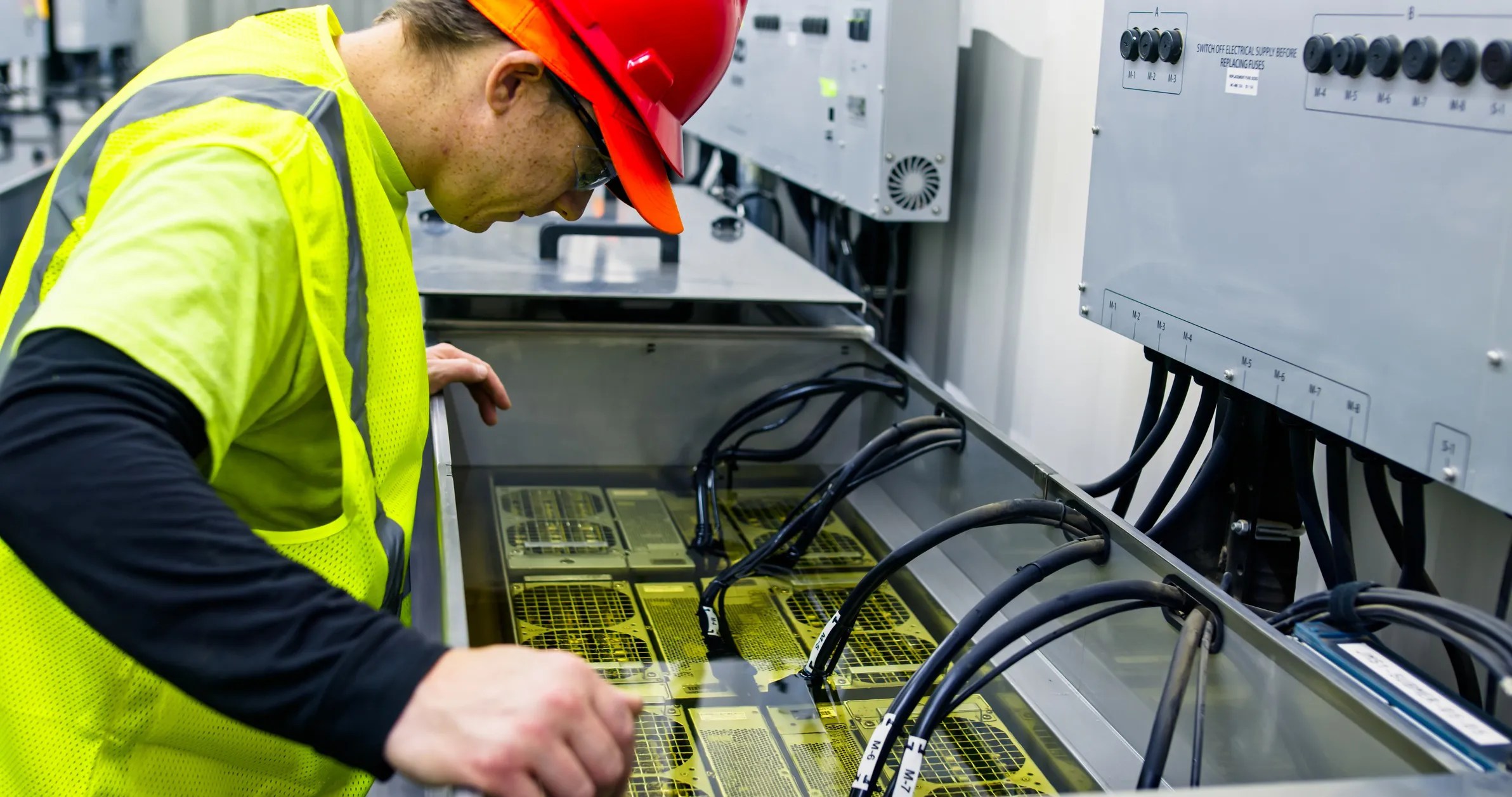
Inside a typical data center, servers use electrical energy to perform calculations and store data, with some of that electrical energy lost as heat. This heat must be removed to prevent the equipment from overheating and breaking down. Evaporative cooling uses water evaporation to cool the air. Significant water, however, is lost annually as it evaporates with waste heat. It is estimated that U.S. data centers directly consumed 21.2 billion liters of water in 2014 and 66 billion liters in 2023.
Impact of Data Centers on Local Water Supplies and Communities
It is important to note that the water used in this process largely comes from “blue sources,” like surface water or groundwater, that is often purchased from local water utilities. Two-thirds of data centers built since 2022 are in water-stressed areas, risking local water supplies. The concentration of data centers in water‑stressed regions raises concerns about aquifer depletion and competition with agriculture and household.
Energy Production Increases Data Center Water Consumption
Water used in data centers goes beyond onsite cooling. Since 56% of their electricity comes from fossil fuels, much of their water footprint (in the U.S., data centers have an indirect water footprint of about 800 billion liters) comes from power plants’ steam cycles—estimated at 211 billion gallons in 2023. Water is also used in the manufacturing of servers, chips, and other materials.
ISO/IEC TR 20226:2025 and Water Footprint Metrics for Sustainable AI Data Centers
ISO/IEC TR 20226:2025 provides an overview of the environmental sustainability aspects (e.g., workload, resource and asset utilization, carbon impact, pollution, waste, transportation, location) of AI systems during their life cycle, and related potential metrics. This standard includes water footprint as a key metric to assess and manage the environmental impact of data centers, helping organizations track water use, improve sustainability, and reduce strain on local water resources.
Carbon Emissions
AI data centers produce significant carbon emissions primarily because they consume massive amounts of electricity—largely derived from fossil fuels—to power, cool, and operate thousands of high-performance servers running nonstop. In 2024, global data centers estimated 182 million tons of CO₂ associated with 460 terawatt-hours (TWh) of electricity consumption, implying an average carbon intensity of approximately 395.65 grams of CO₂ per kilowatt-hour (gCO₂/kWh). Furthermore, the rapid growth of AI is projected to add 24–44 million metric tons of CO2 to the atmosphere annually by 2030. This increase is roughly equivalent to adding 5 to 10 million gasoline-powered cars to U.S. roads each year.
ISO 14064-1:2018 for Measuring and Managing Data Center Carbon Emissions
ISO 14064-1:2018 is crucial for data centers as it provides the international framework for quantifying and reporting greenhouse gas (GHG) inventories at the organizational level, allowing data centers to accurately measure Scope 1, 2, and 3 emissions, track efficiency, and verify reductions. This standard is often used alongside the GHG Protocol to manage carbon inventories in compliance with international reporting requirements
Land and Resource Usage
Construction of data centers often requires hundreds of acres (i.e. a minimum of 200 to over 1,000 acres for infrastructure, cooling, and future expansion), frequently replacing farmland, forests, and wetlands. As a result, ecosystems are disrupted, and biodiversity is reduced.
In Saline Township, Michigan, for example, regulators approved permits in January 2026 for an AI data center project that is located on 575 acres of farmland near Ann Arbor, with plans including three stormwater structures discharging into the Saline River, and this project will destroy approximately 9 acres of wetlands. Another instance of wetland disruption from AI data center construction is in Indiantown, Florida:records obtained in March 2026 revealed plans for a 2 million square foot AI data center that would be built on over 200 acres of wetlands.
ISO/IEC 22237-2:2024 for Data Center Construction, Site Selection, and Security
ISO/IEC 22237-2:2024 focuses entirely on the “building construction” aspect of the data center. It establishes requirements for site selection, risk assessment, and physical security of data center land usage. The standard also provides guidelines for evaluating environmental risks, proximity to hazards, and infrastructure access to assure high availability, security, and sustainable, resilient facility placement.
Noise Pollution
The cooling systems, particularly large fans or gas turbines, create significant, constant noise pollution for surrounding communities. For instance, residents in Vineland, New Jersey, have reported significant issues with a new 300-megawatt AI data center, specifically citing a constant, high-pitched humming noise that is disrupting daily life and sleep. The facility, developed by to support AI, is sparking growing concern over environmental, health, and infrastructure impact and noise also affects wildlife by disrupting communication and altering natural behavior.
ISO 7779:2018 and ISO 9296:2017 for Data Center Noise Pollution
Key international standards for data center noise pollution include ISO 7779:2018 for measuring noise emission from IT equipment and ISO 9296:2017 for declaring these noise values. ISO 7779:2018 standardizes the measurement of noise emitted by IT equipment (servers, storage, switches). It enables accurate comparison of equipment noise levels, crucial for selecting hardware, controlling noise to meet community ordinances, and planning acoustic environments to protect personnel from high-frequency or broadband noise
ISO 9296:2017 standardizes how IT equipment (servers, switches, storage) noise emissions are declared, allowing operators to compare and manage sound levels. It assures accurate noise data (power and pressure levels) from equipment, helping in designing quieter facilities, meeting noise regulations, and assuring worker comfort.
Applying ISO 14001:2026 to Help AI Data Centers
ISO 14001:2026 offers a robust framework that can help data centers manage and mitigate their environmental footprint effectively. It offers a globally recognized framework for managing and reducing environmental impact. This standard can help data centers curb that problem through its requirements for:
- Optimization of cooling systems
- Improvement of server efficiency
- Adoption of renewable energy sources
- Proper disposal
- Recycling
- Minimizing waste generation in the first place
As data centers continue to grow, they will face increased scrutiny over sustainability, making frameworks like ISO 14001:2015 essential for improving environmental performance. By adopting ISO 14001:2015, data centers can boost energy efficiency, enhance waste management, assure compliance, and build stronger trust with stakeholders.
ISO 14001:2015—Environmental management systems – Requirements with guidance for use is available on the ANSI Webstore as well as in the following Standards Packages:
- ISO 45001 / ISO 14001 – Environmental and Occupational Health and Safety Set
- ISO 45001 / ISO 9001 / ISO 14001 – Occupational Health and Safety Requirements Package
- ISO 50001 / ISO 9001 / ISO 14001 – Energy Quality and Environmental Management Systems Package
- ISO 9001 / ISO 14001 – Quality and Environmental Management Set
- ISO 10018 / ISO 9001 / ISO 14001 – Quality and Environmental Management ESG Package
- ISO 14001 / ISO 14002-1 / ISO 14004 / ISO 14006 – Environmental Management Systems ESG Package
- ISO 14001 / ISO 14004 / ISO 19011 / ISO 14050 – Environmental Management Package
- ISO 14001 / ISO 50001 – Energy and Environmental Management Systems Set
- ISO 26000 Guidance on Social Responsibility and ISO 14000 Collection 1
Explore Environmental Management and Sustainability Standards
Data centers use massive amounts of electricity and water—sometimes comparable to small cities—raising serious sustainability concerns, including rising energy costs, strain on local water resources, and impacts on community infrastructure and ecosystems. Despite these challenges, AI data centers continue to expand rapidly to meet growing demand for computing power, storage, and real-time processing. As sustainability becomes a top priority, organizations are increasingly adopting environmental management practices guided by standards such as ISO 14001:2026—Environmental management systems – Requirements with guidance for use.
You can learn more about standards related to environmental management and sustainability in our blog posts:
- What Is Green Coding & Carbon-Conscious Coding?
- The Sustainability Trade-Offs of Generative AI Technology
- ISO 14001:2015 – Environmental Management Systems Requirements
- ISO 14001 Life Cycle Assessment in Environmental Management
- ISO 14001 and Climate Change
- ISO 14001:2015 – A Practical Guide for SMEs Environmental Management Systems
- ISO 14002-1:2019— General Guidelines for Using ISO 14001
- What Is Sustainable Procurement? ISO 20400 & Its Benefits
- NSF 39.1-2019: Professional Services Sustainability
- ANAB’s Sustainability Accreditations