AGMA 905-A17: Inspection of Molded Plastic Gears
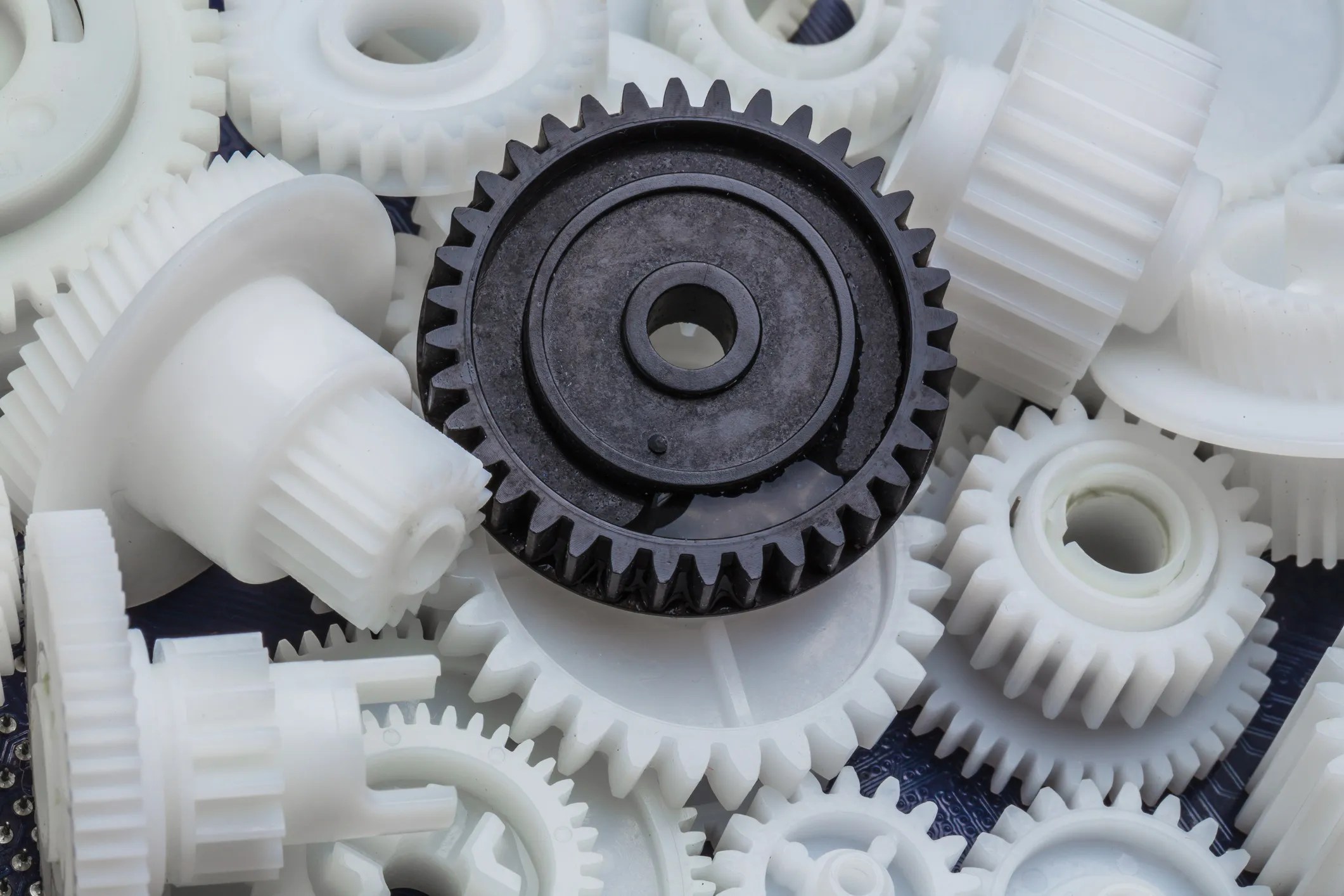
Molded plastic gears are used in a wide range of products, such as dishwashers, seat adjusters, electric screwdrivers, and mechanical toys. Their lightweight construction, corrosion resistance, and ability to be produced in complex shapes make them useful alternatives to metal gears in many applications. AGMA 905-A17, Inspection of Molded Plastic Gears provides industry accepted practices for inspecting molded plastic gears.
Why Molded Plastic Gears Require Specialized Inspection
Molded plastic gears can present measurement challenges that differ from those of metal gears. During injection molding, shrinkage and uneven cooling can cause dimensional deviations and deformation, which can affect characteristics like tooth geometry, concentricity, roundness, and tooth spacing. One study of small-module plastic gears found that cooling rate was the most influential factor in nonlinear shrinkage; a proposed high-speed cooling approach reduced dimensional deviation in the addendum and root circle diameters by 22.79% and 22.99%, respectively.
Besides affecting the final geometry of plastic gears, molding conditions can also impact the accuracy and repeatability of gear measurements. Research examining 29 injection-molded gear samples found that cooling conditions influenced shrinkage and that specialized geometric parameters could provide additional information about molded gear deviations. AGMA 905-A17 addresses these challenges by identifying characteristics of molded plastic gears that can influence measurement accuracy and repeatability.
What Is AGMA 905-A17?
AGMA 905-A17 describes industry accepted practices to inspect molded plastic gears. It identifies the unique characteristics of molded plastic gears that influence the accuracy and repeatability of gear measurements. AGMA 905-A17 also describes the equipment commonly used in measuring plastic gears, the measurement techniques that can be employed, and statistical and system analysis issues that can be applied.
This standard does not establish a quality classification system or tolerances for plastic gear geometry.
Inspection Methods and Types of Gears
The inspection methods described in AGMA 905-A17 are limited to those specifications that are typically defined on a plastic gear’s drawing. These features are described in AGMA 909, Specifications for Molded Plastic Gears.
Inspection methods described in AGMA 905-A17 are limited to the most common types of molded plastic involute gears, namely: spur; helical; cylindrical; worm; external, internal, and rack forms; and sector gears.
Understanding Measurement Accuracy and Repeatability
Two important considerations when inspecting molded plastic gears are accuracy and repeatability. Accuracy describes how closely a measurement reflects the characteristic being measured; repeatability refers to the consistency of measurements when the same process is repeated under the same conditions.
For molded plastic gears, material properties and manufacturing processes can make both particularly important. For example, shrinkage or deformation can affect how a gear is positioned and supported during inspection, while contact forces from measurement equipment may cause a plastic component to flex. These factors can influence the measurement results, making it important to consider the gear itself as well as how it is measured. By considering these factors together, manufacturers can better understand sources of measurement variation and establish inspection practices that produce more consistent and meaningful results.
AGMA 905-A17 identifies commonly used measurement equipment and techniques for plastic gears and addresses statistical and system analysis considerations that can be applied during inspection.
Where to Find AGMA 905-A17
AGMA 905-A17, Inspection of Molded Plastic Gears is available on the ANSI Webstore, the best place to buy AGMA standards.