ASTM A1001-18: High-Strength Steel Castings
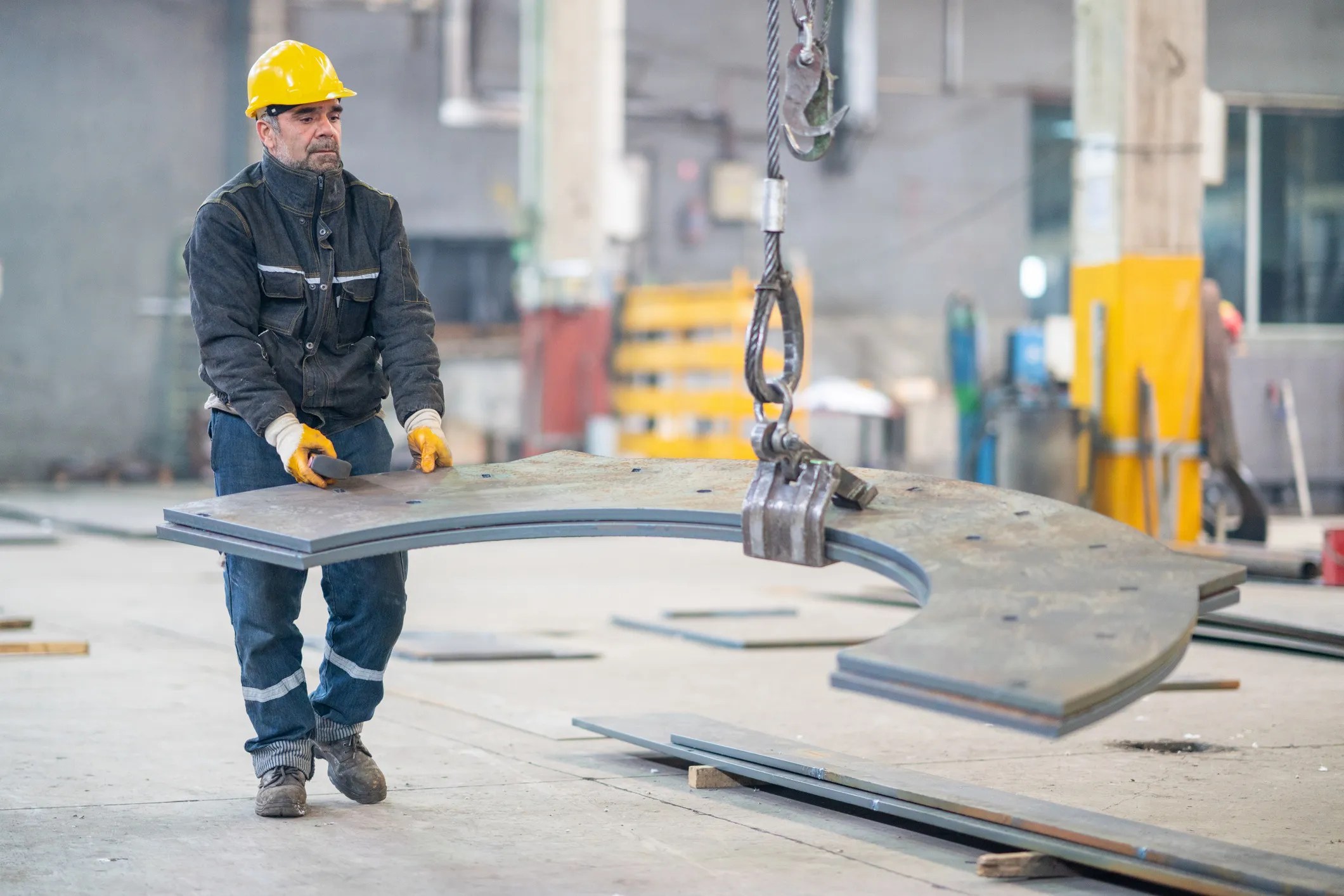
When a crane hook bears a hundred tons, or a shackle holds a load suspended hundreds of feet above the ground, its steel composition plays a defining role in performance and safety. ASTM A1001-18: Standard Specification for High-Strength Steel Castings in Heavy Sections establishes requirements for cast alloy steels used in heavy section sizes (up to 37 inches) in high-stakes, high-strain applications.
What Is ASTM A1001-18?
ASTM A1001-18 covers cast alloy steels in the normalized and tempered or quenched and tempered condition, in section sizes through 37 in. (940 mm), suitable for high-strain gradient conditions, such as those encountered in hooks, shackles, support frames, and other lifting devices. The classes of steel in this specification are weldable only with qualified procedures.
ASTM A1001-18 helps assure that steel castings used in critical applications maintain strength, toughness, and structural integrity under demanding mechanical loads.
Why ASTM A1001-18 Is Important for High-Strength Steel Castings and Safety (info box)
ASTM A1001-18 standardizes the production of high-strength cast alloy steels used in massive components and heavy-duty lifting devices. By establishing strict manufacturing and testing guidelines, it assures safety and reliability in critical infrastructure.
Where ASTM A1001-18 Applies
ASTM A1001-18 applies to specialized, heavy-duty industrial components that must endure high-strain gradient environments, such as lifting devices, hooks, shackles, support frames, and valves. The phrase “high-strain gradient conditions” refers to scenarios where a material experiences drastically different amounts of strain (deformation or stretching) over a very short physical distance or cross-section. Hooks, shackles, and support frames all experience this kind of loading—where one side of a curved hook may be in significant tension while the other is in compression.
Thus, typical applications of ASTM A1001-18 include lifting hooks and crane components, shackles and rigging hardware, structural support frames, heavy-duty mechanical load-bearing assemblies, and industrial lifting devices and safety-critical connectors. These applications require materials that can withstand both static and dynamic loading without failure.
Why Lifting Devices Require High-Performance Steel
Across industries like construction, manufacturing, and offshore operations, lifting equipment is routinely subjected to intense structural stress, heavy workloads, and harsh environments. This creates high-strain gradient conditions that typical structural steel is not designed to handle. Because of this, lifting applications require steels with a unique combination of properties: high strength to prevent deformation, exceptional toughness to resist fracture under impact or shock loading, and strong fatigue resistance for repeated use cycles. These characteristics assure reliability in safety-critical situations where failure is not an option.
ASTM A1001-18 covers the requirements for high-strength steel castings used in heavy-duty lifting and structural components.
Where to Find ASTM A1001-18
ASTM A1001-18: Standard Specification for High-Strength Steel Castings in Heavy Sections is available on the ANSI Webstore.
This standard specification gives engineers, quality teams, and manufacturers the complete chemical requirements, mechanical test criteria, and documentation obligations needed to assure material compliance, verify performance under load, and safely design and produce high-strength cast components for critical lifting and structural applications.