Welding Safety Standard: ANSI Z49.1-2021
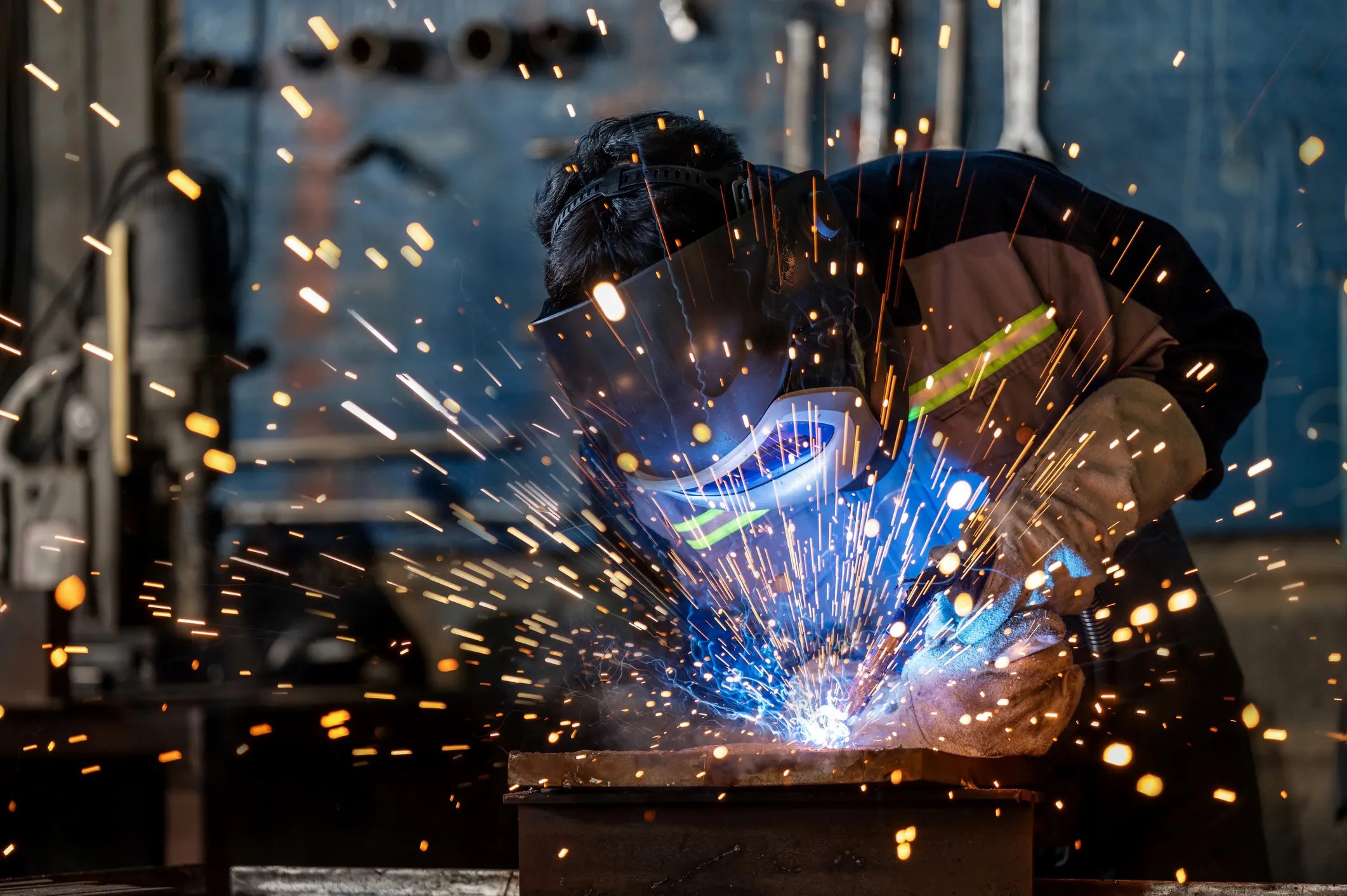
Welding generates extremely high temperatures—sometimes reaching 10,000°F—making safety a critical concern in industrial environments. To assure safety in such high-temperature environments, ANSI Z49.1-2021: Standard for Safety In Welding, Cutting, And Allied Processes provides comprehensive safety guidance for welders, covering protective equipment, ventilation, fire prevention, and hazard control in welding operation.
What Is ANSI Z49.1-2021?
ANSI Z49.1-2021 emphasizes oxygen gas and arc welding processes and provides some coverage about resistance and high energy beam welding, brazing, and soldering. This American National Standard contains precautionary information about the protection of personnel and the general area, ventilation, fire prevention and protection, and confined spaces.
Safety Protection Goals of the Welding Safety Standard
The overall purpose of ANSI Z49.1-2021 is to provide safety protection of:
- Persons from injury and illness.
- Property (including equipment) from damage by fire and explosions arising from welding, cutting, and allied processes.
What Is Welding? Understanding the Welding Process
Welding is a manufacturing process used to permanently join materials—most commonly metals such as steel—by heating their surfaces until they melt and then fusing them together using pressure or filler material. The process can be performed using techniques such as electric arc welding, gas welding, or laser welding. Welding is one of the most important methods of metal fabrication and is used to build everything from skyscrapers and bridges to barbeques, coffee pots, and railroads. In fact, it is estimated that over 50% of the U.S. gross national product is related to welding in some way, highlighting how essential welding is to modern infrastructure and manufacturing.
Industries That Rely on Welding
Welders belong to the following groups:
- Repair services: includes the maintenance and repair of automobiles or electrical machinery
- Mining, oil extraction, and gas: involves the drilling and extracting oil and gas or mining of ores, stone, sand, and gravel
- Metal industries: include steel mills, iron and steel foundries, smelting and refining plants (usually involves maintenance and repair of equipment)
- Electrical and electronic Equipment companies: includes work on electric generators, battery chargers, household appliances, etc.
- Public administration: hires welders to perform maintenance welding done on utilities, bridges, government armories and bases, etc.
- Wholesale and retail establishments: consist of auto and agricultural equipment dealerships, metal service centers, and scrap yards
- Artists and sculptors: have a large impact on the public as they have designed and constructed fountains, sculptures, playgrounds, and more in neighborhoods around the world (e.g., St. Louis Arch, Chicago Picasso, The Grand Canyon Skywalk, and Yankee Stadium).
By following the guidance in ANSI Z49.1-2021, organizations can help protect workers, prevent fires and explosions, and promote safer welding operations across industries.
Welder Safety Requirements and Protective Equipment
ANSI Z49.1-2021 defines a “Welder” and “welding operator” as a person who operates any electric or oxyfuel gas welding or cutting equipment, or allied processes. The American National standard states welders shall wear welding goggles, gloves welding helmet, welding faceshield over spectacles, protective clothing, and/or goggles during all oxyfuel gas welding and cutting and submerged arc welding operations. This equipment is important for eye and face protection from hazards like arc rays, spatter, and weld sparks that may strike against a welder’s helmet.
ANSI Z49.1-2021 does not pertain to the design or manufacture of equipment, such as piping systems, station outlet equipment, bulk gas supply systems, and building electrical installation.
How Does ANSI Z49.1-2021 Relate to OSHA?
ANSI Z49.1-2021 and OSHA are both important in promoting safety in welding and cutting operations, but they serve different roles.
- ANSI Z49.1-2021 provides best-practice safety guidelines for welding and cutting and is seen as the industry benchmark for welding and cutting safety. By showing adherence to the recognized safety practices in this standard, employees can prepare for inspections and defend against citations.
- OSHA sets and enforces legal safety requirements. As such, OSHA inspectors may use ANSI Z49.1-2021 as a reference when evaluating whether an employer is providing a safe workplace.
In sum, ANSI Z49.1-2021 is often used to comply with or exceed OSHA standards and can be helpful in demonstrating a commitment to safety in the workplace.
Common Welding Hazards and Safety Risks
Welding environments present several safety risks due to the intense heat, electrical energy, and fumes produced during the process. Workers may be exposed to hazards such as arc radiation, which can cause severe eye injuries like “arc eye” and skin burns, as well as toxic welding fumes and gases that can lead to respiratory problems when inhaled. Other common risks include electric shock, fires or explosions caused by sparks and molten metal, and burn injuries from hot materials or equipment. The safety guidance outlined in ANSI Z49.1-2021 helps organizations identify and mitigate these hazards through proper ventilation, fire prevention practices, and the use of appropriate personal protective equipment (PPE).
Where to Find ANSI Z49.1-2021
ANSI Z49.1-2021: Standard for Safety In Welding, Cutting, And Allied Processes is available in the ANSI Webstore and in the following Standards Packages:
- ANSI Z49.1 / ANSI Z136.1 / ANSI/ISEA Z87.1 – Welding and Lasers Face Protection Package
- AWS A3.0M/A3.0 / AWS A2.4 / ANSI Z49.1 – Welding Safety Terms and Symbols Package
ANSI Z49.1-2021 is developed by the American Welding Society (AWS).
Please direct any technical questions relating to this American National Standard to the developer. You can find the contact information for all ANSI-accredited standards developers here: List of ANSI-Accredited Standards Developers (ASDs).
For further information, please refer to: Who to Contact for Standards Related Questions.



What was the first date of issue for ANSI Z49.1-2021: Safety In Welding? I need a copy please.
ANSI Z49.1 was first issued in as an American War Standard in 1944 and an American National Standard in 1950. However, the earliest edition we have of the standard is the third edition from 1967: https://webstore.ansi.org/standards/aws/ansiz491967
Is there a standard that covers welding & cutting on galvanized steel?
The section on confined spaces caught my attention because I occasionally weld stainless pipe in fairly cramped areas, and I’ve probably focused too much on the arc itself and not enough on what the gases are doing around me. ANSI Z49.1 covering ventilation, fire prevention and confined-space hazards makes a lot of sense in that context.
That made me read a bit more about the actual gases used for back purging, and I ended up here: https://www.formiersystem.com/en/root-protection-gases/ That helped clear up a lot of things, but I still have some questions, maybe you can help?
One thing I’m still unsure about: when using argon or argon-based purge gases in a confined area, what’s the practical point where normal workshop ventilation is no longer enough and you really need active monitoring or forced ventilation?
Thanks for taking the time to answer!