ISO 11027:1993—Pepper And Pepper Oleoresins
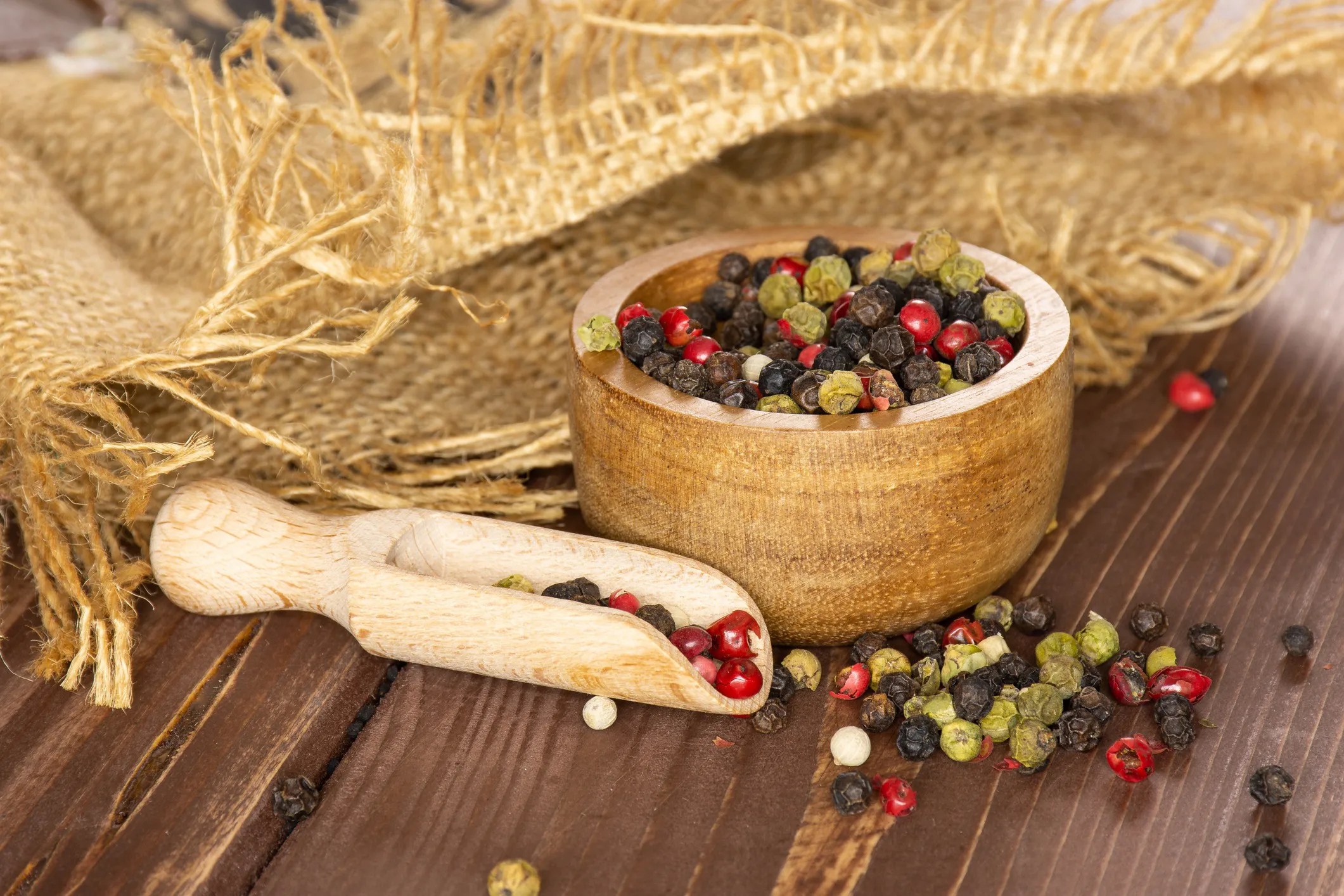
As “the king of spices,” pepper has been the most important traded spice in human history. At times, peppercorn made up 80% of the spice trade by volume. Prizing pepper around the world, monarchs, merchants, and mariners raised armies, set out on quests and risked their lives and fortunes to gain the spice. Today, this spice is not only easily attainable and affordable, but also it has been shown to have health benefits. ISO 11027:1993—Pepper And Pepper Oleoresins — Determination Of Piperine Content — Method Using High-Performance Liquid Chromatography specifies a high-performance liquid chromatography (HPLC) method of the piperine content of pepper.
Piperine and its Role in Chronic Disease
Alkaloids include a family of naturally occurring chemical compounds containing mostly basic nitrogen atoms. Piperine is an alkaloid present in black pepper (Piper nigrum), one of the most widely used spices, in long pepper (Piper longum), and other Piper species fruits belonging to the family of Piperaceae.
Piperine, having a dinstinct sharp flavor, is responsible for the black pepper distinct biting quality. Piperine has many pharmacological effects and several health benefits, especially against chronic diseases, such as reduction of insulin-resistance, anti-inflammatory effects, and improvement of hepatic steatosis. The high-performance liquid chromatography (HPLC) method in ISO 11027:1993 is used for the quantitative determination of piperine in black pepper.
What Is ISO 11027?
ISO 11027:1993 specifies a method for the determination (by high-performance liquid chromatography) of the piperine content of ground pepper, whole pepper, and oleoresins of pepper. The method enables a separation and, if necessary, the determination of the other alkaloids of pepper (isochavicine, isopiperine and piperittin).
- Ground pepper: Extraction with ethanol under reflux, then determination of piperine by high-performance liquid chromatography (HPLC)
- Whole pepper: Preparation by grinding the Sample, then extraction of the powder obtained, followed by determination of piperine by HPLC
- Oleoresins of pepper: Dilution of the oleoresin in ethanol, then determination of piperine by HPLC
The Beginnings of the Global Spice Trade
The spice trade was once the world’s biggest industry. Spices such as cinnamon, cassia, cardamom, ginger, pepper, nutmeg, star anise, clove, and turmeric were traded in the Eastern world. The spice trade led to the creation and destruction of empires, and the discovery of new continents. For example, in 1492, Christopher Columbus thought he could find spices, which were high in demand for food and medicine, by sailing west across the Atlantic Ocean but he only succeeded in finding another landmass in his way: the Americas.
The spice trade is believed to have began around 1000 BCE with the movement of cinnamon, and perhaps pepper, from India and Indonesia to Egypt. For the next 1000 years, the Arabs served as the sole middlemen of the spice trade, picking them up in Southeast Asia and delivering them to Red Sea ports. When the Romans took over Egypt in 30 BCE, soon after about 120 ships were leaving Red Sea ports annually to load their holds with spices in India.
By 1 CE, a trading network was operating across the seas of the Far East, with India at the center. Indian dhows sailed south through the Indian Ocean to Indonesia, where they traded pepper for cloves and nutmeg. Chinese junks plied the South China Sea and reached as far as the Spice Islands (the Moluccas or the East Indies), Indonesia, and Ceylon (Sri Lanka). A maritime trading route of 9000 miles known as the Silk Road had evolved that stretched all the way from Rome, across the Mediterranean to northern Africa, through the Indian Ocean to Indonesia and on to China, with India at its center. Trade on the Silk Road was a significant factor in the development of the great civilizations of China, India, Egypt, Persia, Arabia, and Rome.
While pepper once shaped empires through trade and exploration, international standards like ISO 11027:1993 support quality control and trade of pepper and pepper oleoresin in the modern spice industry.
Where to Find ISO 1102
ISO 11027:1993—Pepper And Pepper Oleoresins — Determination Of Piperine Content — Method Using High-Performance Liquid Chromatography is available on the ANSI Webstore.