
ASTM D7390-18e1: Evaluating Asbestos in Dust on Surface
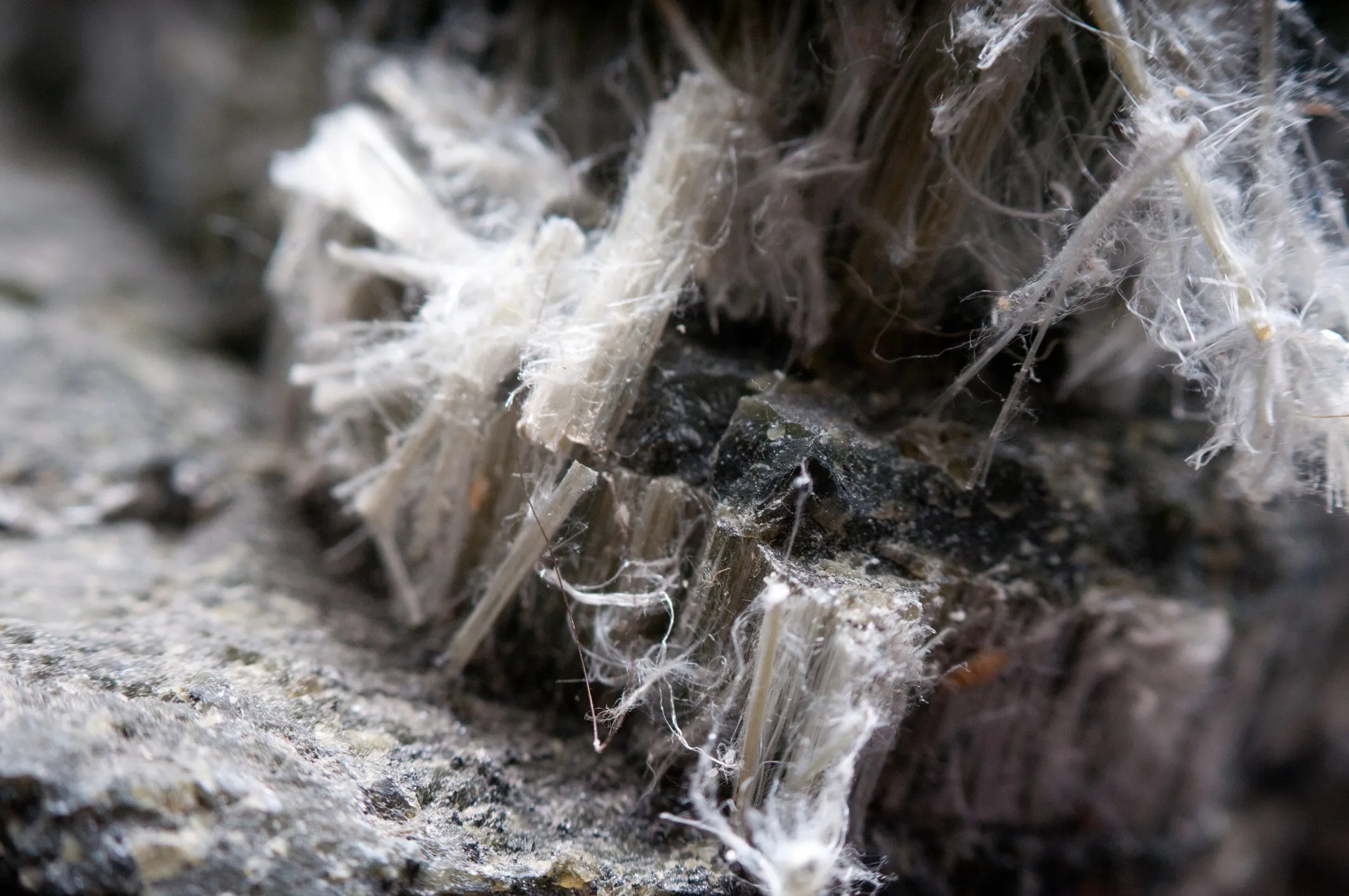
Asbestos, a mineral once widely used in construction and industrial applications, is now recognized as a hazardous material. Asbestos-containing materials (ACMs) can degrade over time, releasing fibers into the air and posing significant risks to workers, building occupants, and the surrounding community. One of the critical concerns in managing asbestos exposure is assuring that dust on surfaces, especially in environments where asbestos-containing materials may have been used or disturbed, is properly evaluated and managed. ASTM D7390-18e1: Standard Guide for Evaluating Asbestos in Dust on Surfaces by Comparison Between Two Environments provides a framework for investigators to compare asbestos concentrations in settled dust between two distinct areas.
Understanding the Health Risks of Asbestos
Asbestos is a group of six naturally occurring microscopic fibrous silicate minerals known for their high heat resistance, durability, and insulating properties. Because of these traits, they were widely used in building materials (insulation, roofing, tiles), friction products (brakes, clutches), and textiles in older buildings (pre-1980s). However, even in trace amounts asbestos fibers can pose significant health risks—including lung cancer, asbestosis, and mesothelioma—when inhaled over time. Therefore, evaluating and identifying asbestos dust on surfaces, such as floors, walls, ducts, and ventilation systems, is a crucial part of occupational safety and environmental health practices.
Asbestos: Air Monitoring and Dust Testing
Asbestos air monitoring and dust testing involve collecting air samples via specialized pumps or dust samples via wipes/micro-vacuums, which are then analyzed in a laboratory using Phase Contrast Microscopy (PCM) or Transmission Electron Microscopy (TEM). PCM is used for rapid, on-site, or occupational exposure screening, while TEM is more precise and used for clearance testing.
- PCM is the recommended method for rapid, cost-effective, real-time monitoring of airborne fiber concentrations in occupational settings. It is used to assess worker exposure but cannot distinguish between asbestos and other fibers or detect thin fibers.
- TEM is recommended for analyzing dust samples, as it provides both identification and quantification of fibers. This method is capable of detecting fibers too small for PCM light microscopy; it uses morphology, chemical composition (EDXA), and crystal structure (SAED) to identify asbestos.
While air monitoring is commonly used to evaluate asbestos exposure, surface dust sampling provides a more direct method of identifying potential risks in a specific location. ASTM D7390-18e1 outlines the necessary procedures for collecting surface dust samples and analyzing them for asbestos content.
What Is ASTM D7390-18e1?
ASTM D7390-18e1 is a test method that covers the procedure to 1) identify asbestos in samples wiped from surfaces and 2) to provide an estimate of the concentration of asbestos reported as the number of asbestos structures per unit area of sampled surface. The procedure is intended to disperse aggregated asbestos into fundamental fibrils, fiber bundles, clusters, or matrices.
ASTM D7390-18e1 is generally applicable for an estimate of the surface loading of asbestos structures starting from approximately 1000 asbestos structures per square centimeter. It is important to note that his test method cannot always discriminate between individual fibers of the asbestos and nonasbestos analogues of the same amphibole mineral.
Where to Find ASTM D7390-18e1
Whether you are managing a construction site, a renovation project, or simply assuring workplace safety, understanding and applying ASTM D7390-18e1is a vital part of protecting both workers and the public from the dangers of asbestos.
ASTM D7390-18e1: Standard Guide for Evaluating Asbestos in Dust on Surfaces by Comparison Between Two Environments is available on the ANSI Webstore.