ANSI Z245.2-2026: Stationary Compactors
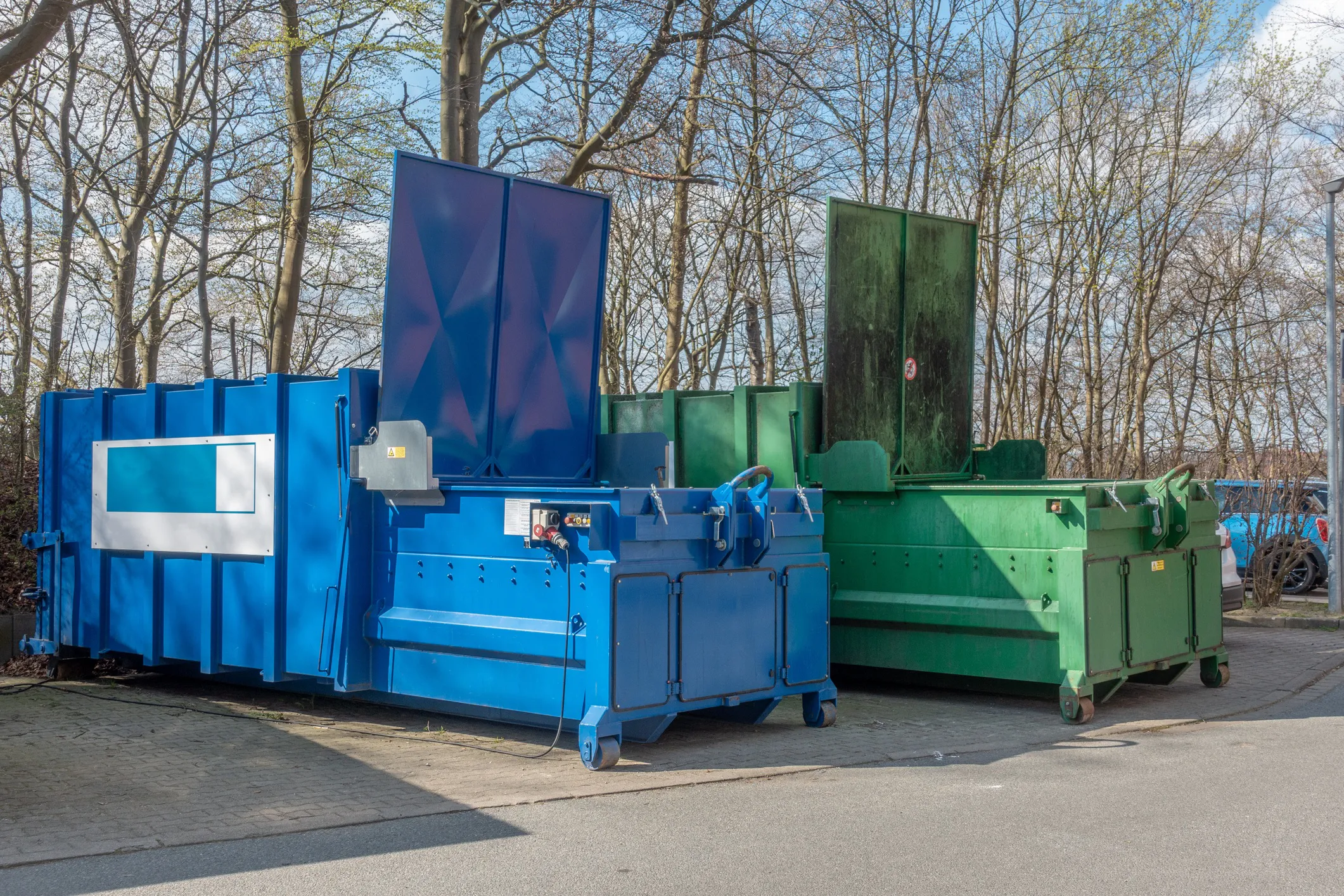
In the quiet corners behind grocery stores, apartment complexes, hospitals, and industrial facilities, stationary compactors work relentlessly to compress mountains of waste into manageable volumes. They are powerful, efficient, and indispensable, but without proper safeguards, they can also pose serious safety risks of fire, shock, and injury. ANSI Z245.2-2026: Stationary Compactors – Safety Requirements focuses on enhanced safety protocols for the installation, maintenance, and operation of stationary compacting equipment.
What Is a Stationary Compactor?
ANSI Z245.2-2026 defines a stationary compactor as “a powered press or auger that remains stationary and is designed to compact waste or recyclable materials into either a detachable or integral container (such as in a self-contained compactor) or into a transfer vehicle.”
Essentially a stationary compactor is a heavy-duty, fixed-position waste management machine that is permanently bolted to the ground, designed to compress large volumes of dry waste (cardboard, paper, plastic) into a separate, detachable container. They are ideal for high-volume settings like warehouses, retail centers, manufacturing plants, commercial business, apartment complexes, and more.
What Is ANSI Z245.2-2026?
ANSI Z245.2-2026 is applicable to the safety requirements for the design, construction, reconstruction, installation, modification, maintenance, repair, operation, and use of commercial compacting equipment used in apartment, institutional, commercial and industrial locations, including transfer stations and recycling facilities.
The requirements of this American National Standard apply to stationary compactors rated at 600 volts or less, for outdoor or indoor use, and are employed in accordance with the manufacturer’s written installation, operation, and maintenance instructions and procedures.
ANSI Z245.2-2026 does not apply to compactors intended for use in non-commercial residential homes. This standard also does not apply to compactors covered in ANSI Z245.23 – Uncontrolled Public Access Compactors as well as to mobile landfill compactors and compactor-type equipment that is operational when permanently mounted on trucks or other vehicles.
Benefits of a Stationary Trash Compactor
Stationary trash compactors offer a range of practical benefits that improve both operations and sanitation. They help improve waste efficiency by minimizing the overall volume and size by 50% to 90%, which helps reduce the amount of waste that ends up in the landfill. Trash compactors are also cost effective; they typically reduce waste hauling frequency and associated costs by 50% to 75%. By compressing waste at ratios often ranging from 3:1 up to 10:1, fewer pickups are required, which significantly lowers transportation and disposal fees.
The enclosed design of stationary compactors prevents overflow, keeping areas cleaner and more professional while also discouraging scavenging and unauthorized dumping through restricted access. Compactors also help minimize rodent and insect activity by limiting exposed waste and containing odors, creating a more hygienic environment for employees, customers, and surrounding communities.
Where to Find ANSI Z245.2-2026
ANSI Z245.2-2026: Stationary Compactors – Safety Requirements is available on the ANSI Webstore, the best place to buy NW&RA standards.
ANSI Z245.2-2026 was developed by the National Waste & Recycling Association (NW&RA).
Please direct any technical questions relating to this American National Standard to the developer. You can find the contact information for all ANSI-accredited standards developers here: List of ANSI-Accredited Standards Developers (ASDs).
For further information, please refer to: Who to Contact for Standards Related Questions.