ANSI/AHAM AC-1-2020: Portable Air Cleaner Performance
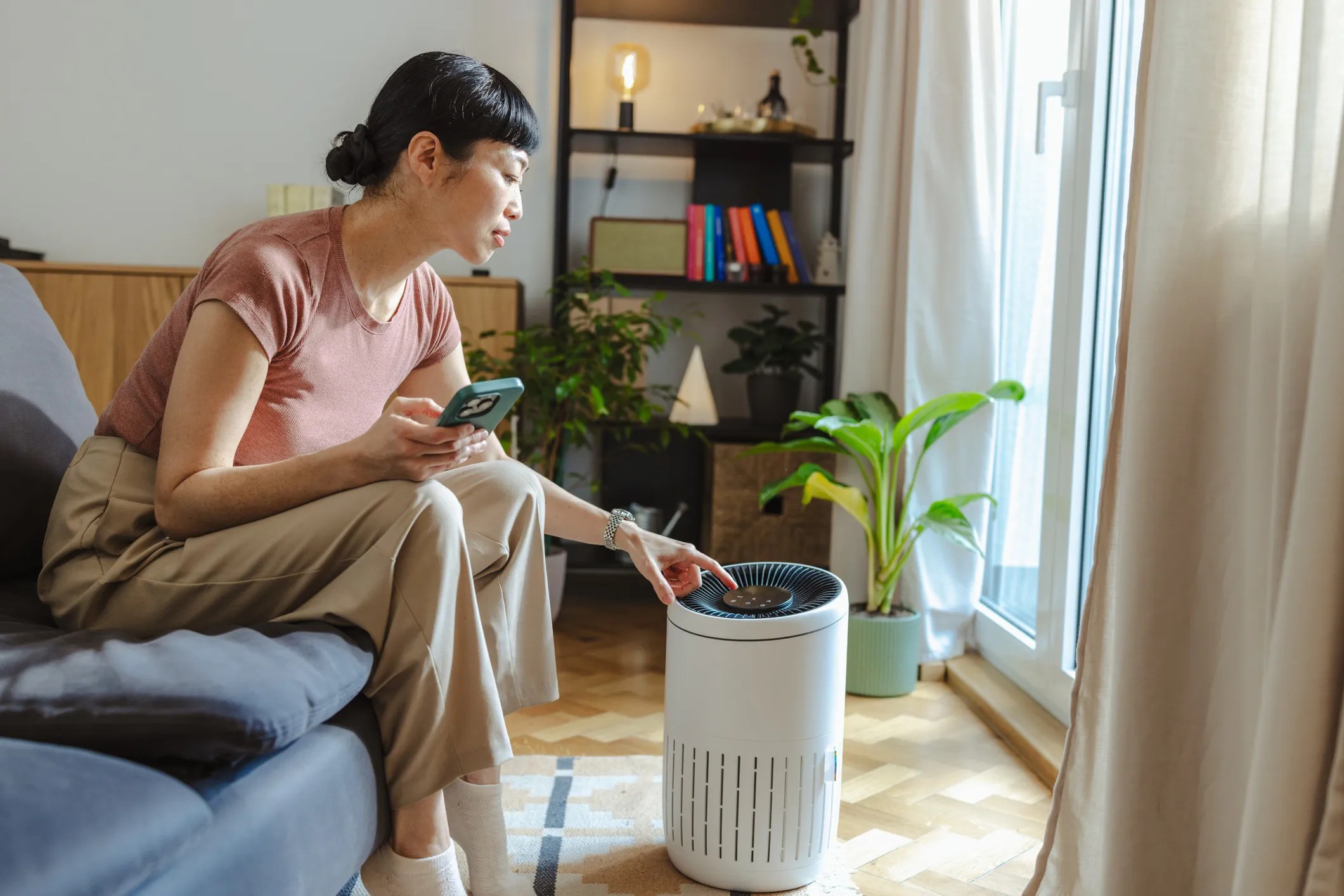
Americans spend approximately 90% of their time indoors, where certain air pollutants can accumulate. Sources of indoor air pollution range from wildfire smoke, dust, building materials, cleaning products, mold, and more. As such, portable room air cleaners have become an increasingly popular solution for improving indoor air quality. ANSI/AHAM AC-1-2020: Method for Measuring Performance of Portable Household Electric Room Air Cleaners establishes a standardized testing method for evaluating air cleaner performance consistently.
Why Standardized Testing of Portable Air Cleaner Performance Matters
Without standardized testing, performance claims could vary significantly depending on testing conditions, room size, airflow, or measurement techniques. ANSI/AHAM AC-1-2020 defines a consistent test procedures for all participating manufacturers.
What Is ANSI/AHAM AC-1-2020?
ANSI/AHAM AC-1-2020 establishes a standardized, repeatable method for measuring the performance of portable household air purifiers. The American National Standard defines consistent procedures for evaluating key product characteristics, including how effectively an air cleaner reduces airborne particulate matter within a controlled test chamber, as well as its operating and standby power consumption.
Rather than evaluating only the filter media, ANSI/AHAM AC-1-2020 measures the performance of the complete air cleaner system, providing a more accurate assessment of how the unit performs in real-world use. By using uniform testing methods, the American National Standard enables meaningful comparisons among different brands and models of portable household air cleaners, giving manufacturers a consistent benchmark and consumers reliable performance data to support informed purchasing decisions.
Why Air Purifiers Matter for Indoor Air Quality
Portable air purifiers play an increasingly important role in improving indoor air quality by helping remove airborne particles such as dust, pollen, pet dander, mold spores, and smoke. While no air purifier can eliminate every indoor air pollutant, many models equipped with high-efficiency particulate air (HEPA) filters are designed to capture at least 99.97% of particles that are 0.3 microns in diameter under laboratory conditions.
ANSI/AHAM AC-1-2020 applies to HEPA filters; it defines them in Section 3.7, High Efficiency Particulate Air (HEPA) Filter High Efficiency Particulate Air (HEPA) Filter.
Understanding Clean Air Delivery Rate (CADR)
One of the key performance metrics associated with ANSI/AHAM AC-1-2020 is the clean air delivery rate (CADR), which provides consumers with an objective way to compare the overall effectiveness of portable air cleaners. CADR measures how quickly an air cleaner removes airborne particles from a controlled test chamber by accounting for both filtration efficiency and airflow. Rather than evaluating the filter alone, it reflects how effectively the entire appliance delivers clean air into a room.
The standard measures CADR for three common indoor pollutants: smoke (the smallest test particles), dust, and pollen (the largest test particles). For each pollutant, a higher CADR indicates that the air cleaner can remove particles more quickly. By providing standardized, measurable performance data, CADR enables consumers to compare different brands and models using objective results rather than relying solely on marketing claims.
Where to Find ANSI/AHAM AC-1-2020
ANSI/AHAM AC-1-2020: Method for Measuring Performance of Portable Household Electric Room Air Cleaners is available on the ANSI Webstore.
ANSI/AHAM AC-1-2020 was developed by the Association of Home Appliance Manufacturers (AHAM).
Please direct any technical questions relating to this American National Standard to the developer. You can find the contact information for all ANSI-accredited standards developers here: List of ANSI-Accredited Standards Developers (ASDs).
For further information, please refer to: Who to Contact for Standards Related Questions.