Standards Help Build Safe and Resilient World Cup Stadiums

Hosting millions of fans at the FIFA World Cup requires much more than iconic stadiums and unforgettable matches. Every venue must be designed to safely support massive crowds, withstand environmental and structural stresses, protect occupants during emergencies, and deliver reliable performance throughout the tournament. These goals are achieved through a comprehensive framework of standards that helps engineers, architects, and construction professionals build stadiums that are safe, resilient, and prepared for one of the world’s largest sporting events.
The 2026 FIFA World Cup: Building the Largest Tournament in History
Every four years, the FIFA World Cup captures the attention of billions of fans around the globe. But the 2026 tournament is making history long before the final whistle. As the first World Cup hosted by three countries—the United States, Canada, and Mexico—and the first to feature 48 national teams, it includes 104 matches across 16 host cities, making it the largest and most complex FIFA World Cup ever organized. The 2026 World Cup has already reached a new all-time attendance record, reaching 4.6 million across first 72 matches of tournament.
Stadiums have averaged nearly full capacity throughout the tournament. As such, managing millions of spectators places extraordinary demands on stadium infrastructure, public safety, accessibility, transportation, and emergency preparedness. Designing facilities that can safely host crowds of this size requires far more than innovative architecture. It depends on an extensive framework of internationally recognized standards, building codes, and engineering best practices that help assure stadiums remain safe, resilient, accessible, and sustainable throughout decades of use.
Engineering Sports Stadiums for Structural Safety
Modern stadiums are among the most complex structures ever built. Long-span roofs, massive seating bowls, retractable components, and advanced building systems must withstand millions of pounds of structural loads while resisting weather, seismic activity, and long-term wear. One of the foundational international standards supporting structural engineering is ISO 2394:2015, General Principles on Reliability for Structures. Rather than prescribing specific design methods, ISO 2394 establishes reliability principles that engineers use to evaluate structural performance, service life, durability, and acceptable levels of risk. In stadium design, ISO 2394 provides the probabilistic and risk-informed mathematical framework used to assure large-scale venues can safely withstand extreme dynamic crowd loads, environmental forces, and degradation over a 50- to 100-year lifespan.
For stadiums located in earthquake-prone regions—including several World Cup host cities—engineers may also apply ISO 3010:2017, Basis for Design of Structures—Seismic Actions on Structures, which provides guidance for incorporating seismic (earthquake) forces into structural design, such as tall, expansive, or non-standard civil facilities. For stadium design, ISO 3010 is applied to determine baseline lateral forces, analyze dynamic roof vibrations, and evaluate the structural integrity of large bowl geometries during seismic events.
These standards help engineers answer critical questions such as:
- Can the structure safely support tens of thousands of spectators?
- How will it perform during high winds or earthquakes?
- How should long-term deterioration be considered?
- What level of reliability is appropriate over a 50- to 100-year service life?
Together, ISO 2394 and ISO 3010 support consistent engineering practices that improve structural resilience and public safety.
World Cup Stadiums Are Engineered to Handle Massive Crowds
The largest stadium selected for the 2026 FIFA World Cup is AT&T Stadium (Dallas Stadium) in Arlington, Texas, which has a tournament capacity of approximately 94,000 spectators. Tens of thousands of people moving at once can produce measurable dynamic loads: vibrations and structural swaying caused by synchronized movement. While a single person’s impact is negligible, synchronized crowds create unified energy that can increase structural stresses by 40–66% if resonance occurs. Modern stadium engineering relies on flexibility and energy dissipation to safely manage these structural vibrations.
Designing Sports Stadiums for Wind, Weather, and Climate
World Cup matches are played in a wide variety of climates, from intense summer heat, heavy rainfall, high winds, and severe storms. Structural engineers evaluate environmental loads throughout the design process using internationally recognized codes (like the International Building Code [IBC] or local equivalents like Mexico’s Manual de Diseño de Obras Civiles and standards from organizations like the American Society of Civil Engineers [ASCE]).
ASCE/SEI 7-2022: Minimum Design Loads and Associated Criteria for Buildings and Other Structures is the primary standard governing structural integrity and design loads in the United States. Stadiums are classified as major public venues, and ASCE/SEI 7 treats them as both “Buildings” and “Other Structures” for the purpose of establishing minimum design loads and hazard criteria. The standard dictates how sports stadiums are structurally engineered against environmental hazards; it treats stadiums as critical public assembly venues and enforces Risk Category III or IV, digital hazard mapping, and new tornado load provisions. Furthermore, ASCE/SEI 7 is adopted by IBC to establish baseline structural strength and serviceability against loads like crowds, wind, and seismic events.
For electrical protection, the IEC 62305 series, Protection Against Lightning, provides internationally recognized requirements for safeguarding structures, occupants, and electrical and electronic systems from the effects of lightning. These standards are particularly important for large, open-air sports stadiums, where direct lightning strikes can threaten thousands of spectators and damage critical infrastructure. The series addresses lightning protection systems, surge protection for electrical and electronic equipment, and measures to reduce dangerous step and touch voltages around exposed metal structures, helping stadiums remain safe and operational during severe weather.
These environmental considerations help assure that sports stadiums remain operational during changing environmental conditions while protecting spectators and critical infrastructure.
Building More Sustainable Stadiums
Many modern stadiums are designed to reduce environmental impacts while enhancing long-term operational efficiency. Today’s eco-conscious venues increasingly integrate renewable energy systems, advanced water recycling technologies, and comprehensive waste-reduction strategies to significantly reduce resource consumption and carbon emissions. By prioritizing lifecycle performance and operational efficiency, these stadiums not only lower long-term utility and maintenance costs but can also improve asset value, all while maintaining the high-performance standards required for world-class sporting events.
Organizations can implement ISO 14001:2026, Environmental Management Systems—Requirements with Guidance for Use to identify and manage environmental impacts throughout construction and operation. It helps venues systematically control their ecological footprint, comply with regulations, and achieve continual environmental improvement.
Energy-intensive facilities can also benefit from ISO 50001:2018, Energy Management Systems—Requirements with Guidance for Use, which provides a framework for improving energy performance through continual monitoring and optimization. For sports stadiums, ISO 50001 provides a structured, data-driven approach to optimize massive energy consumption, reduce operational costs, and meet sustainability targets for lighting, HVAC, and event hosting.
Together, ISO 14001 and ISO 50001 help stadiums reduce environmental impact, optimize energy use, and deliver more sustainable, high-performance venues for global sporting events.
A Strong Foundation for the World’s Biggest Tournament
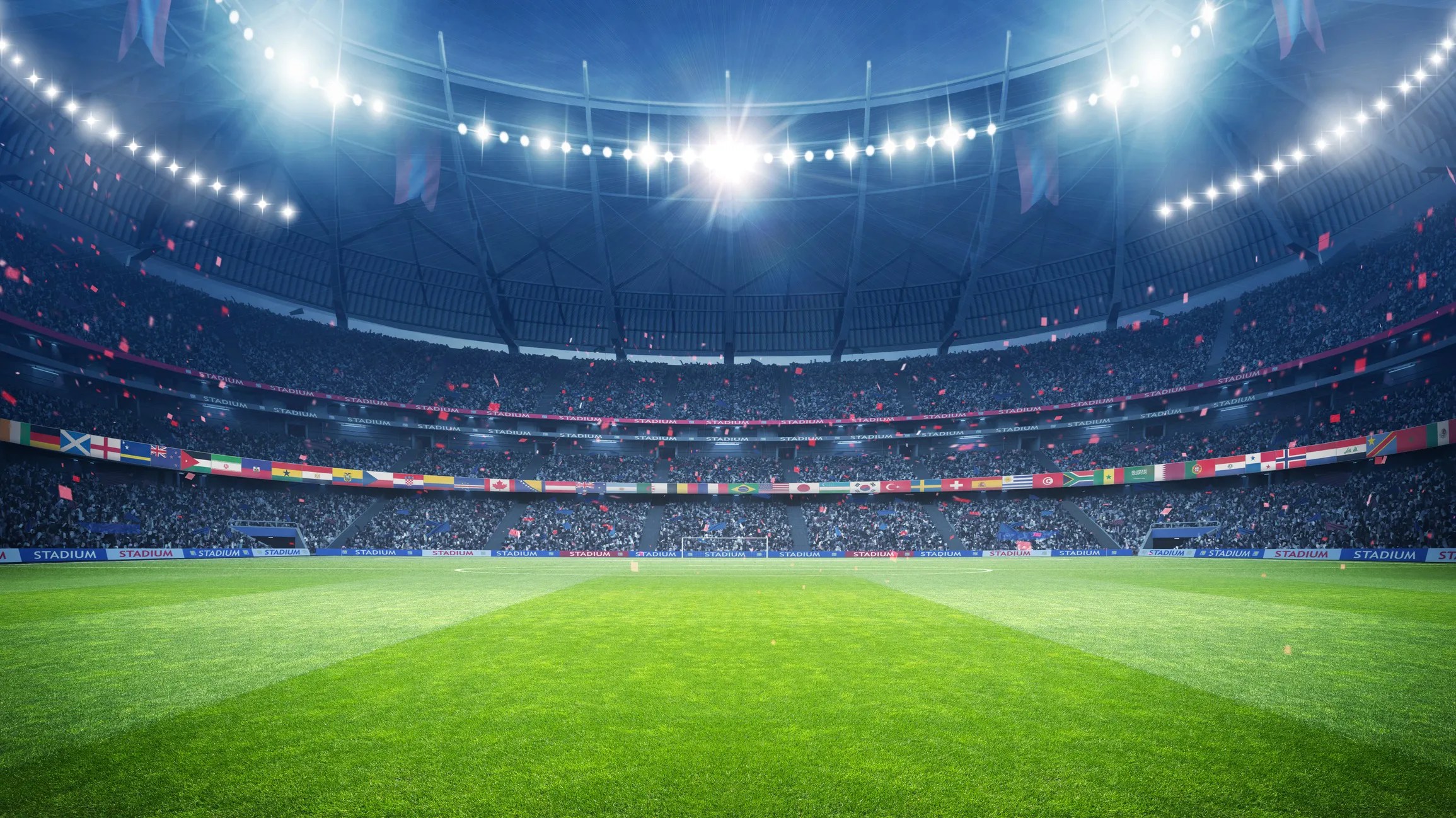
Behind every FIFA World Cup match is an extraordinary achievement in engineering, construction, and safety. Through ISO 2394 guiding structural reliability, ISO 3010 addressing seismic design, ASCE/SEI 7 covering environmental hazards, and ISO 50001 for energy management, standards provide the foundation for venues that can safely welcome millions of spectators while remaining resilient, sustainable, and prepared for the future.
Learn More about Soccer Standards
- History of Soccer: From Ancient Games to Modern Football
- ASTM F2950-14(2021): Soccer Goals
- ASTM F803-25: Eye Protectors for Selected Sports
- ASTM Standards for Safe Sports Surfaces & Injury Prevention
- ASTM F1015-03(2017): Abrasiveness of Synthetic Turf
- ANSI/IES RP-6-20: Sports and Recreational Area Lighting