Trash in Space: A Growing Problem & the Need for Standards
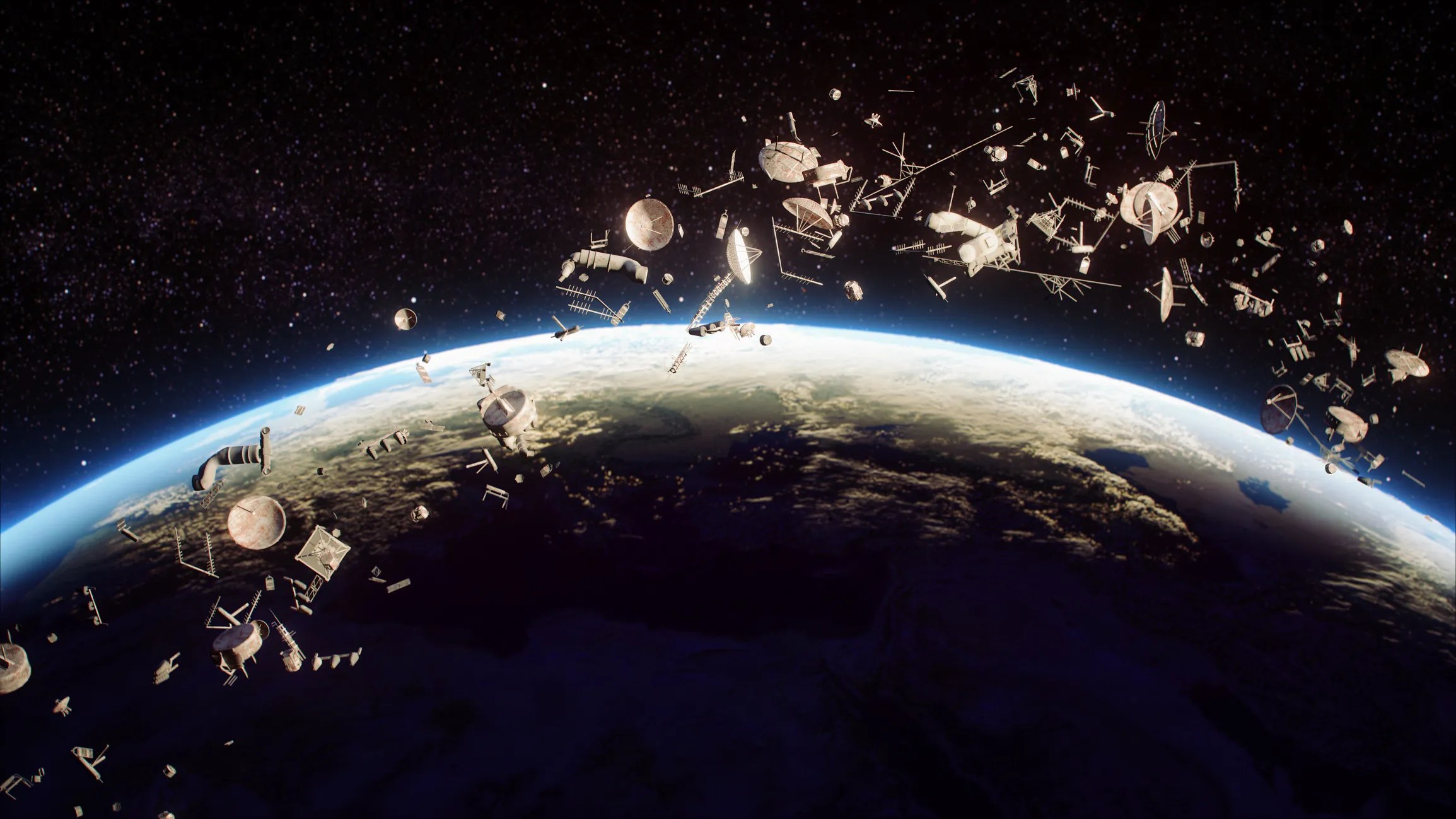
In recent years, the issue of trash in space—also known as orbital debris or space junk—has become a growing concern for scientists, engineers, and policymakers around the world. Since the dawn of the space age in the 1950s, thousands of rockets have been launched and even more satellites are orbiting every month. Now, we face an ever-increasing risk of collision as we launch more and thus managing space debris is no longer optional; it is a necessity.
What Is Trash in Space?
Trash in space refers to defunct satellites, used rocket stages, fragments from collisions, and other debris left behind by space missions. All space junk is the result of humans launch objects from earth and it remaining in orbit until it reenters the atmosphere. This debris orbits Earth at high velocities—more than 28,000 kilometers per hour—posing serious threats to operational spacecraft, satellites, and even the International Space Station (ISS).
How Much Orbital Debris Is Currently Orbiting Earth?
According to NASA, there are:
- Over 25,000 pieces of debris larger than 10 cm
- About 500,000 particles between 1 and 10 cm in diameter
- Over 100 million particles larger than 1 mm
- Over 9,000 metric tons of material orbiting the Earth
As of 2024, hundreds of thousands of junk debris orbit Earth at dangerous speeds, with the vast majority too small to be tracked. These objects include defunct satellites, rocket parts, and small fragments like paint flecks from collisions.
Why Trash in Space Is a Global Concern
The space around Earth is a shared environment, much like our oceans or atmosphere. But unlike terrestrial trash, trash in space does not just sit idle—it travels at breakneck speeds, increasing the risk of collisions. In fact, it is very unlikely that you would see space debris because relative to a person in orbit, space debris is moving about ten times faster than a bullet, and the vast majority of debris is as small as or smaller than a bullet.
If two large objects collide, they can produce thousands of new pieces of debris in a phenomenon called the Kessler Syndrome—a cascading effect that could make some orbits unusable for decades or even centuries. This has massive implications for:
- Global communications
- Weather forecasting
- Navigation systems
- Scientific research
- Manned space missions
Fortunately, at the moment, trash in space does not pose a huge risk to space exploration. The biggest danger space junk poses are to other satellites in orbit. But it is important to that over time, the growth of debris can make it tough to perform a mission if frequent maneuvers are required to avoid debris, and a satellite would additionally have to carry extra fuel for these extra maneuvers and would likely need to shield critical areas from collisions with small debris. Space debris has the implications of making space missions more costly, hazardous, and difficult.
The Role of International Standards in Managing Space Trash
Because space is a global commons, managing trash in space requires cooperation among nations and private entities. That is where international standards come in.
- United Nations Office for Outer Space Affairs (UNOOSA) — Promotes peaceful and sustainable use of outer space through international cooperation and guidelines.
- Inter-Agency Space Debris Coordination Committee (IADC) — Provides recommendations for space debris mitigation, including limiting debris during normal operations, preventing on-orbit breakups, and post-mission disposal planning.
- ISO 24113:2023 — Defines the primary space debris mitigation requirements applicable to all elements of unmanned systems launched into, or passing through, near-Earth space, including launch vehicle orbital stages, operating spacecraft and any objects released as part of normal operations.
- ISO 23312:2022 — Defines detailed space debris mitigation requirements and recommendations for the design and operation of unmanned spacecraft in Earth orbit.
- ISO 20893: 2021 — Defines detailed space debris mitigation requirements and recommendations for the design and operation of launch vehicle orbital stages in Earth orbit.
Innovative Solutions to Clean Up Trash in Space
While international standards help prevent new debris, cleaning up existing trash in space is an even bigger challenge. Thankfully, innovative solutions are on the horizon:
- Active Debris Removal (ADR): Missions that capture and de-orbit large debris. The process involves a spacecraft rendezvousing with the debris, capturing it, and then changing its orbit to a trajectory that results in it burning up in the atmosphere, thereby clearing space for future operations.
- Drag sails and tethers: Devices that help satellites de-orbit at end-of-life. These passive systems are designed to accelerate the deorbit of space debris by increasing atmospheric drag, helping to clear space and reduce collisions.
- Laser systems: Ground-based lasers could nudge debris into lower orbits for burn-up. They work by ablating, or vaporizing, a small amount of material from a debris object, creating a plasma plume that generates a thrust.
Importance of Adhering to the ISO 24113:2023 Standard for Trash in Space
Ultimately, trash in space is more than a technical problem—it poses a global policy challenge to keep space safe, sustainable, and accessible for generations to come. Without clear international standards and real accountability, the orbital environment is becoming more challenging for future missions.
The time to act is now, and ISO 24113:2023 helps different countries, agencies, and companies operate under a common framework so that debris mitigation is not fragmented or inconsistent. These international standard places responsibility across the lifecycle: design, operations, and end-of-life disposal—assuring that interventions are considered from the start rather than after debris exists.
ISO 24113:2023—Space systems – Space debris mitigation requirements is available on the ANSI Webstore and in the following Standards Packages: ISO Space Systems Collection – Debris and ISO Space Systems Debris Package.
You can learn more about trash in space in our blog post: Space Debris – The Problem of Orbital Trash.