
History of Basketball & Key Safety Standards for Equipment
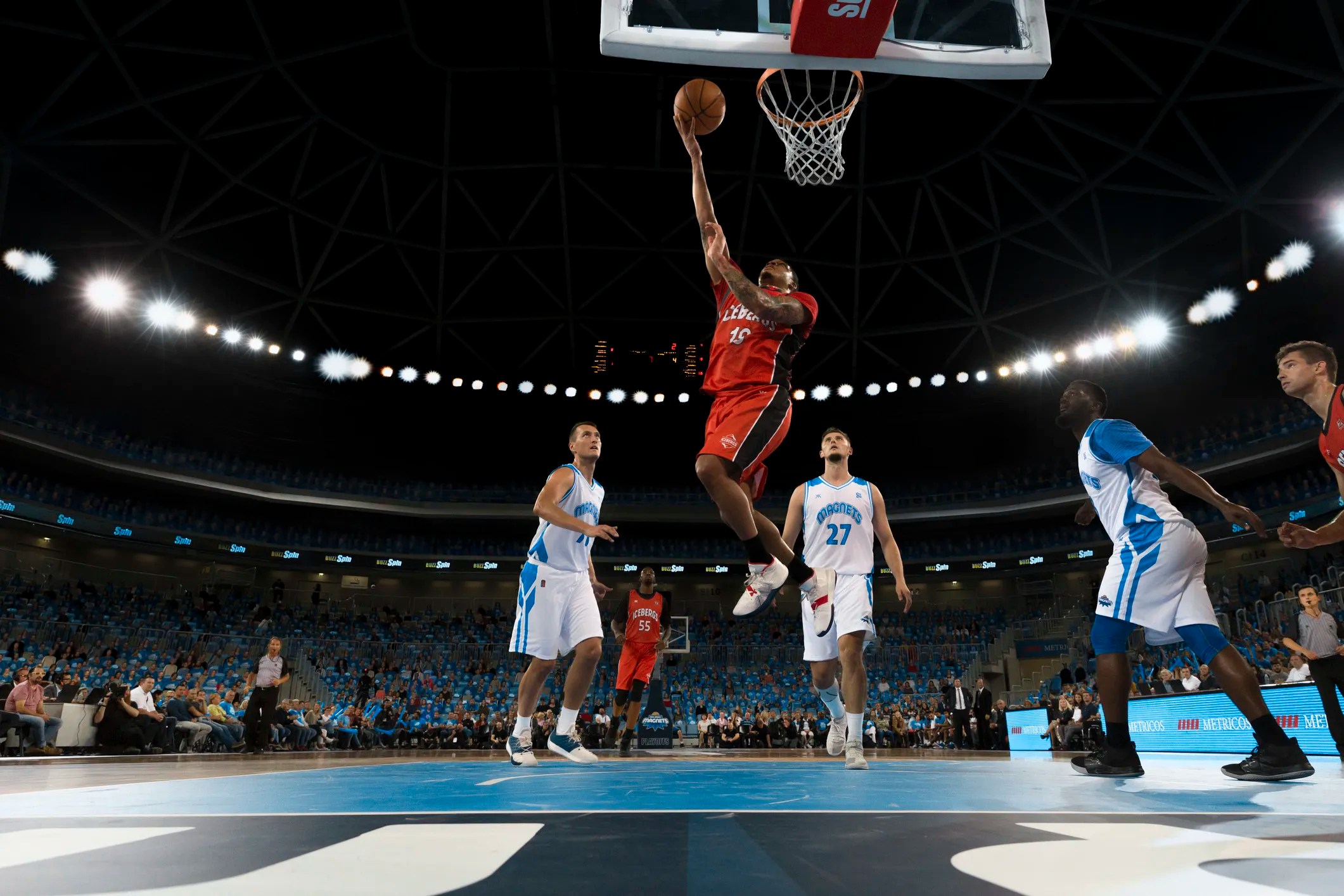
The odds of picking a perfect 64-team bracket for March Madness are 1 in 9.2 quintillion. This tournament has not only showcased some of the most memorable moments in basketball’s history—including Kris Jenkins’ 2016 buzzer-beater for Villanova, Christian Laettner’s 1992 turnaround jumper, and NC State’s 1983 buzzer-beating dunk—but it also has played a key role in the growth of basketball globally. As you tune in for this year’s March Madness tournament, remember that the evolution of basketball—from its humble beginnings in a small Springfield, Massachusetts gym to a worldwide televised sensation—has been closely linked to advancements in safety, equipment, and standards.
The Birth of Basketball: 1891
The story of basketball begins in December 1891 at the International YMCA Training School in Springfield, Massachusetts. Dr. James Naismith, a physical education instructor, developed a new indoor game to keep his students active during the winter months. Naismith approached the school janitor, asking if he could find two square boxes to use as goals. When the janitor returned, he had two peach baskets instead. Naismith attached the peach baskets to the lower rail of the gymnasium balcony, one at each end. Coincidentally, the height of that rail was 10 feet. The students played in teams, trying to score by getting the ball into the opposing team’s basket. A person was stationed at each end of the gym to retrieve the ball, which was a soccer ball at that time, from the basket and return it to play.
With 13 basic rules—which included fouls, goals, and out-of-bounds penalties—the first game of “basket ball” was born. The initial game did not include the high-speed dribbling and dynamic plays we see today; instead, players relied heavily on passing and shooting a ball to score. The game was divided between eighteen players into two teams; each team had a goalkeeper, two guards, three center men, two wings, and a home man or goal thrower (three centers, three forwards, and three guards).
Early Evolution of Basketball: From Dribbling to NCAA Safety Standards
Naismith’s students went on to become teachers and coaches, spreading the game, and by the late 19th century, basketball had become popular in schools and colleges across the United States. Rules changes made the game more fun: dribbling was allowed (1901); backboards were added to make scoring easier (1895); the peach basket was replaced with by metal hoops with nets (1893),; and a new ball was introduced, one that was easier to dribble and shoot (1893). By 1906, the bottom of the basket was fully removed to allow the ball to fall through and speed up play.
Also in 1906, the Intercollegiate Athletic Association [which became the National Collegiate Athletic Association (NCAA) in 1910] was established to address safety concerns in college sports and regulate the competitive landscape among member institutions. The formation of the NCAA was a response to many detrimental issues that were plaguing collegiate sports, chief among them serious injury and even death of college football players. In the early 20th century, the NCAA started to record and compile statistics of football, basketball, and baseball and even printed rule books for several sports to maintain conformity in college sports.
NBL, FIBA, NBA, and Key Milestones in the Basketball’s Evolution
Professional basketball leagues began to form in the late 19th century, with the first official National Basketball League (NBL) established in 1898. In the 1920s, teams like the Original Celtics and the Harlem Rens gained national attention, drawing huge crowds during their tours across the country.
In 1932, the Fédération Internationale de Basketball (FIBA) was founded to oversee the global governance of basketball. The men’s basketball tournament made its Olympic debut at the 1936 Berlin Games, followed by the introduction of the women’s tournament in the 1976 Montreal Olympics. FIBA also organized the first Men’s Basketball World Championship in 1950, with the inaugural Women’s Basketball World Championship held in 1953, marking key milestones in the sport’s global expansion.
Meanwhile, in North America, the Basketball Association of America (BAA) was founded in 1946, becoming one of the first governing bodies for professional basketball. In 1949, the BAA merged with the National Basketball League (NBL) to create the National Basketball Association (NBA), which would grow to become the dominant professional basketball league in the world.
Another landmark event, March Madness, began in 1939 with just eight teams, and Oregon won the first-ever title. The term “March Madness” was originally used in 1939 to describe Illinois high school basketball but did not become synonymous with the NCAA tournament until 1982.
The Role of ASTM Standards in Modern Basketball
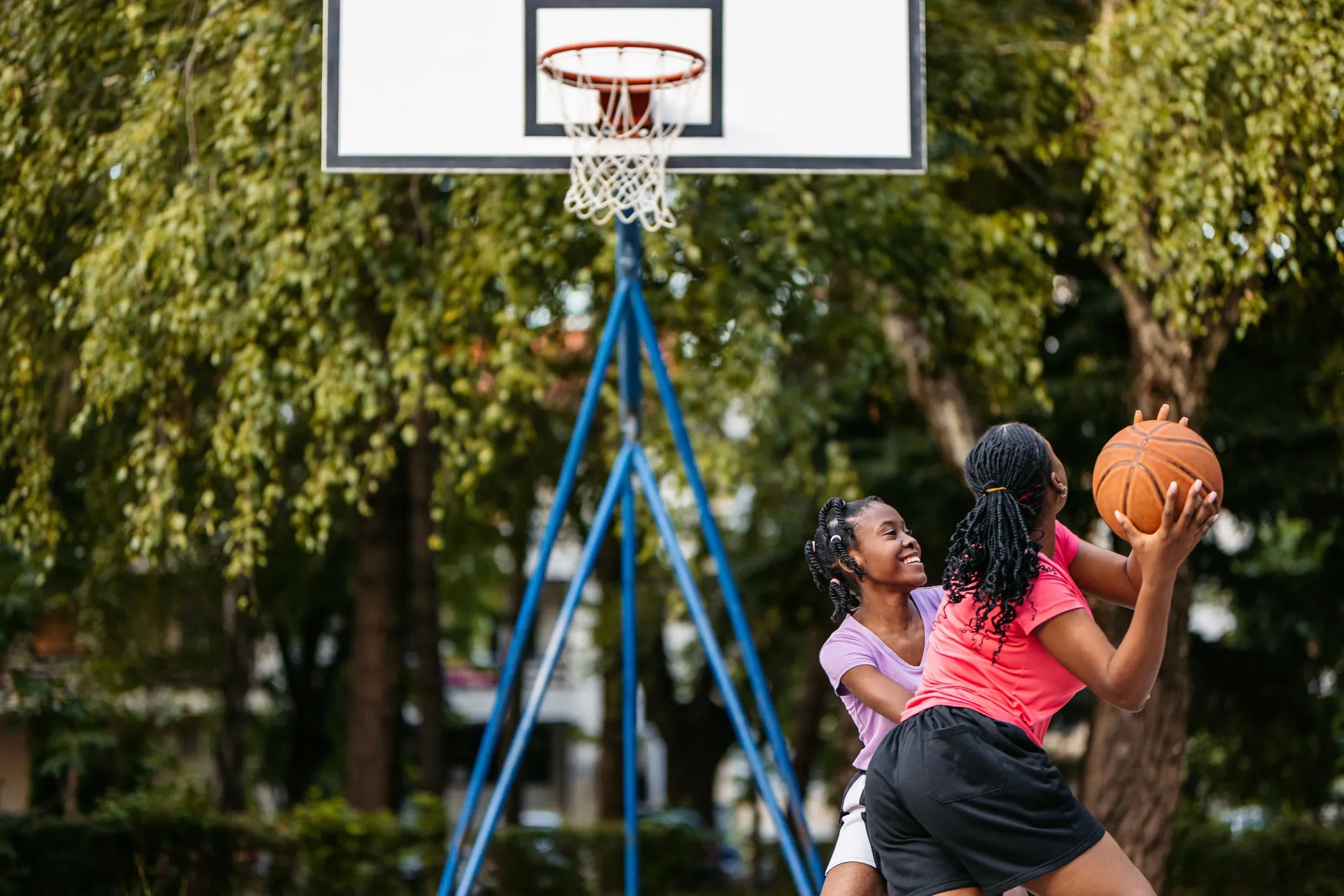
The current National Collegiate Athletic Association (NCAA) March Madness college basketball tournament includes the best 68 of more than 1,000 college teams, stadiums that seat tens of thousands of spectators, and lucrative television contracts. As one of the most played and watched sports in the world, assuring the safety and integrity of basketball equipment and systems is essential. ASTM standards play a key role in assuring the safety of basketball, whether you are playing in your backyard or on the world stage.
ASTM F1882: Standard Specification for Residential Basketball Systems:
ASTM F1882-15 provides detailed guidelines for the manufacturing, assembly, safety, and maintenance of home basketball systems. It specifically covers the backboard, rim, net, and support structure but does not apply to public-use equipment. ASTM F1882-15 assures that home systems are built for durability and safety but under different criteria than those used for public venues.
ASTM F3683: Standard Terminology Relating to Commercially Installed Basketball Equipment
For basketball equipment used in public settings—like schools, gyms, and recreation centers—ASTM F3683-24 defines the terminology for basketball equipment, making it easier for manufacturers, facilities, and users to understand and comply with safety and performance expectations.
ASTM F3731: Standard Guide for Ceiling Suspended and Wall Mounted Basketball Backstops
For public-use, overhead-mounted basketball equipment, ASTM F3731-24 outlines safety guidelines to prevent accidents and injuries in settings like schools, gyms, and recreational centers. It assures that the installation of basketball backstops meets strict performance criteria.
ASTM F2440: Standard Specification for Indoor Wall/Feature Padding
To reduce injuries from players making contact with walls, ASTM F2440-24 specifies the type of padding that should be used around indoor courts. It assures that facilities have adequate safety measures to protect players from impact injuries.
ASTM F2772: Standard Specification for Athletic Performance Properties of Indoor Sports Floor Systems
ASTM F2772-24 evaluates the safety and performance characteristics of indoor gym flooring. The flooring is crucial for basketball as it provides the appropriate bounce and grip for players. ASTM F2772-24 assures that indoor court surfaces offer the best performance while minimizing the risk of injury.
Where to Find Standards for Basketball
Whether on a residential basketball system, a professional court, or an indoor gymnasium, the future of basketball will continue to be built on a foundation of safety, performance, and excellence.
You can find standards related to basketball on the ANSI Webstore.





March Madness brings unforgettable buzzer-beaters and global passion—all from humble beginnings.
March Madness combines unbelievable odds, historic buzzer-beaters, and basketball’s global rise from a small gym to a worldwide sensation