The Evolution of Welding: From Blacksmiths to Robotics
Welding is one of the oldest metalworking techniques, dating back to the Bronze Age when ancient civilizations joined metals like copper, gold, and bronze to create tools and weapons. While the practice of joining metals dates back thousands of years to early blacksmiths, welding technology has evolved dramatically through innovation, industrial demand, and scientific advancement. From traditional forge welding to today’s automated and robotic systems, each stage in welding’s development has improved efficiency, precision, and safety. Today, standards are pivotal in assuring that welding processes remain reliable, consistent, and safe across industries.
Bronze Age and Iron Age: Early Welding Techniques
Welding’s development can be traced back to early developments that started during the Bronze Age.
- 4000 BC: Ancient Egypt began welding with copper, which was the only welded metal at this time.
- 3500 BC: Tin was used in welding.
- 3000 BC: Egyptians used charcoal to pressure-weld swords, and Sumerians were the first to use hand soldering to manufacture their swords.
- 3000 – 2000 BC: Bronze and gold were used in welding, and small gold circular boxes with pressure welded joints were discovered in Egyptian pyramids. Humans started welding metal into kitchen utensils, farming tools, hunting tools, arms, and jewelry pieces
- 1500 BC: Iron smelting became more common in Ancient Egypt
- 1300 BC: The Egyptians began soldering, blowing pipe, and joining pieces of metal together.
- 1000 BC: The primary technology was the “bloomery,” a clay furnace used to heat iron ore (mixed with charcoal) to manufacture swords, spears, arrows, and bowheads.
- 900 and 850 BC: Egyptians began to create simple tools made of iron.
Although primitive by today’s standards, these early techniques established the basic principle of welding: applying heat and pressure to join materials.
Middle Ages: Advances in Forge Welding
During the Middle Ages, blacksmiths were essential members of village life, forging-welded weapons and producing everyday items like nails, locks, horseshoes, armor, and tools. Blacksmiths mastered the process of forge welding: heating iron in a charcoal furnace and hammering overlapping metal ends to bond them. In 1540, Italian metallurgist Vannoccio Biringuccio published De la pirotechnia, the first printed book on metallurgy. The book documented techniques such as smelting and forging iron, helping spread metallurgical knowledge during the Renaissance.
The Industrial Revolution: Welding Enters Modern Manufacturing
Welding began to evolve rapidly during the Industrial Revolution in the 18th and 19th centuries. In the early 1800s, scientists discovered the electric arc, which would later revolutionize welding technology. By the late 19th century, arc welding began to take shape thanks to innovations by pioneers such as Nikolay Benardos and Stanislaw Olszewski, who developed carbon arc welding. Their work marked the transition from purely mechanical metal joining to electrically powered processes. As metal manufacturing expanded, new joining methods were needed for machinery, railroads, and infrastructure.
Early 20th Century: Welding Innovation
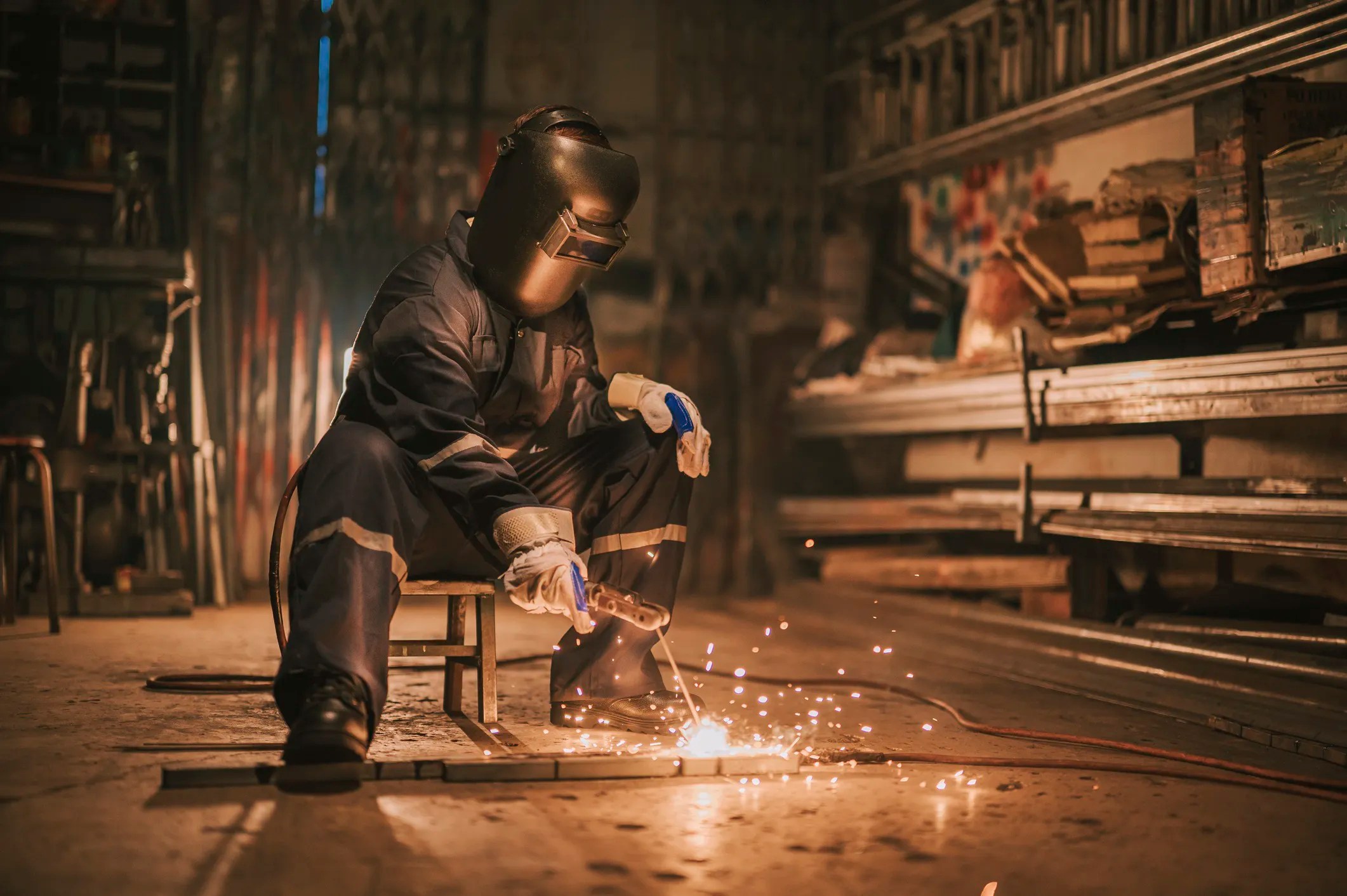
Welding technology advanced dramatically during the early 20th century, particularly during World War I and World War II. The demand for ships, tanks, aircraft, and weapons pushed engineers to develop faster and stronger welding methods. Furthermore, during this period, shielded metal arc welding (SMAW)—also known as stick welding—became widely used in industrial production in the early 1880s. It was the primary, indispensable method for high-speed fabrication in shipbuilding, armored vehicle production, and structural manufacturing. Shipyards, for example, used welding extensively to accelerate the production of cargo ships such as the Liberty ship during World War II.
Post-War Innovation: Precision and New Materials
After World War II, welding technologies continued to evolve with the rise of new industries and materials. Several modern welding methods emerged, including:
- Gas tungsten arc welding (TIG)
- Gas metal arc welding (MIG)
- Submerged arc welding
- Laser beam welding
These processes improved precision, speed, and reliability. They also enabled the welding of advanced alloys used in aerospace, automotive manufacturing, and energy infrastructure.
Modern Age: Welding in the Age of Automation and Robotics
There are even robots that perform welding. For instance, in 1961, General Motor’s Unimate, the very first mass-produced industrial robot, was a single-arm unit designed to perform spot welds, and it revolutionized the world of manufacturing. The Unimate weighed over 4,000 pounds (over two tons) and did its work, which consisted of taking die castings from machines and performed welding on auto bodies, from step-by-step commands stored in an attached magnetic drum. By removing human workers from direct exposure to welding fumes, heat, and sparks, automation like the Unimate helped lay the groundwork for safer industrial environments, and in fact, the Unimate can be found in the Robot Hall of Fame, housed in the Carnegie Science Center.
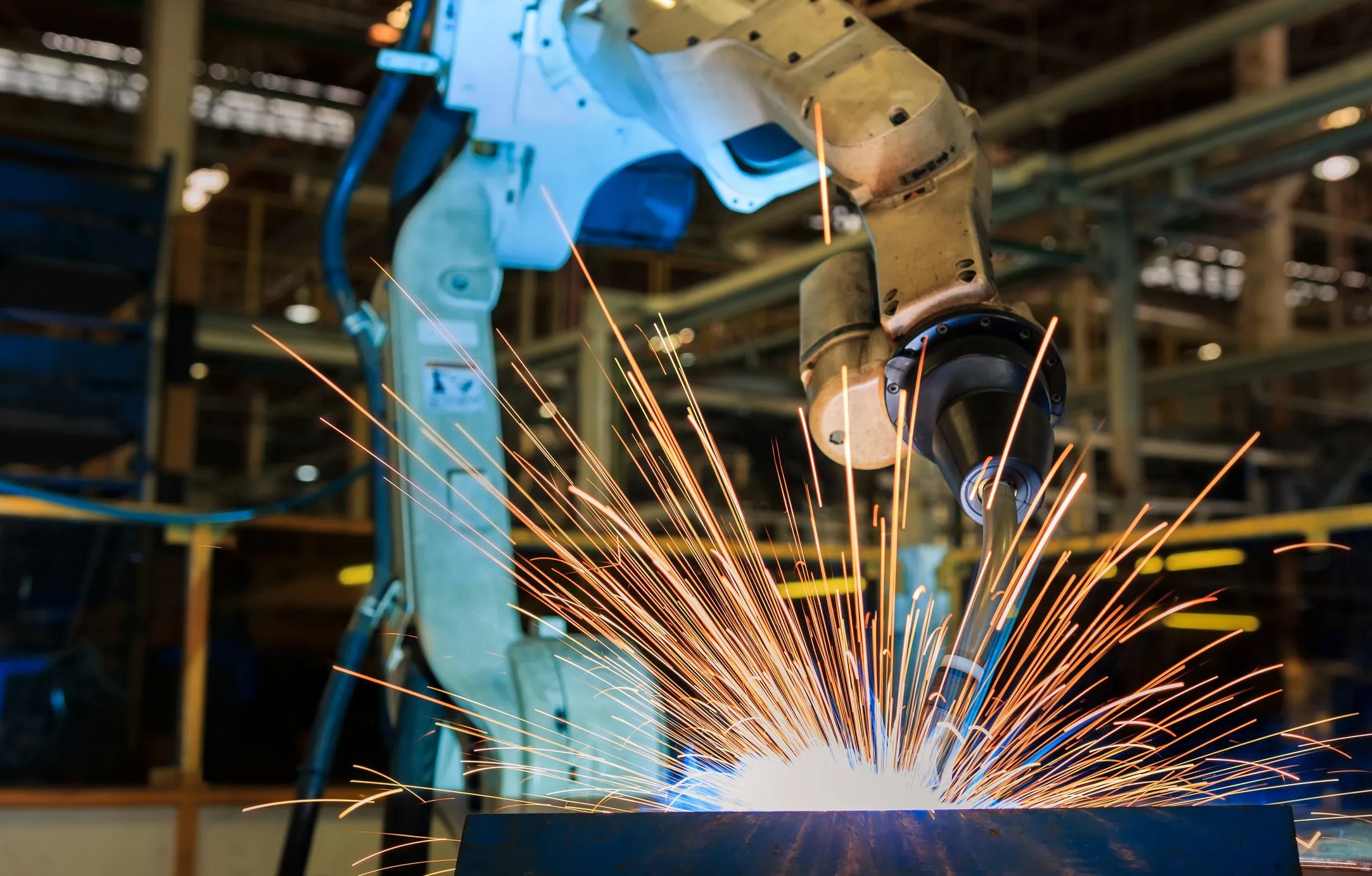
Modern manufacturing facilities rely on robotic welding systems capable of performing thousands of precise welds per day with minimal human intervention. Industries such as automotive manufacturing use robotic arms guided by sensors, machine vision, and digital controls to assure consistent weld quality. In addition, emerging technologies such as friction stir welding, electron beam welding, and AI-assisted welding systems are expanding the possibilities of metal fabrication, improving efficiency, safety, and precision.
Importance of Welding Standards for Safety and Quality
Standards play a critical role in welding by helping assure safety, quality, and consistency across industries. Standards developing organizations develop guidelines that define proper welding procedures, material requirements, inspection methods, and welder qualifications—helping manufacturers produce reliable welds that can withstand stress, pressure, and environmental conditions.
ANSI Z49.1-2021: Safety in Welding, Cutting, and Allied Practices
ANSI Z49.1-2021 covers all aspects of safety and health in the welding environment, emphasizing oxygen gas and arc welding processes with some coverage given to resistance and high energy beam welding, brazing and soldering.
AWS D1.1/D1.1M:2025: Structural Welding Code – Steel
AWS D1.1/D1.1M:2025 covers the welding requirements for any type of welded structure made from the commonly used carbon and low-alloy constructional steels.
AWS D9.1/D9.1M:2018: Sheet Metal Welding Code
AWS D9.1/D9.1M:2018 covers the arc and braze welding requirements for nonstructural sheet metal fabrications using the commonly welded metals available in sheet form.
ASTM A488/A488M-24: Standard Practice for Steel Castings, Welding, Qualifications of Procedures and Personnel
ASTM A488/A488M-24 covers the qualification of procedures, welders, and operators for the fabrication and repair of steel castings by electric arc welding.
ASTM A501/A501M-21: Standard Specification for Hot-Formed Welded and Seamless Carbon Steel Structural Tubing
ASTM A501/A501M-21 covers black and hot-dipped galvanized hot-formed welded and seamless carbon steel square, round, rectangular, or special shape structural tubing for welded, riveted, or bolted construction of bridges and buildings, and for general structural purposes
Where to Find Standards for Welding
By following recognized standards, companies can reduce defects, protect workers, improve product performance, and assure compliance with industry regulations in sectors such as construction, aerospace, manufacturing, and energy.
Standards for welding are available on the ANSI Webstore and in the following Standards Packages:
- ANSI Z49.1 / ANSI Z136.1 / ANSI/ISEA Z87.1 – Welding and Lasers Face Protection Package
- AWS A3.0M/A3.0 / AWS A2.4 / ANSI Z49.1 – Welding Safety Terms and Symbols Package
- AWS A2.4 / AWS A3.0M/A3.0 / AWS D1.1/D1.1M / AWS D1.3/D1.3M – Steel Welding Code Symbols and Terms Package
- AWS D1.1/D1.1M / AWS D1.2/D1.2M / AWS D1.3/D1.3M – Structural Welding Code Package – Steel Aluminum and Sheet Steel