


Artificial intelligence (AI) is rapidly transforming how organizations operate, but with that transformation comes growing concern around AI ethics in business. From biased algorithms and data privacy risks, companies must ensure their AI systems are transparent, accountable, and fair. With nearly 78% of organizations already using or exploring AI, ethical governance is no longer optional; rather, it is a business imperative.
What Is AI Ethics in Business?
AI ethics in business refers to the responsible development and use of artificial intelligence systems to ensure fairness, transparency, accountability, and privacy. Key examples of responsible AI in business include auditing hiring algorithms to eliminate gender/racial bias, disclosing when customers interact with chatbots, protecting personal data used to train AI, and ensuring AI financial decisions are explainable.
Why Is AI a Significant Area of Concern in Businesses?
88% of organizations in 2025 used AI in at least one business function, which up from 78% in 2024. Since AI is increasingly being used in organizations, it is worth examining its ethical concerns across business sectors:
- Healthcare: The use of AI in healthcare, such as diagnostic tools and treatment recommendations, raises ethical concerns related to patient privacy, data security, and the potential for AI to replace human expertise.
- Criminal Justice: The use for predictive policing, risk assessment, and sentencing decisions can perpetuate biases and raise questions about due process and fairness.
- Cybersecurity: AI plays an important role in cybersecurity, helping businesses detect and respond to threats quicker and more effectively. The use of AI in cybersecurity raises ethical concerns around data protection and the potential for AI to be used maliciously.
- Sustainability: The computational resources required to train and run AI models can have a significant environmental impact, including substantial water usage and carbon emissions. Ethical considerations include minimizing AI’s carbon footprint and promoting sustainable AI development.
- Social Media: AI is widely used in social media to personalize content, moderate comments, and even detect fake news. However, these applications raise ethical challenges, particularly around privacy and content moderation.
- Military: The development and use of autonomous weapons into military systems raise ethical concerns about the potential for AI to make life-and-death decisions in armed conflicts.
- Education: The use of AI in education, such as automated grading and personalized learning, raises concerns about data privacy, the quality of education, and the role of human educators.
What Are Risks of AI in Businesses?
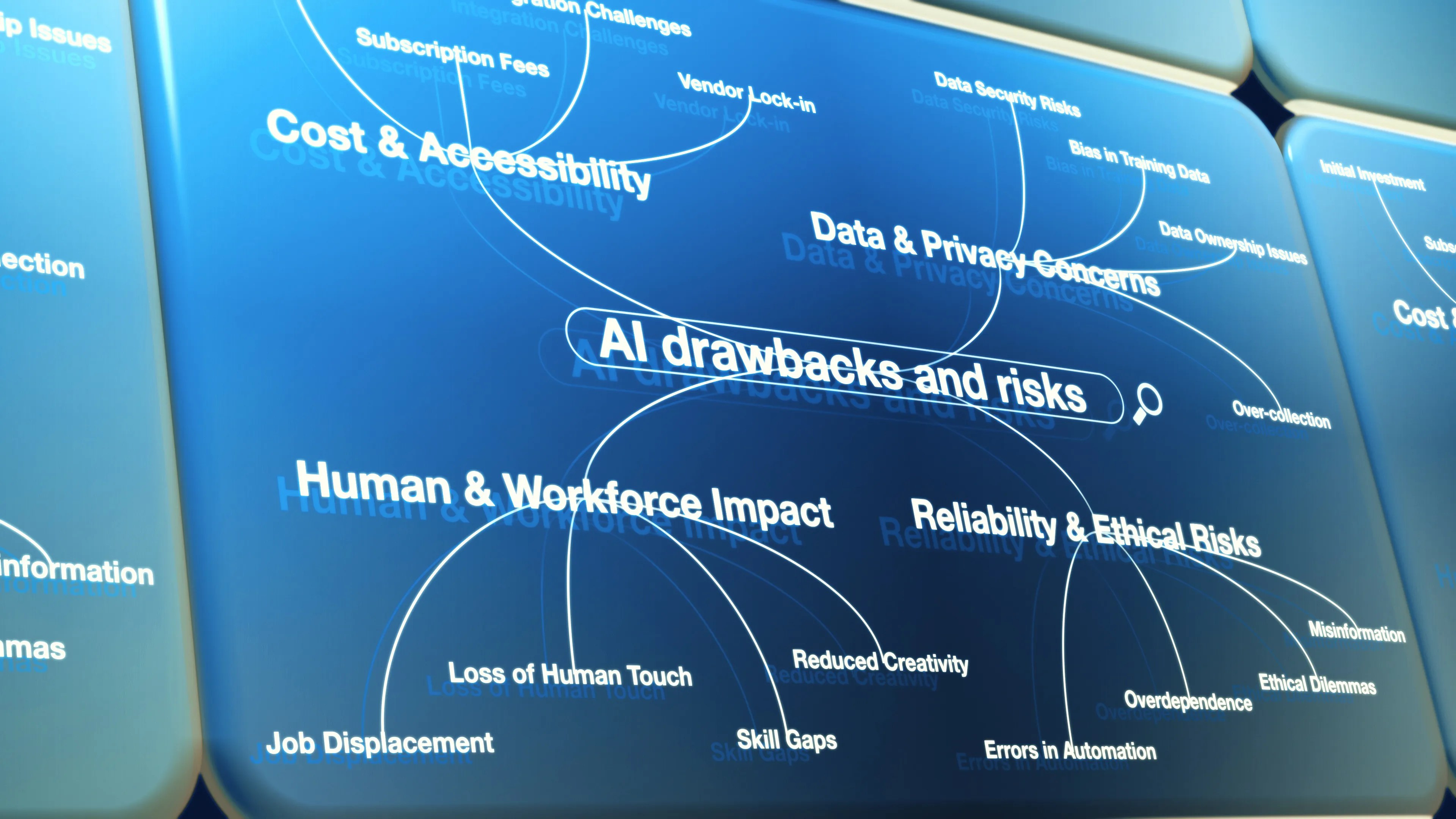
Here are some central ethical risks associated with the use of AI in business:
Bias and Fairness
AI systems can inherit and amplify biases present in their training data, resulting in unfair or discriminatory outcomes. This is particularly seen in hiring, lending, and law enforcement applications.
Privacy
AI systems often require access to large amounts of data, including sensitive personal and professional information. The ethical challenge lies in collecting, using, and protecting this data to prevent privacy violations, unauthorized access, and misuse.
Transparency and Accountability
Many AI algorithms, particularly deep learning models, are often considered “black boxes” because they are difficult for users to understand or interpret. Transparency involves making the decision-making processes of AI systems understandable and accessible; accountability ensures that there are mechanisms in place to hold individuals and organizations responsible for the outcomes of AI systems.
Autonomy and Control
As AI systems become more autonomous, concerns about the potential loss of human control exist. This is especially relevant in applications where AI systems make critical decisions autonomously like self-driving vehicles, robotic caregivers, autonomous weapons, and military drones.
Job Displacement
Automation through AI can lead to job displacement and economic inequality. Ensuring a just transition for workers and addressing the societal impact of automation is an ethical issue.
Security and Misuse
AI can be used for malicious purposes, such as cyberattacks, deepfake creation, and surveillance. Ensuring the security of AI systems and preventing their misuse is an ongoing challenge.
Liability
Determining who is responsible when an AI system makes a mistake or causes harm can be difficult. Establishing clear lines of liability is essential for addressing AI-related issues.

ISO/IEC 42001 Supports Ethical AI Governance and Responsible AI Use
Addressing these AI ethical risks involves developing ethical guidelines, regulations, and best practices to assure that AI technologies are developed and deployed in ways that benefit humanity while minimizing harm and assuring fairness and accountability. ISO/IEC 42001 is the first global standard explicitly focused on AI management systems. This international provides a framework for developing and using AI systems responsibly, assuring they are trustworthy, transparent, and accountable. In essence, ISO/IEC 42001 serves as a guide for organizations to harness the transformative potential of AI technologies while proactively managing associated risks and responsibilities.
Integrating the ethical AI considerations of ISO/IEC 42001 can help businesses avoid potential pitfalls while assuring that AI technologies are used responsibly, fairly, and effectively. Embracing ethical AI can also enhance business’ decision-making processes, improve customer experience, and contribute to long-term business success.
Learn More about ISO/IEC 42001
You can learn more ISO/IEC 42001 about in our blog post: ISO/IEC 42001: Artificial Intelligence Management Systems (AIMS). Additionally, the standard is available on the ANSI Webstore as well as in various Standards Packages:
- ISO/IEC 42001 / ISO/IEC 42005 / ISO/IEC 42006 – Artificial Intelligence Package
- ISO/IEC 42001 / ISO/IEC 22989 / ISO/IEC 23894 – Artificial Intelligence Package
- ISO/IEC 42001 / ISO/IEC 23894 – Artificial Intelligence Set
- ISO/IEC 42001 / ISO/IEC 23894 / ISO/IEC 42006 – Artificial Intelligence Package
- ISO/IEC 5338 / ISO/IEC 8183 / ISO/IEC 42001 – Artificial Intelligence Package