AWS B2.1/B2.1M:2026—Welding Procedure Qualification
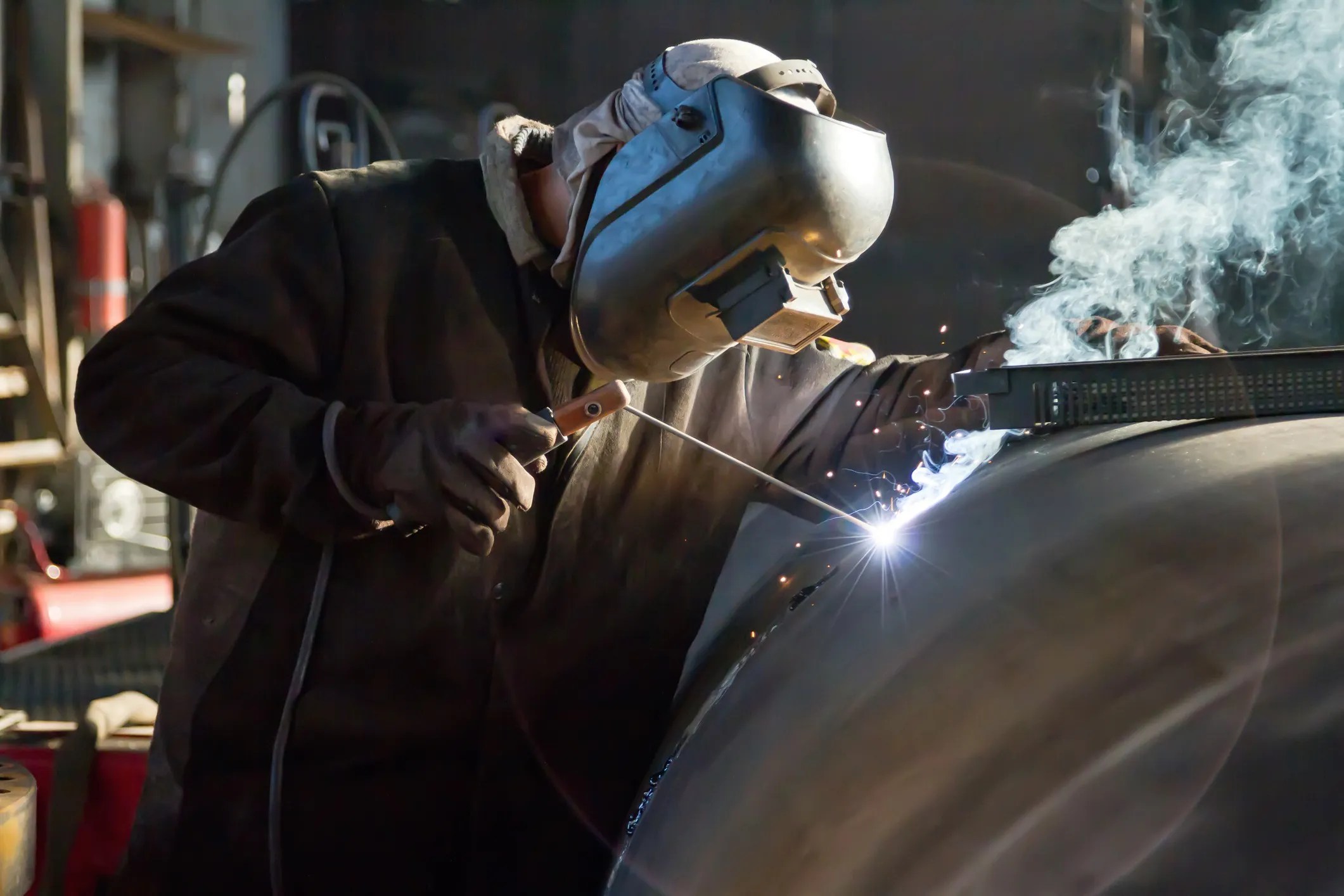
Whether constructing bridges, fabricating pressure vessels, manufacturing heavy equipment, or producing structural steel, weld quality directly affects safety, performance, and reliability. Even the most skilled welder requires qualified procedures to consistently produce sound welds. AWS B2.1/B2.1M:2026—Specification for Welding Procedure and Performance Qualification establishes requirements for qualifying welding procedure specifications, welders, and welding operators across a wide array welding processes.
What Is a Welding Procedure Specification (WPS) and Welding Procedure Qualification (WPQR)?
A welding procedure specification (WPS) and welding procedure qualification (WPQR/PQR)work together as sequential components of welding quality control across industries such as construction, aerospace, and oil and gas.
A WPS is a formal, written document that provides detailed instructions and parameters for producing consistent, high-quality welds. It defines the essential variables required for a specific welding operation, including electrical parameters, base metals, filler metals, joint design, preheat and interpass temperatures, and other critical process controls.
A WPQR (also commonly referred to as a PQR—Procedure Qualification Record) is the documented test record that verifies a welding procedure can consistently produce sound, code-compliant welds. It demonstrates that a specific combination of materials, filler metals, equipment, and welding variables—such as current, voltage, travel speed, preheat, and shielding gas—has been tested under controlled conditions and meets required mechanical and inspection criteria.
In simple terms, the WPS serves as the “instruction manual” for production welding, while the WPQR provides the objective evidence that those instructions have been tested and proven effective. Both documents are essential under AWS B2.1/B2.1M.
What Is AWS B2.1/B2.1M:2026
AWS B2.1/B2.1M:2026 provides the requirements for qualification of welding procedure specifications, welders, and welding operators for manual, semiautomatic, mechanized, and automatic welding.
By standardizing qualification methods, AWS B2.1/B2.1M:2026 helps manufacturers demonstrate that both their procedures and personnel can consistently produce welds that meet established quality requirements.
Welding Processes Covered in AWS B2.1/B2.1M:2026
AWS B2.1/B2.1M:2026 includes qualification requirements for many of today’s most widely used welding processes, including:
- Shielded Metal Arc Welding (SMAW)
- Gas Tungsten Arc Welding (GTAW)
- Gas Metal Arc Welding (GMAW)
- Flux Cored Arc Welding (FCAW)
- Submerged Arc Welding (SAW)
- Plasma Arc Welding (PAW)
- Oxyfuel Gas Welding (OFW)
- Arc Stud Welding (SW)
- Electrogas Welding (EGW)
- Electroslag Welding (ESW)
- Electron Beam Welding (EBW)
- Laser Beam Welding (LBW)
This broad scope allows organizations across numerous industries to qualify procedures using a single recognized framework.
Why Welding Procedure Qualification Matters in Modern Manufacturing
Hundreds of thousands of skilled welding professionals support industries ranging from infrastructure and transportation to energy, aerospace, and manufacturing, and demand for qualified welders continues to grow. At the same time, poor weld quality can result in costly repairs, production delays, equipment failures, and safety hazards. Welding procedure qualification assures that welding processes are proven, repeatable, and reliable before production begins, helping organizations deliver safe, compliant, and high-quality welded products.
Where to Find AWS B2.1/B2.1M:2026
By establishing consistent qualification requirements, AWS B2.1/B2.1M:2026 helps organizations improve quality, demonstrate competence, and produce reliable welded products that meet demanding industry expectations.
AWS B2.1/B2.1M:2026—Specification for Welding Procedure and Performance Qualification is available on the ANSI Webstore.