ASA/ANSI S3.47-2014 (R2023): Hearing Assistance Devices
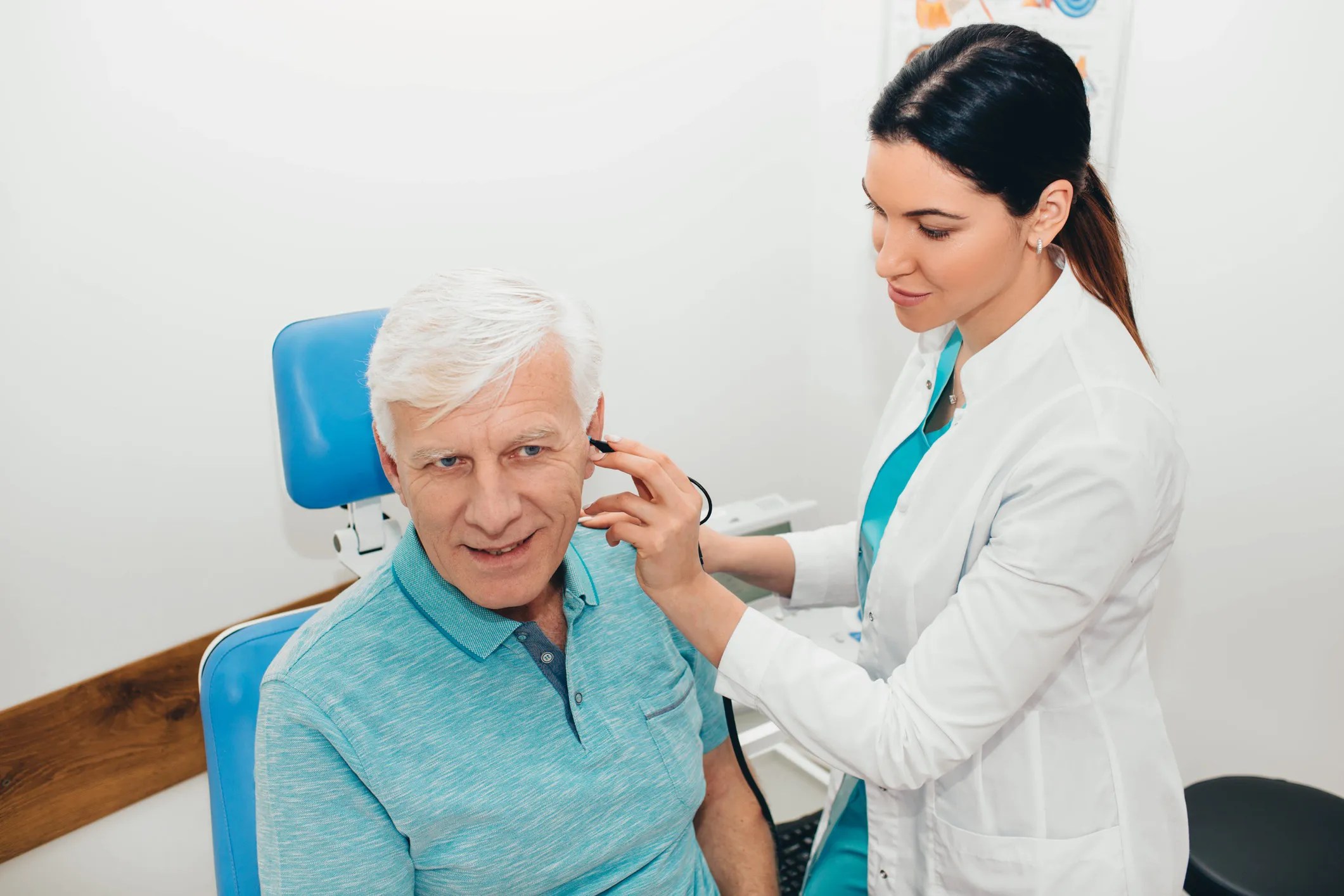
You are sitting in a packed auditorium. A speaker steps to the podium, and around you, the audience settles into silence. For someone with hearing loss, however, the challenge is just beginning. Every word must travel through microphones, transmitters, receivers, and assistive listening devices before it reaches the listener. Hearing assistance devices and systems (HADS) help bridge this communication gap, bringing lectures, performances, announcements, and conversations into clearer focus for millions of people. ASA/ANSI S3.47-2014 (R2023): Specification of Performance Measurement of Hearing Assistance Devices/Systems establishes standardized methods for evaluating the electroacoustic performance of hearing assistance technologies.
What Are Hearing Assistance Devices/Systems?
Hearing assistance devices/systems (HADS) addressed in ASA/ANSI S3.47-2014 (R2023) have the following four characteristics:
- They have the capability of processing an acoustic input signal and delivering an acoustic output signal when coupled to the ear
- They are intended to facilitate hearing by providing amplification of an acoustic signal and/or improving the signal-to-noise ratio for the listener
- They are physically coupled to the ear or interfaced with another device such as a hearing aid that is physically coupled to the ear
- They are designed and packaged as a complete device and/or system rather than as a component of another system
Essentially, HADS are technologies designed to improve access to sound for individuals with hearing loss. Because hearing assistance systems employ different transmission technologies—including FM, infrared, induction loop, and digital wireless systems—users and facility operators need reliable methods to assess performance and compare products. ASA/ANSI S3.47-2014 (R2023) addresses this need by establishing uniform measurement procedures.
What Is ASA/ANSI S3.47-2014 (R2023)?
ASA/ANSI S3.47-2014 (R2023) defines various types of hearing assistance devices/systems (HADS) and describes procedures for measuring their performance characteristics. This American National Standard provides:
- Guidelines for the description of the physical characteristics of HADS
- Guidelines for the description of the transmission methods used in HADS
- Procedures for measuring electroacoustic characteristics accurately and consistently
This standard does not address measurement of hearing aids or personal sound amplifiers which can be evaluated according to procedures described in ASA/ANSI S3.22.
Key Performance Characteristics Evaluated by ASA/ANSI S3.47-2014 (R2023)
The electroacoustic characteristics described within ASA/ANSI S3.47-2014 (R2023) are measured at settings described by the manufacturer. These characteristics include:
- Family of response curves (50- to 90-dB SPL input in 10 dB increments)
- Output sound pressure level for 90-dB SPL input
- High frequency average output sound pressure level for 90-dB SPL (HFA-OSPL90) input x high frequency average output sound pressure level for 50-dB SPL (HFA-OSPL50) input
- Frequency range x total harmonic distortion
- Noise level with no input
- Input-output characteristics
- Dynamic automatic gain control (AGC) characteristics
- Gain control linearity
- Current drain
- Immunity to EMI (refer to ANSI C63.19 and IEC 60118-13)
These performance measurements help manufacturers, facility operators, and accessibility professionals verify the quality, reliability, and effectiveness of hearing assistance devices and systems. At its core, ASA/ANSI S3.47-2014 (R2023) gives manufacturers, audiologists, regulators, and consumers a common language and common methodology for evaluating how hearing assistance devices/systems (HADS) perform.
Where to Find ASA/ANSI S3.47-2014 (R2023)
ASA/ANSI S3.47-2014 (R2023): Specification of Performance Measurement of Hearing Assistance Devices/Systems is available on the ANSI Webstore.
ASA/ANSI S3.47-2014 (R2023) was developed by the Acoustical Society of America (ASA).
Please direct any technical questions relating to this American National Standard to the developer. You can find the contact information for all ANSI-accredited standards developers here: List of ANSI-Accredited Standards Developers (ASDs).
For further information, please refer to: Who to Contact for Standards Related Questions.