


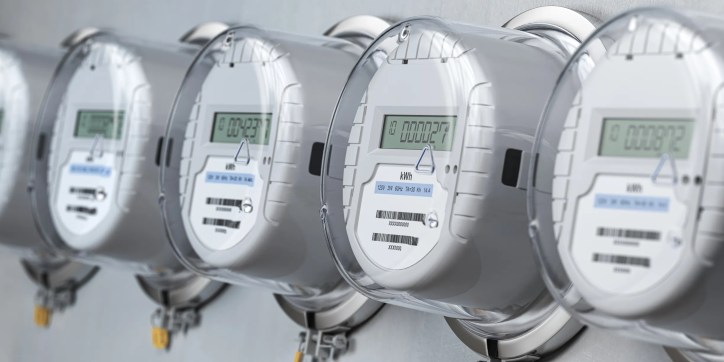
The total electricity installed capacity in the US hit around 1.19 billion kilowatts at the end of 2023, and the nation’s electrical power industry grows by over $400 million every year. Electrical power and access to electricity is so essential to our lives that it has become a necessity comparable to food and water. Standards change and grow to keep up with the developments in electricity metering. As mentioned in the foreword of ANSI C12.1-2026: Electric Meters – Code for Electricity Metering:
“The Code for Electricity Metering is a body of work that originated over 110 years ago with the first edition released in 1910. Since then, a great many people have dedicated themselves to updating and modernizing this work. This latest edition is dedicated to all the past and present committee members who have demonstrated a passion for Electricity Metering standards development, and upon whose shoulders this latest version stands.”
Foreword of ANSI C12.1-2026
What is ANSI C12.1-2026?
ANSI C12.1-2026: Electric Meters – Code for Electricity Metering is the current edition of the American National Standard that specifies acceptable performance criteria for new types of ac watthour meters, demand meters, demand registers, pulse devices, and auxiliary devices. It also describes acceptable in-service performance levels for meters and devices used in revenue metering.
ANSI C12.1-2026 also deals with the testing and installation of the meters. These address a variety of issues that can naturally be presented to the meters throughout their life usage, such as the effect of radio frequency interference. This gives utilities, manufacturers, and even legislative bodies the ability to secure the usage of meters over time.
Also covered in the ANSI C12.1-2026 standard are accuracy class designations, current class designations, voltage and frequency ratings, test current values, service connection arrangements, pertinent dimensions, form designations, and environmental tests.
Developments in Electric Meters and Impact on the Changes to ANSI C12.1-2026
In the time since the 2014 edition of the ANSI C12.1 standard (which was published in 2016) was revised, the electric meters industry has undergone some significant technological advancements, which are reflected in the current standard. In the North American market, electromechanical meters are no longer manufactured, and tests related to them have been deprecated. There have also been developments in the field of electromagnetic compatibility and auxiliary communications device influence, which have been included in the American National Standard.
How Do ANSI C12.1 and ANSI C12.20 Relate?
A major change with the 2022 revision of this American National Standard saw the content of another standard in this series, ANSI C12.20, be merged into C12.1. (You can read more about this revision in its section below).
Because of this, ANSI C12.1 is now a singular document that covers the entire Code for Electricity Metering. Blondel and non-Blondel meters are both covered by C12.1, and C12.20 was withdrawn.
Changes to ANSI C12.1-2026
The 2026 version of C12.1 was modified to correct Section 4.7.1.2 / Table 10, both Test 30 “Effect
of operating Temperature” and Test 31 “Effect of Relative Humidity” to reflect that tests may be run
on single-phase as well as polyphase loading.
Most other specifications have been retained from the previous edition. The following is a brief
summary of the main changes:
- Polyphase loading has been mandated for all type testing of polyphase meters
- Voltage tests for meters with wide input voltage ranges have been simplified
- Test No. 4: Effect of variation of power factor has been greatly simplified
- Test No. 7: Equality of current circuits has been simplified
- Test No. 9: Heat rise test has been modified
- Test No. 10: Effect of register friction has been deprecated
- Test No. 12: Effect of tilt has been deprecated
- Introduction of the Critical Change Value concept for certain External Influence tests
- Test No. 17: Effect of high-voltage line surges has been modernized
- Test No. 18: Effect of external magnetic field has been modernized
- Test No. 26: Effect of radio frequency interference has been modernized
- Test No. 28: Effect of electrostatic discharge (ESD) has been modernized
- Tests 39 through 44: Harmonic Influence have been carried over from C12.20
- Appendices A and B have been modernized
- A section on non-Blondel metering has been added to Appendix
The previous edition of this standard, ANSI C12.1-2024, saw Test No. 9: Heat rise test be modified, among other changes.
The edition of this standard released in 2022 was significant, and knowledge of its changes could be useful for the standards users:
Changes to ANSI C12.1-2022
ANSI C12.1-2022 revised two standards: ANSI C12.1-2014 (the previous edition of the code for electricity metering) and ANSI C12.20-2015. While ANSI C12.20 was previously another standard in this series, its content has been merged into ANSI C12.1, so there is now a singular document that covers the entire code for electricity metering. Blondel and non-Blondel meters are both covered by the current version of C12.1, and ANSI C12.20 was withdrawn.
Specific major changes made to ANSI C12.1-2022 include:
- Polyphase loading was mandated for all type testing of polyphase meters
- Voltage tests for meters with wide input voltage ranges were simplified
- Test No. 4: Effect of variation of power factor was greatly simplified
- Test No. 7: Equality of current circuits was simplified
- Test No. 10: Effect of register friction was deprecated
- Test No. 12: Effect of tilt was deprecated
- Introduction of the Critical Change Value concept for certain External Influence tests
- Test No. 17: Effect of high-voltage line surges was modernized
- Test No. 18: Effect of external magnetic field was modernized
- Test No. 26: Effect of radio frequency interference was modernized
- Test No. 28: Effect of electrostatic discharge (ESD) was modernized
- Tests 39 through 44: Harmonic Influence were carried over from ANSI C12.20
- Appendices A and B were modernized
- A section on non-Blondel metering was added to Appendix A, “Measurement of Power, Energy, and Related Quantities”
How Does ANSI C12.1 Relate to ANSI C12.10?
Another American National Standard in the series of standards for electric meters, ANSI C12.10-2011 (R2021): Physical Aspects Of Watthour Meters – Safety Standard, covers the physical aspects of detachable and bottom-connected watthour meters and associated registers. In its scope, ANSI C12.1-2026 states:
“Where differences exist between the requirements of this standard and the most current version of ANSI C12.10, the requirements of this standard shall prevail.”
What About Smart Meters?
Smart meters, which are being installed nationwide, offer numerous key benefits for customers, the state, utilities, and even the environment. In 2022, U.S. electric utilities had about 119 million smart metering infrastructure installations. The rapid installation of these meters is considered the first step toward developing smart grids, in which digital technologies are applied to every aspect of the industry, from generation, to transmission, to distribution, to the customer interface.
Currently, the infrastructure for a smart meter type system is covered by several standards in the ANSI C12 series:
ANSI C12.18-2006 (R2016): Protocol Specification For ANSI Type 2 Optical Port
ANSI C12.19-2021: Utility Industry End Device Data Tables
ANSI C12.21-2006 (R2023): Protocol Specification For Telephone Modem Communication
ANSI C12.22-2012 (R2020): Protocol Specification For Interfacing To Data Communication Networks
These standards, ANSI C12.1, and other meter standards are available as part of the ANSI C12 Smart Grid Meter Package.
ANSI C12.1-2026: Electric Meters – Code for Electricity Metering is available on the ANSI Webstore.
Questions About ANSI C12.1?
ANSI C12.1 is developed and published by the National Electrical Manufacturers Association (NEMA).
Please direct any technical questions relating to this American National Standard to the developer. You can find the contact information for all ANSI-accredited standards developers here: List of ANSI-Accredited Standards Developers (ASDs).
For further information, please refer to: Who to Contact for Standards Related Questions.