


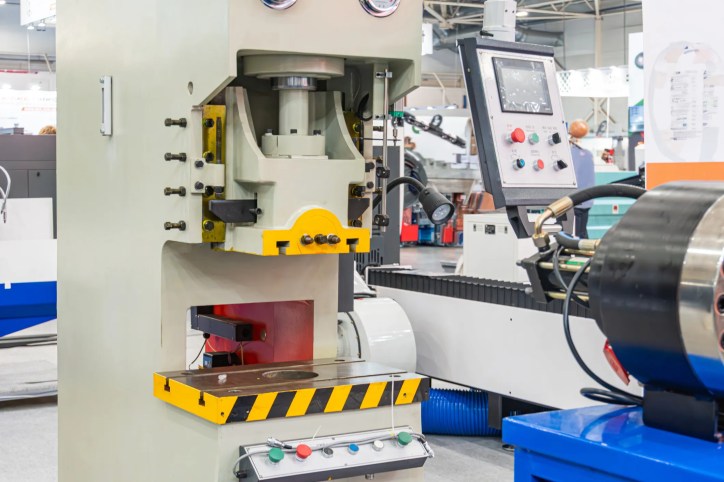
Every perfectly stamped automotive panel, precision-formed aerospace component, and heavy-duty industrial part begins with immense force applied with remarkable precision. Hydraulic and pneumatic presses make this possible, delivering the power manufacturers depend on to shape, cut, and assemble materials at high speeds. The same force that drives productivity can, however, create significant workplace hazards if machines are not properly safeguarded. ANSI B11.2-2013 (R2020), Safety Requirements for Hydraulic and Pneumatic Presses provides essential safety requirements to help manufacturers reduce risk, protect operators, and support safer, more efficient production.
Why Hydraulic and Pneumatic Press Safety Matters
Power presses, such as hydraulic presses and pneumatic presses, are used to work on metal or other material with cutting, shaping, or combination dies attached to plungers, platens, or slides (rams). Because these machines generate intense mechanical force that can cause life-altering injuries, implementing the appropriate safeguards is paramount. In fact, 49% of the injuries from mechanical power presses resulted in an amputation.
Implementing recognized safety requirements helps organizations reduce the likelihood of operator injuries, improve machine reliability, minimize costly downtime caused by accidents, support compliance with workplace safety programs, and foster a stronger culture of safety throughout manufacturing operations. ANSI B11.2-2013 details comprehensive safety requirements for hydraulic and pneumatic presses.
What Is ANSI B11.2-2013?
ANSI B11.2-2013 establishes safety requirements for the design, construction, operation and maintenance of hydraulically or pneumatically powered machines, commonly referred to as hydraulic/pneumatic power presses. These machines transmit force to cut, form, or assemble metal or other materials by means of tools or dies attached to or operated by plungers or slides. They include the following:
- Manually fed presses
- Automatically fed presses
- Presses utilized for hydroforming, spotting or tryout
- Transfer presses
- Tandem line presses
- Presses used in production cells.
The primary objective of this American National Standard is to eliminate, control or reduce hazards to individuals associated with hydraulic / pneumatic power presses. To accomplish this objective, responsibilities have been assigned to the supplier (e.g., manufacturer, modifier, rebuilder and integrator), the user, and individuals in the working environment. ANSI B11.2-2013 should be used with ANSI B11.0 and ANSI B11.19.
Learn More about ANSI B11.0 & ANSI B11.19
You can learn more about ANSI B11.0 in our blog post, ANSI B11.0-2023: Safety of Machinery, and about ANSI B11.19. in our blog post, ANSI B11.19-2019: Safeguarding and Machinery Risk Reduction.
Differences Between Pneumatic Presses & Hydraulic Presses
Although both hydraulic and pneumatic presses are designed to apply force for cutting, forming, assembling, and shaping materials, they operate using different power sources.
- Hydraulic presses use pressurized hydraulic fluid to generate extremely high, consistent force, making them well suited for heavy-duty applications such as metal forming, stamping, and deep drawing.
- Pneumatic presses use compressed air to power the press. They typically operate faster and are ideal for lighter-duty, high-speed applications like assembly, punching, crimping, and small-part manufacturing.
Regardless of the power source, both types of presses can pose serious hazards (e.g., severe crushing, amputations, and high-pressure fluid injection injuries that can cut off blood flow, destroy tissue, and lead to permanent disability or limb loss) without proper safeguards, making standards such as ANSI B11.2-2013 essential for promoting safe operation and reducing workplace risks.
Where to Find ANSI B11.2-2013
ANSI B11.2-2013 (R2020), Safety Requirements for Hydraulic and Pneumatic Presses is available on the ANSI Webstore, the best place to buy B11 Standards. It is also in the following packages:
- ANSI B11. Machine Tools Safety Package
- ANSI B11.1 / ANSI B11.2 – Power Presses Safety Requirements Package
- ANSI B11.1 / ANSI B11.2 / ANSI B11.3 – Power Presses Package
ANSI B11.2-2013 was developed by B11 Standards.
Please direct any technical questions relating to this American National Standard to the developer. You can find the contact information for all ANSI-accredited standards developers here: List of ANSI-Accredited Standards Developers (ASDs).
For further information, please refer to: Who to Contact for Standards Related Questions.
You can learn more about B11 Standards in our blog post: ANSI B11 Standards (Safety of Machinery).