



Artificial Intelligence (AI) is a foundational technology shaping industries, economies, and everyday life. From virtual assistants to advanced data analytics, AI enables machines to simulate human intelligence, including learning, reasoning, and decision-making. But how did we get here? Well, the invention of AI was not a single breakthrough, but rather the result of decades of ideas, experimentation, and technological progress.
The Origins of Artificial Intelligence
The concept of artificial intelligence dates to ancient history, when philosophers and inventors imagined machines capable of independent thought. Early automatons and mechanical devices hinted at the possibility of self-operating systems long before modern computing existed. Moreover, the most prominent path toward AI began in the early 20th century with the development of electronic computing. One of the most influential milestones came in 1950, when Alan Turing—a British mathematician and logician—proposed the question, “can machines think?”
The Turing Test: Determining if Machines Can Think
In his paper, “Computing Machinery and Intelligence,” Turing laid out what has become known as the Turing Test, or imitation game, to determine whether machines can think. The concept was adapted from a Victorian parlor game, in which an interrogator communicates with two unseen participants (a man and a woman) and must determine who is who based solely on their responses.
In Turing’s version, the computer program replaced one of the participants, and the interrogator had to determine which was the computer and which was the human. If the interrogator was unable to tell the difference between the machine and the human, the computer would be thinking or possess “artificial intelligence.” Hence, this test focused on behavioral similarity of the human and computer participant. The results of the Turing Test were not a single experimental outcome, but rather a theoretical framework and prediction that established the standard for measuring machine intelligence.
The Birth of AI: 1956 and the Dartmouth Conference
The official “invention” of AI as a field is widely attributed to the 1956 Dartmouth Summer Research Project on Artificial Intelligence. Organized by John McCarthy, Marvin Minsky, Nathaniel Rochester, and Claude Shannon, the conference brought together researchers interested in neural networks and the automation of intelligent behavior. It was at this conference that the term “Artificial Intelligence” was coined, and researchers began formalizing the idea that machines could replicate human cognition.
Early pioneers developed foundational programs that could solve problems, prove theorems, and simulate logical reasoning. These early successes sparked optimism that human-level intelligence in machines was within reach.
AI Boom (1980–1987): Rapid Growth, Innovation, and Early Warning Signs
The 1980s marked a significant “AI boom,” characterized by rapid advancements, increased government funding, and growing commercial interest. During this period, technologies like expert systems and early deep learning techniques enabled computers to learn from data and support decision-making. Major milestones included:
- Early Driverless Car Prototypes (e.g., Stanford Cart): early experiments in autonomous navigation used basic vision systems to move through environments, laying the foundation for modern self-driving cars. The Stanford Cart, for example, was originally created around 1960–1961 as a remote-controlled vehicle to study lunar exploration, and in 1979, it was to be an autonomous vehicle that used computer vision to navigate.
- AARON: created by British artist Harold Cohen in the early 1970s, it generated original artwork autonomously, raising questions about machine creativity.
- XCON Expert System: eXpert CONfigurer (XCON), or R1, was a pioneering rule-based expert system developed in 1978 by Digital Equipment Corporation (DEC) and Carnegie Mellon University to automatically configure VAX computer system components based on customer orders. It automated computer system configuration, saving millions and proving AI’s commercial value.
- AAAI Conference 1980: the first Association for the Advancement of Artificial Intelligence (AAAI) conference, which established AI as a formal academic field and brought researchers together to share advances and set future research directions.
- Fifth Generation Computer Systems Project: a 10-year (1982-1992) initiative launched by Japan’s Ministry of International Trade and Industry (MITI) to develop computers based on massively parallel computing and logic programming.
The period between the late 1970s and early 1990s, however, signaled an “AI winter”—a term first used in 1984—that referred to the gap between AI expectations and the technology’s shortcomings. Both private investors and the government lost interest in AI and halted their funding due to high cost versus seemingly low return.
The Rise of Machine Learning and Deep Learning
By the late 1990s and early 2000s, AI research had come back to the forefront by focusing on finding specific solutions to specific problems rather than on the original goal of creating versatile, fully intelligent machines. AI accelerated significantly in the late 2000s and 2010s. The explosion of data (“big data”) and advances in computing power made it possible to train larger and more complex neural networks. This era saw the rise of deep learning algorithms, computer vision systems, and natural language processing technologies.
These innovations enabled machines to perform tasks that were once thought to require human intelligence, such as recognizing images, understanding speech, and making predictions based on data.
The Modern AI Era: Generative AI and Real-World Applications
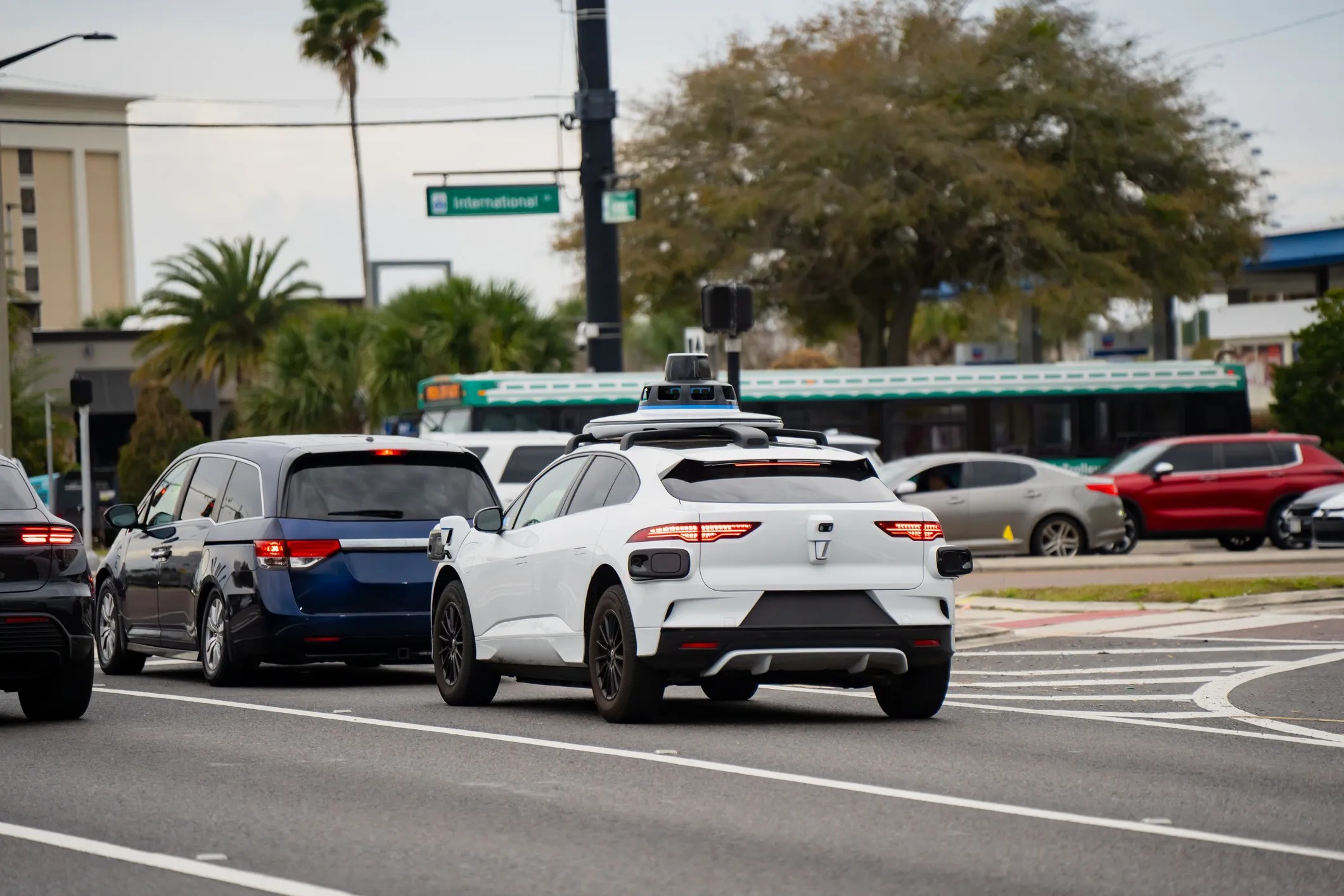
Today, AI is deeply integrated into society. From recommendation engines to autonomous vehicles, AI systems are transforming how businesses operate and how people interact with technology. One of the most significant recent breakthroughs is generative AI—systems capable of creating text, images, and even video. This shift represents a major turning point, making AI more accessible and impactful across industries. For example, AI applications range from healthcare diagnostics, financial forecasting, customer service automation, and content creation.

Why the Invention of AI Matters
The invention of AI represents a fundamental shift in how humans solve problems. By enabling machines to process vast amounts of data and learn from experience, AI enhances efficiency, accuracy, and innovation. At the same time, however, it raises critical questions:
- How will AI impact jobs and the workforce?
- What ethical frameworks are needed?
- How do we assure responsible AI development?
By providing frameworks for AI, international standards help answer these questions.
Key ISO Standards for Artificial Intelligence
Building on the need for responsible AI development, international standards have been established to guide organizations in designing, implementing, and managing AI systems. These standards provide a structured approach to governance, risk, transparency, and ethical considerations.
ISO/IEC 42001:2023 — Artificial Intelligence Management System (AIMS)
ISO/IEC 42001:2023 is the first global standard specifically designed for managing AI systems. It provides requirements for establishing, implementing, maintaining, and continually improving an AI management system. Organizations can use it to assure responsible development and use of AI, with a strong focus on risk management, transparency, and accountability.
ISO/IEC 23894:2023 — AI Risk Management
ISO/IEC 23894:2023 offers guidance on identifying, assessing, and mitigating risks associated with AI systems. It is essential for organizations looking to address uncertainties, biases, and potential harms linked to AI technologies.
ISO/IEC 22989:2022— Artificial Intelligence Concepts and Terminology
ISO/IEC 22989:2022 is a foundational standard that defines key AI terms and concepts. It helps create a common understanding across industries, which is critical for effective communication and implementation.
ISO/IEC 23053:2022— Framework for AI Systems Using Machine Learning
ISO/IEC 23053:2022 provides a structured framework for AI systems that utilize machine learning, outlining components, processes, and system lifecycle considerations.
ISO/IEC TR 24028:2020— Trustworthiness in AI
This technical report focuses on key trust factors such as reliability, safety, security, privacy, and fairness—core elements for ethical AI deployment.
ISO/IEC TR 24368:2022— Overview of Ethical and Societal Concerns
This technical report explores the broader societal impacts of AI, including bias, transparency, and human oversight, helping organizations align AI systems with ethical expectations.
You can find these standards on the ANSI Webstore and in Standards Packages like ISO/IEC 42001 / ISO/IEC 23894 – Artificial Intelligence Set, ISO/IEC 42001 / ISO/IEC 38507 / ISO/IEC 23894 – Artificial Intelligence Risk and Governance Package, and ISO/IEC 5338 / ISO/IEC 8183 / ISO/IEC 42001 – Artificial Intelligence Package.
Why These International Standards for AI Matter
Together, these international standards provide a comprehensive framework for addressing the biggest challenges in AI, including trust, risk, ethics, and governance. By adopting these standards, organizations can not only improve the performance and reliability of their AI systems but also build confidence among users, regulators, and stakeholders. As AI continues to evolve, adherence to these standards will be critical in assuring that innovation is balanced with responsibility.
The Future of Artificial Intelligence
AI is still in its early stages compared to its full potential. Future trends in AI include:
- Agentic AI and Autonomous Systems: AI is moving from chatbots to “agents” that can plan and execute complex workflows independently across multiple applications, acting as digital coworkers.
- Specialized Small Language Models (SLMs): Organizations are increasingly adopting smaller, domain-specific AI models trained on targeted datasets.
- Democratization of AI Through Low-Code Platforms: AI development is becoming more accessible through low-code and no-code tools that empower non-technical users to build, deploy, and scale AI solutions.
- Edge AI and Increased Efficiency: AI is moving to local devices (phones, sensors, local servers) rather than the cloud, reducing latency and costs while enhancing privacy.
- Physical AI and Humanoid Robotics: AI is extending beyond screens into physical environments, with rising investment in robotics for factories, warehouses, and logistics.
- Multimodal and Hyper-Personalized Interaction: Systems are becoming better at handling simultaneous inputs (text, voice, image, haptic) for more natural interaction, creating highly personalized communication experiences.
- Stronger AI Governance and Regulation: As AI adoption grows, regulatory frameworks are becoming more robust.
- Hybrid Computing: AI Meets Quantum: Quantum computing is beginning to work alongside traditional AI to accelerate discovery in fields like medicine and material science.
In sum, AI is expected to transform industries while also reshaping the global workforce, creating both opportunities and challenges.