


For centuries, humans have studied animal behavior by observing movement, vocalizations, and social interactions. Today, advances in artificial intelligence (AI), machine learning, and bioacoustics are transforming that research as AI is helping scientists better understand how animals communicate. By processing massive datasets of sounds and movements, machine learning is revealing complex, hidden patterns in animal communication, such as whale dialects and elephant naming. Breakthroughs in AI are driving an even greater need for high-quality data, consistent methodologies, and trusted standards to assure reliable, reproducible results.
How AI Is Transforming Animal Communication Research
More than 8 million species share our planet, yet humans truly understand language of only one—their own. Organizations are working to change that by developing AI models capable of analyzing enormous collections of bioacoustic recordings (i.e., audio captures of sounds produced by living organisms) from birds, whales, elephants, bats, insects, and many other species.
AI’s power lies in its ability to recognize, parse, and replicate patterns—and language is nothing if not patterned.
AI Is Revealing New Insights into Animal Communication
Studies suggest that some animals may use sophisticated communication systems—including individualized calls, context-dependent vocalizations, and even “names” for one another.
AI Suggests African Elephants May Call Each Other by Name
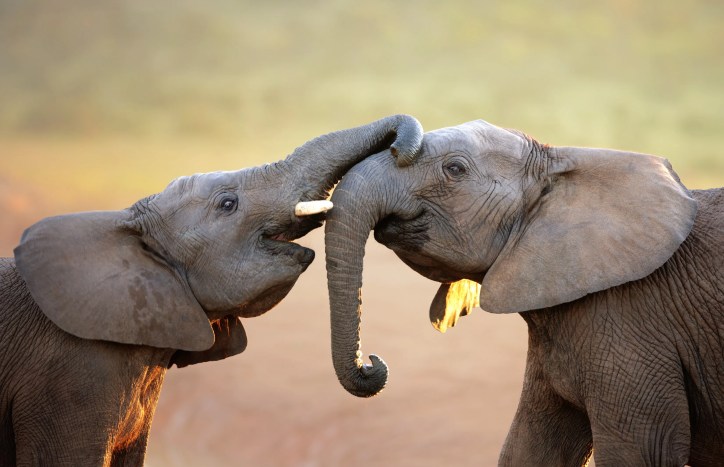
One of the most compelling recent discoveries comes from African elephants. Researchers used machine learning to analyze hundreds of elephant rumbles recorded in Kenya and found evidence suggesting elephants may use unique vocalizations to address specific individuals—similar to the way humans use names. The AI model correctly identified which elephant was being called significantly more often than would occur by chance, indicating that these calls may function as individualized “names.”
This finding adds to a growing body of evidence that elephants possess remarkably sophisticated social intelligence, memory, and communication skills. It also demonstrates how AI can reveal subtle acoustic patterns that would be nearly impossible for humans to detect through listening alone.
AI Reveals a Possible “Phonetic Alphabet” in Sperm Whales
Researchers recently used AI to analyze thousands of vocalizations from sperm whales and discovered evidence suggesting they may use a “phonetic alphabet”—a structured system of clicks and sound combinations that can be arranged into increasingly complex sequences. Rather than producing random noises, sperm whales appear to combine subtle variations in rhythm, tempo, and click patterns to convey different information, much like humans combine letters into words and sentences.
This breakthrough demonstrates how AI can detect intricate communication patterns hidden within massive bioacoustic datasets, offering scientists an unprecedented window into one of the ocean’s most intelligent species while advancing both marine biology and machine learning.


AI Is Finding Patterns—Not Translating Conversations
Rather than literally “translating” animal languages into English, AI systems are focused on detecting, classifying, and analyzing sounds at scale. This allows scientists to process years of recordings in a fraction of the time and uncover patterns and relationships that would otherwise remain hidden.
Furthermore, interpreting the biological meaning of these datasets still requires collaboration among ecologists, biologists, linguists, and data scientists as animal communication is highly complex. It extends beyond vocalizations to include body language, facial expressions, touch, chemical signals, and environmental context. For instance, a single call can vary in meaning depending on situation, social setting, or time of day.
ISO 19115 Supports AI Research in Animal Communication
ISO 19115-1:2014, Geographic information – Metadata – Part 1: Fundamentals defines metadata for geographic information. The standard allows researchers to tag acoustic and video datasets with exact bounding boxes, coordinates, and altitudes, helping AI learn how environmental factors (e.g., habitat type, water depth, noise pollution) impact communication signals. Essentially, ISO 19115 helps provide the crucial spatiotemporal context and provenance needed to train machine learning models effectively.
Why Bioacoustical Terminology Standards Matter for AI Research
As AI systems increasingly analyze complex animal vocalizations, consistent and precise terminology becomes essential for assuring scientific clarity and reproducibility. ASA/ANSI S3.20-2015 (R2025), Bioacoustical Terminology provides structured definitions for key concepts in bioacoustics, including hearing, speech, psychoacoustics, and physiological acoustics. This standard works alongside ANSI/ASA S1.1-2013(R2024), Acoustical Terminology, which establishes foundational definitions across broader acoustics disciplines, including physiological, psychological, and musical acoustics.
These American National Standards (developed by the Acoustical Society of America [ASA]) assure semantic interoperability: the ability of different computer systems to exchange data and accurately interpret its exact meaning and context. In the study of animal communication, where vocalizations, behaviors, and environmental conditions vary widely across species and recording environments, this shared understanding is critical. It allows machine learning models to reliably process, compare, and learn from large, multi-source acoustic datasets—helping researchers identify patterns in animal calls, such as contextual vocal usage or individualized signals, with far greater accuracy and consistency than isolated analyses would allow.
Why AI Management Standards Matter for AI Research
Animal communication research relies on massive datasets collected from different recording devices, habitats, and research organizations around the world. Standards help establish consistent approaches for data quality, metadata, interoperability, AI governance, and model evaluation, enabling researchers to compare results, reproduce findings, and collaborate more effectively.
International standards such as ISO/IEC 42001 for AI management systems, ISO/IEC 23894 for AI risk management, and ISO/IEC 22989 for AI concepts and terminology provide organizations with frameworks for developing trustworthy, transparent, and responsible AI systems across a wide range of applications—including scientific research. Together, these international standards support greater confidence in AI applications.
Learn More about AI Standards
Learn more about AI standards and related publications available through the ANSI Webstore and on the ANSI Blog:
- ISO/IEC 42001: Artificial Intelligence Management Systems (AIMS)
- ISO/IEC 23894:2023— Guidance on Risk Management for AI
- INCITS/ISO/IEC 22989:2022 (2023)— Artificial Intelligence Terminology
- Artificial Intelligence: Invention, Evolution & Future
- The Future of Jobs: How AI is Reshaping Work as We Know It
- AI Governance: Standards, Risk, and Compliance Guide
- The Sustainability Trade-Offs of Generative AI Technology
- Is AI Eroding Our Critical Thinking Skills?
- Enhancing Critical Thinking with AI: A Practical Guide
- How AI Is Transforming the Financial World
- AI Relationships: Will Humans Form Romantic Bonds With AI?